Advanced agriculture

What are the recent trends in organic farming and sustainable agriculture?

sustainable

Growing Consumer Demand for Organic Products: Demand for sustainable agriculture, organic food and goods has been rising consistently. The demand for organic vegetables, dairy, meat, and other products is rising as more people become aware of the environmental and health benefits of organic farming methods.

Regenerative agriculture is becoming more popular as an agricultural strategy that goes beyond organic farming methods. It focuses on promoting ecosystem services, biodiversity, carbon sequestration, and soil health. Cover crops, crop rotation, and low tillage are examples of regenerative practices that work to regenerate the soil while fostering resilient and sustainable agricultural systems.

Organic farmers promote and manage biodiversity, increased populations of natural enemies (helps control pests and diseases without chemicals), improved natural resources such as soil, water, air, and wildlife, and support pollinators, which are essential to maintaining a healthy environment as well as producing.

What exactly is sustainable agriculture? It is farming that meets the needs of existing and future generations, while also ensuring profitability, environmental health and social and economic equity. It favours techniques that emulate nature–to preserve soil fertility, prevent water pollution and protect biodiversity.
How has climate change impacted agricultural productivity and food security?

impacted

The productivity of agriculture and the availability of food have been significantly impacted by climate change, creating difficulties for the world’s food chain. Here are a few ways that agriculture has been impacted by climate change.

Temperature and precipitation changes: Increasing temperatures and shifting precipitation patterns have a direct impact on the growth and development of crops. Crop yields can be affected by heat stress, and it can also affect pollination and raise water usage. Schedules for planting, irrigation, and harvesting can be affected by droughts or floods brought on by changes in rainfall patterns.

Changes to Phenological Cycles and Traditional Growing Seasons: Planting, flowering, and harvesting times may all be impacted by climate change. Agricultural practices may be difficult for farmers to modify in response to the changing environment, which could result in lower crop yields and unstable production.

Water Scarcity and Unpredictability: Climate change may make it more difficult to get enough water for irrigation systems, crops, and cattle in many areas. Water shortages may result from altered rainfall patterns and higher rates of evaporation, which may have an impact on agricultural productivity and food production.

Pest and disease spread: Changes in the climate can have an impact on the distribution and prevalence of pests and diseases, increasing the risks and difficulties in managing crops and livestock. Warmer weather can encourage the spread of illnesses and pests, necessitating more resources and pest control techniques.

What are the major challenges facing the global agriculture sector today?

facing

To ensure food security, sustainability, and equitable agricultural practices, the global agriculture sector faces a number of pressing issues that must be resolved. The following are some of the main issues that the world’s agriculture sector is currently facing.

Need for Food and Population Growth: As the world’s population continues to rise, so does the need for food. Population growth is anticipated to reach 9.7 billion people by 2050, necessitating a substantial increase in agricultural output to feed everyone well.

Climate Change and Extreme Weather: Agriculture is seriously threatened by climate change. Increased frequency of extreme weather events including droughts, floods, and storms, as well as rising temperatures, can disrupt agricultural systems, lower crop yields, and lower livestock output.

Environmental Impact: Agriculture, facing a significant role in environmental problems such soil erosion, water pollution, greenhouse gas emissions, and biodiversity loss. To reduce its negative environmental effects and maintain ecosystems, the sector must embrace sustainable practises.

Labour Shortages in Rural Areas as a Result of Rural-Urban Migration: Rural-to-urban migration has caused a reduction in agricultural labour, resulting in labour shortages in rural areas. This problem is made worse by an ageing farming population and a lack of interest in agriculture among younger generations.

How has climate change impacted agricultural productivity and food security?

agricultural productivity

The impacts of climate change on agricultural productivity have created challenges for the global food chain. Here are a few ways that agriculture has been impacted by climate change.

Temperature and precipitation changes: Increasing temperatures and shifting precipitation patterns have a direct impact on the growth and development of crops. Crop yields can be affected by heat stress, and it can also affect pollination and raise water usage. Schedules for planting, irrigation, and harvesting can be affected by droughts or floods brought on by changes in rainfall patterns.

Changes to Phenological Cycles and Traditional Growing Seasons: Planting, flowering, and harvesting times may all be impacted by climate change. Agricultural practises may be difficult for farmers to modify in response to the changing environment, which could result in lower crop yields and unstable production.

Water Scarcity and Unpredictability: Climate change may make it more difficult to get enough water for irrigation systems, crops, and cattle in many areas. Water shortages may result from altered rainfall patterns and higher rates of evaporation, which may have an impact on agricultural productivity and food production.

Pest and disease spread: Changes in the climate can have an impact on the distribution and prevalence of pests and diseases, increasing the risks and difficulties in managing crops and livestock. Warmer weather can encourage the spread of illnesses and pests, necessitating more resources and pest control techniques.

What are the major challenges facing the global agriculture sector today?

agriculture sector

To ensure food security, sustainability, and equitable agricultural practises, the global agriculture sector faces a number of pressing issues that must be resolved. The following are some of the main issues that the world’s agriculture sector is currently facing.

need for Food and Population Growth: As the world’s population continues to rise, so does the need for food. Population growth is anticipated to reach 9.7 billion people by 2050, necessitating a substantial increase in agricultural output to feed everyone well.

Climate Change and Extreme Weather: Agriculture is seriously threatened by climate change. Increased frequency of extreme weather events including droughts, floods, and storms, as well as rising temperatures, can disrupt agricultural systems, lower crop yields, and lower livestock output.

Environmental Impact: Agriculture has a significant role in environmental problems such soil erosion, water pollution, greenhouse gas emissions, and biodiversity loss. To reduce its negative environmental effects and maintain ecosystems, the sector must embrace sustainable practises.

Labour Shortages in Rural Areas as a Result of Rural-Urban Migration: Rural-to-urban migration has caused a reduction in agricultural labour, resulting in labour shortages in rural areas. This problem is made worse by an ageing farming population and a lack of interest in agriculture among younger generations.

What is the role of nanosensors in precision agriculture?

nanosensors

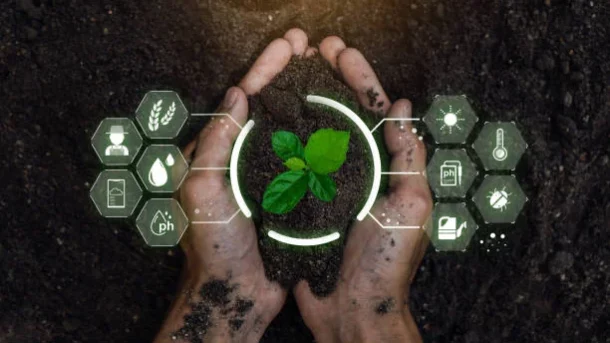
By providing real-time and extremely localised data on numerous factors relating to soil, plants, and environmental conditions, nanosensors play a significant part in precision agriculture. These tiny sensors, which are typically nanoscale in size, have a high sensitivity and precision for detecting and measuring particular features. The following are some crucial functions of nanosensors in precision agriculture.

Nanosensors can be used to monitor soil parameters, such as salinity, pH, moisture content, and nutrient levels. Farmers can optimise irrigation schedules and fertilisation practises based on the particular requirements of various soil locations thanks to the accurate and localised data they can supply.

Real-time monitoring of plant health metrics, such as leaf temperature, chlorophyll content, and nutritional status, is made possible using it. Nanosensors assist farmers in taking prompt action to treat stress or nutrient deficits by spotting early warning indications, enhancing crop health and productivity.

Monitoring particular biomarkers or volatile organic molecules released by infected plants allows nanosensors to identify the presence of pests and illnesses in plants. Early detection enables farmers to execute focused pest control strategies, minimising crop losses and the need for broad-spectrum chemical applications.

How are AI and computer vision being used for weed identification and control in Agriculture?

computer

Agriculture weed identification and management are greatly aided by AI (Artificial Intelligence) and computer vision technologies. To identify and manage weeds, computer vision and artificial intelligence are being employed as follows.

Weed Detection and Segmentation: Using computer vision and AI algorithms, photos or videos taken in the field can be examined to identify and separate weeds from nearby crops or soil. To learn the visual traits and patterns of various weed species, deep learning models, such as convolutional neural networks (CNNs), are trained on massive datasets of weed photos. Even under difficult and congested field circumstances, these models are able to distinguish and identify weeds properly.

AI-based systems can use species categorization and weed identification to make recommendations for the best herbicide for efficient weed management. AI algorithms can recommend the best herbicide or herbicide combination to target a particular weed species, maximising effectiveness while minimising environmental damage, by analysing the identified weed species and their accompanying herbicide resistance patterns.

Precision Weed Control: AI and computer vision technology can direct methods for precise weed control, such as mechanical weed removal or targeted spraying. Automated systems can precisely spray pesticides or eradicate specific weeds with little effect on neighbouring crops once weeds have been located and identified. This lessens the requirement for widespread herbicide application and reduces the use of chemicals, leading to financial savings and positive effects on the environment.

How is IoT technology being implemented in smart irrigation systems?

smart

Applications for smart farming are a major factor in improving food traceability throughout the agricultural supply chain. Smart farming makes ensuring there is transparency and traceability from farm to fork by utilising a variety of technologies and data-driven solutions. For food traceability, the following smart farming applications are used.

IoT Sensors and RFID Tags: Throughout the supply chain, different parameters are tracked and monitored using Internet of Things (IoT) sensors and Radio Frequency Identification (RFID) tags. To gather information on temperature, humidity, soil moisture, and pesticide use, IoT sensors can be installed in fields and farms. To track the movement and status of individual products as they travel through the supply chain, such as crates or pallets, RFID tags are affixed to them.

Automated Decision-Making: Algorithms for automated decision-making decide when and how much water should be applied to the crops based on the data that has been analysed. To optimise irrigation scheduling and reduce water waste, these algorithms take into account elements including soil moisture levels, crop water requirements, weather forecasts, and historical data.

IoT technology allows for the remote monitoring and management of irrigation systems. Through web-based or mobile applications, farmers and agronomists can access real-time data and manage irrigation settings. This enables the system’s performance to be monitored, watering schedules to be modified, and irrigation equipment to be remotely turned on or off as required.

What are the benefits of using satellite-based weather forecasting in agriculture?

satellite

Utilising blockchain and satellite technology, every transaction and movement of food products from their point of origin to their final destination is tracked in a transparent and immutable ledger. A safe and auditable record of the product’s journey is ensured by the ability of every stakeholder in the supply chain, including farmers, processors, distributors, and retailers, to submit data into the blockchain.

Through the provision of a decentralised and tamper-proof system for tracking and confirming the authenticity and integrity of food products and this technology facilitates traceability.

QR codes and barcodes are frequently used on food packaging to give consumers access to thorough information on the product’s origin and manufacturing processes, and supply chain trip. Consumers can track the merchandise by using a smartphone to scan these codes.

Satellite remote sensing data is critical for monitoring soil, drought and snow cover, and crop development. Satellite rainfall estimates, for example, assist farmers in planning the quantity and timing of irrigation required for their crops.

For example, weather forecasting enables you to properly plan your farm operations, such as planting, irrigation, fertilizer application, pruning/weeding, harvesting or livestock mating and since farming and agriculture as a whole chiefly depend on seasons and weather.

How are smart farming applications being used for food traceability?

food traceability

Applications for smart farming are being utilised more frequently to improve food traceability throughout the agricultural supply chain. To ensure transparency and traceability from farm to fork, these applications make use of a variety of technology and data-driven solutions. For food traceability, the following smart farming applications are used.

IoT Sensors and RFID Tags: Throughout the supply chain, different parameters are tracked and monitored using Internet of Things (IoT) sensors and Radio Frequency Identification (RFID) tags. To gather information on temperature, humidity, soil moisture, and pesticide use, IoT sensors can be installed in fields and farms. To track the movement and status of individual products as they travel through the supply chain, such as crates or pallets, RFID tags are affixed to them.

Traceability within food control systems is applied as a tool to control food hazards, provide reliable product information and guarantee product authenticity. Recall or Product Recall is defined as “the action to remove food from the market at any stage of the food chain, including that possessed by consumers”.