Agricultural market

What is the primary goal of the Price Stabilization Fund (PSF)?

Price Stabilization

The Price Stabilization Fund (PSF)’s main objective is to maintain stable agricultural commodity prices and guarantee customers may purchase them at fair prices. The PSF is a government program run by the Indian Ministry of Consumer Affairs, Food, and Public Distribution.

The Price Stabilization Fund’s primary goals and duties typically consist of:

Price Intervention: During times of price instability or unexpected price surges, the PSF intervenes in the market to stabilize the prices of necessary commodities. It seeks to control price swings, eliminate hoarding and speculative activity, and guarantee that consumers have access to basic goods at reasonable costs.

Making a Buffer Stock: The PSF makes a buffer stock of necessities including lentils, onions, and edible oils.

Market Intervention Techniques: The PSF use a variety of market intervention techniques to control prices, including buying goods directly from farmers, importing more supply, and releasing goods from the buffer stock when prices rise above a certain level. These steps are used to maintain price stability and have an impact on market dynamics.

Timely Intervention: The PSF makes sure that supply-demand mismatches and price changes are addressed in a timely manner. In order to prevent excessive price fluctuations and market distortions that can have a negative impact on consumers and farmers, it closely monitors market circumstances, tracks pricing patterns, and acts quickly.

Name a scheme that aims to enhance the productivity of milch animals and provide support for dairy development.

dairy development

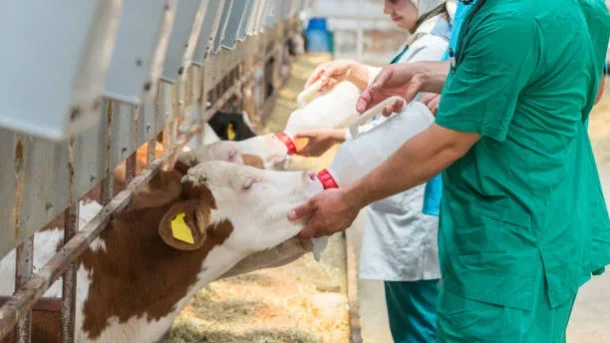
The “National Dairy Plan (NDP)” is one program that attempts to increase milch animal productivity and assist the development of the dairy industry in India. The National Dairy Plan is a multi-state program run by the National Dairy Development Board (NDDB) with the goals of raising milk output, promoting milk quality, and improving dairy farmers’ standard of living.

Typically, the National Dairy Plan’s main goals are:

The program’s main objective is the genetic development of dairy animals, especially high-yielding native breeds and crossbred cows. To increase milk production and productivity, it encourages the employment of better breeding practices, artificial insemination, and the introduction of bulls with high genetic quality.

Training and Capacity Building Programs: The plan places a strong emphasis on training and capacity building programs for dairy farmers, milk producers, and other stakeholders. It offers instruction on a variety of dairy farming topics, such as methods for caring for animals, growing feed, managing a farm, handling milk, and processing methods. The objective is to advance best practices in dairy development and improve farmers’ knowledge and abilities.

Construction of dairy infrastructure, including as milk collection facilities, chilling plants, bulk milk coolers, and milk processing units, is encouraged by the National Dairy Plan. It focuses on enhancing the efficiency of milk collecting and processing, strengthening the dairy value chain, and ensuring improved market access for dairy producers.

What is the purpose of the Interest Subvention Scheme for farmers in India?

Interest Subvention Scheme

The Interest Subvention Scheme for Farmers in India was created with the intention of assisting farmers financially and easing the strain of high interest rates on agricultural loans. The program’s goal is to increase farmers’ access to and affordability of agricultural financing, which will boost agricultural productivity, lessen stress, and improve their general well-being.

The Interest Subvention Scheme primary goals typically consist of:

Reduced Interest Rates: The program offers interest rate subvention, which lowers the actual interest rate applied to loans for agricultural purposes. By offering an interest rate subsidy or subvention on the applicable interest rate for a set length of time, it tries to reduce the cost of loan for farmers.

Timely and Adequate Credit: The program makes sure that timely and adequate credit is available.

Promotion of Priority Sector loans: Under this program, banking institutions are required to direct a certain portion of their overall loans into agriculture and related industries. It encourages banks to reach their lending goals for agriculture and makes it easier for small and marginalized farmers to get finance.

The program places a strong emphasis on inclusive financing and makes sure that disenfranchised small farmers, particularly women farmers and those from underprivileged backgrounds, have access to credit at reasonable rates. Its goal is to lessen financial exclusion and encourage financial inclusion among farmers.

What is the primary goal of the Pradhan Mantri Kisan Sampada Yojana (PMKSY)?

Kisan Sampada Yojana

The Pradhan Mantri Kisan Sampada Yojana (PMKSY)’s main objective is to enhance and modernize India’s whole food processing value chain, from the farm gate to the retail outlet, with an emphasis on lowering wastage, boosting value addition, and assuring higher returns for farmers. In order to generate money, create jobs, and encourage entrepreneurship in rural regions, PMKSY wants to revolutionize the agricultural industry.

The Pradhan Mantri Kisan Sampada Yojana’s primary goals typically include:

Construction of infrastructure, such as cold chains, integrated packhouses, processing facilities, and agro-processing clusters, is a key area of concentration for Pradhan Mantri Kisan Sampada Yojana. Establishing effective and integrated infrastructural facilities to lower post-harvest losses and increase the quality and shelf life of agricultural products is the main objective.

Employment Creation and Rural Entrepreneurship: PMKSY works to support rural entrepreneurship and employment prospects in the food processing industry. The program encourages the construction of food processing facilities, cold storage facilities, and agro-processing clusters, all of which help create both direct and indirect jobs in rural areas.

Market Access and Trade Promotion: The program places a strong emphasis on easing farmers’ and food processors’ access to markets. It encourages connections between domestic and foreign markets for processed agricultural products. To increase the competitiveness of Indian food products in domestic and international markets, PMKSY promotes branding, market development, and quality certification efforts.

Which scheme provides financial assistance to farmers for the establishment of polyhouses and shade net houses?

polyhouses

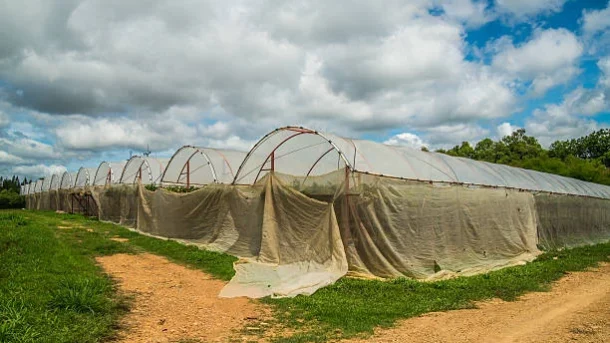
The “National Horticulture Board’s (NHB) Polyhouse and Shade Net Development Scheme” is the program that offers farmers financial support for the construction of polyhouses and shade net houses in India. This program is carried out by the National Horticulture Board, an agency of the Ministry of Agriculture and Farmers Welfare, to encourage protected farming methods in horticulture.

The Polyhouse and Shade Net Development Scheme’s salient characteristics are:

Financial support: The program offers financial assistance to farmers in the form of grants or subsidies to help them build polyhouses and shade net houses. Depending on the size of the building and the kind of horticultural crop that will be grown, different amounts of financial aid are provided.

Technical assistance and training: The program provides farmers with technical assistance and training on the building, running, and maintenance of polyhouses and shade net houses. This contains details on picking appropriate crops, watering techniques, managing pests and diseases, and making the best use of inputs like fertilizers and growth regulators.

Infrastructure development: The plan’s main objective is to build the infrastructure required to support protected agriculture. It involves the construction of shade net or cluster-based polyhouses, which offer shared services including electricity, water supply, storage, and marketing facilities to help farmers.

Building capacity: The plan places a focus on enhancing farmers’ knowledge and abilities in protected agriculture techniques by holding training sessions, workshops, and exposure tours. By doing this, farmers are able to adopt best practices and increase their yields and earnings.

Name a government program that aims to enhance the productivity of small and marginal farmers in India.

small and marginal farmers

The “National Agriculture Market” (e-NAM) initiative is one government program that tries to increase the productivity of small and marginal farmers in India. The Government of India introduced the e-NAM program in 2016 to establish a single national market for agricultural products.

The main goal of the e-NAM program is to make it possible for small and marginal farmers to sell their goods directly to consumers in various states and regions. By encouraging open price discovery and effective market procedures, it aims to do away with middlemen and secure fair pricing for farmers.

The e-NAM program’s main benefits and characteristics are as follows:

The program offers an online platform (e-NAM portal) that links several agricultural produce market committees (APMCs) around the nation. It promotes an open dialogue.

Single license: Under the e-NAM program, farmers may use a single trading license that is accepted at all national e-NAM markets. For farmers, this eliminates the requirement for various licenses and streamlines the selling procedure.

Information that is current: The e-NAM portal offers current data on the cost, demand, and availability of agricultural products in various markets. Farmers can use this data to inform their decisions on how to sell their produce.

What are the challenges faced by farmers in adapting to technological advancements and digitalization in agriculture?

digitalization

Farmers must overcome a number of obstacles to adapt to the digitalization and technology improvements in agriculture. Here are some typical difficulties:

Access to Technology: For many farmers, especially those who operate in distant or underdeveloped locations, access to technology—including hardware, software, and digital infrastructure—remains a substantial challenge. Farmers’ capacity to adapt and profit from technology improvements is hampered by their limited access to dependable internet connectivity, smartphones, computers, and other digital gadgets.

Affordability: Using technology frequently entails spending money on equipment purchases, software licenses, and ongoing maintenance charges. It may be difficult for farmers to cover these expenditures, especially small-scale and resource-constrained farmers, which makes it tough for them to invest in and embrace modern technologies.

Data management and privacy: The digitalization of agriculture generates a lot of data, such as information about farms, the weather, and market trends. Farmers might be concerned about data ownership, privacy, and information security. Appropriate data governance frameworks and unambiguous policies are needed for the efficient management and preservation of data in order to address these issues.

Infrastructure and Reliability: Technological improvements depend on a strong and dependable infrastructure, including network coverage, access to electricity, and internet connectivity. However, access to continuous and dependable infrastructure is difficult in many farming areas, especially in rural and isolated places, which restricts the efficient use of digital technology.

How does the absence of market infrastructure and value-added processing impact farmers’ income and profitability?

Limited Market Access: Farmers may have trouble accessing markets for their agricultural products in the absence of adequate market infrastructure. They can be forced to rely on regional marketplaces or middlemen who provide lower prices, which can lead to limited selling options and diminished bargaining strength. Farmers’ capacity to access bigger, more lucrative markets may be constrained by limited market access, which may reduce the amount of money they may make.

Price volatility is a problem for farmers because it causes big swings in the cost of their goods. This is caused by a lack of market infrastructure. Farmers may find it difficult to negotiate fair and consistent prices for their produce in the absence of efficient markets, the transmission of price information, and transparent transactions. Farmers may experience revenue instability as a result of the difficulty planning ahead and managing their finances due to price fluctuation.

Value-added processing facilities allow farmers to diversify their crops and command premium prices in the market despite limited product differentiation. Without these resources, farmers could only be able to sell raw or unprocessed goods, which frequently sell for less money than processed or value-added goods. The ability of farmers to realize better earnings and boost their income may be constrained by the lack of value addition options.

Dependence on Intermediaries: Without market infrastructure, farmers may rely excessively on middlemen or intermediaries to sell their produce. Due to a lack of direct market access, this dependence might result in exploitative practices where farmers obtain reduced prices for their goods.

How does the limited availability of agricultural data and information hinder evidence-based policymaking?

The lack of agricultural data and information can impede the development of evidence-based policies in a number of ways.

An insufficient knowledge of agricultural systems can be brought about by a lack of data and information on a number of factors, including crop yields, land usage, water resources, weather patterns, and market dynamics. It’s possible that policymakers lack the knowledge needed to create focused policies and actions that address particular possibilities and difficulties in agriculture.

Inaccurate Assessment of concerns and Impacts: Policymakers may find it difficult to make accurate assessments of the scope and effect of agricultural concerns in the absence of thorough and current data. Food insecurity, land degradation, water shortages, and the impact of climate change on agriculture are a few examples of such problems. In the lack of trustworthy data, legislators could create regulations that

Weak Predictive and Forecasting Capabilities: Predictive modelling and forecasting depend on data and information to help decision-makers foresee future trends, dangers, and opportunities in agriculture. A lack of data makes it difficult to create accurate models and projections, which makes it difficult to create proactive strategies and adjust to changing agricultural conditions.

Lack of Stakeholder involvement: Information and data are essential for promoting stakeholder involvement and collaborative decision-making. Stakeholders, such as farmers, academics, business representatives, and civil society organizations, may be excluded from meaningful participation in the creation and implementation of policies when data is scarce or unavailable. As a result, agricultural policies lose some of their credibility and efficacy and lose some of their potential influence.

What are the problems caused by inadequate infrastructure for agricultural logistics and distribution?

agricultural

Several issues in the agriculture industry might arise from inadequate infrastructure for agricultural logistics and distribution:

Limited Market Access: The flow of agricultural goods from fields to markets can be hampered by a lack of infrastructure, such as roads, bridges, and transportation networks. This restricts farmers’ access to bigger, more lucrative markets, which drives down prices and lowers their potential revenue.

Post-Harvest Losses: Poor infrastructure for facilities for handling, processing, and storing goods can result in post-harvest losses. Perishable crops may deteriorate fast in the absence of adequate storage facilities, lowering their market value. Ineffective handling and processing facilities can also cause quality to deteriorate and food to rot, costing farmers money.

High transportation expenses: Farmers may face high transportation costs when transporting their goods to markets or processing facilities in locations with poor transportation infrastructure. Long distances, insufficient transportation alternatives, and bad road conditions can raise transportation costs, lowering farmers’ profitability and competitiveness.

Limited Value-Added Processing: Farmers’ capacity to add value to their agricultural goods may be constrained by a lack of infrastructure for value-added processing, such as food processing factories. Farmers may pass up chances to expand their product lines, boost their profit margins, and provide the market with processed or value-added agricultural products if they lack access to processing facilities.