Beneficial organisms

What is the purpose of the National Mission on Sustainable Water Use in Agriculture (NMSWUA)?

Sustainable Water

India has launched a program called the National Mission on Sustainable Water Use in Agriculture (NMSWUA) to encourage the use of sustainable water management techniques in agricultural practices. It tries to address issues including inadequate water use, unsustainable water resource depletion in the agriculture sector, and lack of water.

The following are the main goals of the national mission on sustainable water use in agriculture:

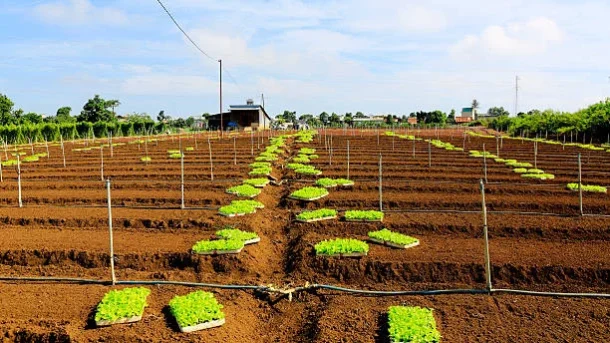
Efficiency in the use of water: The mission seeks to increase the effectiveness of the use of water in agricultural operations by encouraging the use of effective irrigation methods, such as drip irrigation and spray irrigation. Through the use of these technologies, water is delivered directly to plant roots, reducing water loss due to evaporation or runoff.

Crop diversification and optimization: The mission places a strong emphasis on the need to promote crops that use less water or are better suited to the regional agro-climatic conditions, as well as the necessity to vary cropping patterns. By doing so, the demand on water resources is lessened while water use is optimized.

Building capacities and raising awareness: The goal of the mission is to empower farmers and other stakeholders to implement sustainable water management techniques. On effective irrigation practices, water-saving strategies, and crop planning, it also involves awareness campaigns, training programs, and information dissemination.

Rainwater conservation and harvesting: NMSWUA promotes the use of rainwater harvesting methods to collect and store rainwater for use in agriculture. This promotes groundwater recharging and lessens reliance on unsustainable groundwater extraction.
Name a government program that provides financial assistance for the establishment of food processing units.

food processing units

The Pradhan Mantri Kisan Sampada Yojana (PMKSY) in India is one instance of a government program that offers financial help for the creation of food processing units. The Government of India developed the PMKSY umbrella program with the intention of upgrading and bolstering the nation’s food processing units.

The establishment of new processing units as well as the enlargement and upgrading of existing units are all covered under the PMKSY’s financial aid program. The program includes marine, meat, poultry, and horticulture items in addition to agricultural and horticultural commodities.

The financial aid offered under PMKSY consists of:

Capital Investment Subsidy: The program provides financial assistance for capital investments made in establishing new processing units or enlarging and upgrading existing ones.

Infrastructure Development: In order to promote the effective handling and preservation of perishable goods, PMKSY supports the construction of infrastructure facilities such as cold storage, warehousing, packaging, and transportation.

Mega Food Parks: The program encourages the growth of these industrial parks, which include integrated infrastructural facilities for food processing. The formation of Mega Food Parks receives financial support, including funding for infrastructure development, shared amenities, and administrative costs.

Backward and Forward connections: In the food processing industry, PMKSY promotes backward and forward connections. In order to enhance the supply chain and guarantee farmers’ access to markets, this includes funding for projects like as farmers’ associations, producer firms, agri-logistics, and market intelligence.

What is the primary goal of the National Mission on Rural Drinking Water (NMRDW)?

NMRDW

The National Mission on Rural Drinking Water (NMRDW)’s main objective is to give rural India with a reliable supply of safe drinking water. The Department of Drinking Water and Sanitation, Ministry of Jal Shakti, Government of India, is responsible for implementing the NMRDW.

The National Mission on Rural Drinking Water main goals and initiatives typically consist of:

Access to Safe Drinking Water: The objective is focused on ensuring that all rural areas in India have access to safe and potable drinking water. By providing dependable and sustainable supplies of drinking water, it seeks to address the problems of water scarcity, water quality, and waterborne illnesses.

Infrastructure Improvement: The NMRDW places a strong emphasis on developing and enhancing the infrastructure for rural drinking water. To satisfy the drinking water demands of rural populations, it includes projects for the building of piped water delivery systems, hand pumps, tube wells, rainfall gathering structures, and other water supply infrastructure.

Water Quality Management: The mission gives water quality management a high priority. In order to guarantee that the supplied drinking water complies with the required quality standards, it also comprises interventions like water testing, water quality surveillance, water treatment, and the installation of suitable water purification equipment.

Which government program focuses on promoting the use of solar pumps for irrigation?

solar pumps for irrigation

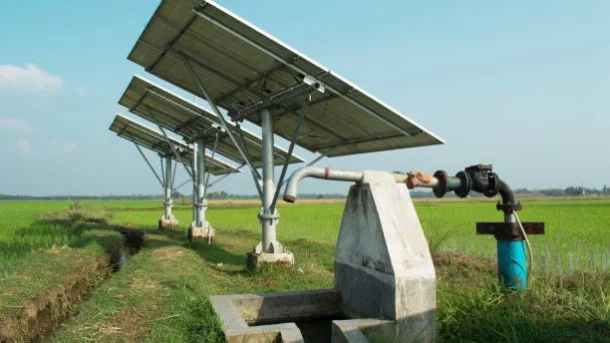
The “Pradhan Mantri Kisan Urja Suraksha evam Utthaan Mahabhiyan” (PM-KUSUM) project is one government initiative that promotes the use of solar pumps for irrigation in India. A government program called the Pradhan Mantri Kisan Urja Suraksha evam Utthaan Mahabhiyan is carried out by the Indian Ministry of New and Renewable Energy.

The PM-KUSUM scheme’s primary goals and measures typically consist of:

Promotion of Solar Pumps: By giving farmers financial assistance, the program hopes to encourage the use of solar pumps for irrigation. It promotes the setting up of solar pump manufacturing facilities, the installation of independent solar pumps, and the solarization of current grid-connected agricultural pumps.

Financial Support: Farmers that want to install solar pumps can do so with the help of the PM-KUSUM program. It comprises financial aid or capital cost assistance to lower the initial outlay needed to buy and install solar pumps. Farmers now have more economical and convenient access to solar pumps as a result.

Replacement of Diesel Pumps: The program’s goal is to switch out diesel pumps for solar ones in order to lessen reliance on fossil fuels and support renewable energy sources. It aids in lowering carbon emissions and the negative effects of diesel-powered irrigation on the environment.

Solar pumps that are connected to the grid: The PM-KUSUM plan also encourages solarizing current grid-connected farm pumps. It encourages farmers to put up solar panels on their farmland so that they can use solar energy to run their irrigation pumps. Farmers can gain income by selling extra electricity that isn’t used by selling it back to the grid.

Name a scheme that aims to promote the cultivation of cashew and provide support for cashew processing units.

cashew processing

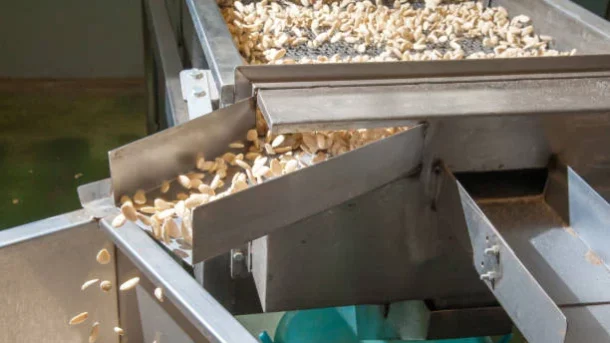
The “Mission for Integrated Development of Horticulture” (MIDH) is one program that attempts to support cashew processing facilities in India and encourage cashew processing farming. The Ministry of Agriculture and Farmers Welfare, Government of India, is responsible for carrying out the Mission for Integrated Development of Horticulture.

The Cashew Development Program’s main goals and initiatives typically consist of:

Promotion of Cashew Cultivation: The program’s main objective is to increase cashew production by giving farmers financial help, technical aid, and training. It involves assistance with the creation of fresh cashew orchards, the restoration of aged and underutilized orchards, the use of superior planting materials, and the adoption of best agricultural practices.

Training and Capacity Building: The initiative places a strong emphasis on training and capacity building programs for farmers growing cashews. It offers instruction on a variety of elements of cashew production, such as post-harvest management, irrigation management, planting methods, and pest and disease control.

Research and Development: The program funds initiatives for the production and processing of cashews. In order to create and spread better cashew varieties, crop management strategies, and processing methods, it encourages partnerships with research facilities, agricultural universities, and technology providers.

What is the main objective of the National Mission on Sustainable Forest Management (NMSFM)?

Sustainable Forest Management

Initiatives for sustainable forest management have as their goal the preservation and protection of forests, including natural forests, regions with a high biodiversity, and forest ecosystems. They place a strong emphasis on protecting the ecological stability, biological richness, and carbon stores of forests as well as the wildlife habitats found there.

The sustainable use of forest resources, such as timber, non-timber forest products, and ecosystem services, is encouraged by these programs. They place a strong emphasis on ethical harvesting methods, forest regeneration, and the preservation of natural harmony while assuring the socioeconomic progress of nearby people that depend on the forest’s resources.

Programs for forest restoration, afforestation, and reforestation are components of initiatives for sustainable forest management. To achieve environmental, economic, and social goals, they seek to increase the amount of forest cover, improve the productivity and health of damaged forests, and establish new forested regions.

Support for Community Participation and Livelihoods: These programs work to integrate local knowledge, customs, and traditional rights into forest governance while also fostering community involvement in forest management. They encourage sustainable livelihood options based on forestry resources, support community-based forest management strategies, and help communities that depend on forests for their way of life.

Which scheme provides financial assistance for the establishment of organic farming clusters?

organic farming clusters

The “Paramparagat Krishi Vikas Yojana” (PKVY) is one program that offers financial aid for the construction of organic farming clusters in India. The Ministry of Agriculture and Farmers Welfare, Government of India, is in charge of carrying out the Paramparagat Krishi Vikas Yojana.

The Paramparagat Krishi Vikas Yojana’s primary goals and initiatives typically consist of:

Promotion of Organic Farming: The program seeks to encourage farmers to use organic farming practices and to make it easier for them to embrace organic practices. It encourages the use of conventional and organic alternatives while reducing or eliminating the use of synthetic inputs like chemical fertilizers and pesticides.

The PKVY focuses on the creation of organic farming clusters, when a number of farmers embrace organic farming methods in close proximity to one another. By bringing together a sufficient number of organic farmers, cluster development aids in information exchange, resource optimization, and joint marketing opportunities.

Financial Support: The program offers financial support to farmers and farmer organizations in order to build organic farming cluster. Financial assistance is provided for a number of things, including capacity building, education, certification, organic inputs, farm machinery, marketing infrastructure, and other initiatives required to advance organic farming within the clusters.

What is the primary goal of the Agricultural Credit Guarantee Scheme (ACGS)?

Agricultural Credit Guarantee Scheme

The Agricultural Credit Guarantee Scheme (ACGS)’s main objective is to offer credit guarantee coverage to Indian farmers and agricultural firms. The Department of Agriculture, Cooperation & Farmers Welfare, Ministry of Agriculture and Farmers Welfare, Government of India, is the government agency responsible for implementing the ACGS.

The Agricultural Credit Guarantee Scheme primary goals and duties typically consist of:

Credit Guarantee Coverage: The program’s goal is to give agricultural businesses and farmers credit guarantee coverage to make it easier for them to obtain institutional credit. It lowers the risk involved with agricultural financing by assuring lenders (such banks and financial organizations) of the repayment of loans in the event of default by the borrowers.

Increasing financing Access: The ACGS concentrates on expanding the affordability and accessibility of financing for farmers and agricultural entrepreneurs. By offering credit guarantee coverage, it encourages financial institutions to lend to the agricultural industry, particularly to small and marginal farmers who would have trouble getting credit due to a lack of collateral or other factors.

Promoting Institutional Lending: The plan encourages banks to lend to the agricultural industry. Through the credit guarantee coverage offered by the ACGS, it encourages banks and other financial institutions to raise the amount of money they lend to farmers by lowering the risk involved with agricultural loans. This aids in directing more formal financing into agriculture, lowering reliance on unofficial loan sources, and fostering financial inclusion.

Name a government initiative that focuses on the development of agri-export zones in India.

agri-export

The “Agri Export Policy” (AEP) is one government effort that concentrates on the growth of agri-export zones in India. The Ministry of Agriculture and Farmers Welfare, Government of India, is responsible for carrying out the Agri Export Policy.

The Agri Export Policy’s primary goals and initiatives typically consist of:

Creation of Agri Export Zones: The strategy intends to identify and create Agri-Export Zones (AEZs) in particular regions that have the ability to produce and export a particular type of agricultural commodity. AEZs are geographical areas that have been classified as having concentrated agricultural production, processing, storage, and logistics infrastructure with the goal of aiding exports.

Infrastructure Development: The policy places a strong emphasis on creating logistical facilities within AEZs. It encourages the development of facilities for cold storage, packing, processing, irradiation, and other relevant infrastructure needed for the effective handling and preparation of agricultural products for export.

Market Access and Promotion: The policy’s main goal is to make it easier for Indian agricultural products to find a market in foreign countries. It consists of programs aimed at enhancing market research, branding, and marketing assistance for Indian agricultural exports. In order to increase the exposure and market reach of Indian agricultural products, the strategy also promotes participation in international trade fairs, buyer-seller meetings, and promotional efforts.

What is the primary goal of the Agricultural Technology Management Agency (ATMA)?

Agricultural Technology Management Agency

Promoting and bolstering agricultural extension services at the district level in India is the main objective of the Agricultural Technology Management Agency (ATMA). The Department of Agriculture, Cooperation & Farmers Welfare, Ministry of Agriculture and Farmers Welfare, Government of India, is responsible for carrying out the government project known as ATMA.

The Agricultural Technology Management Agency primary goals and duties typically consist of:

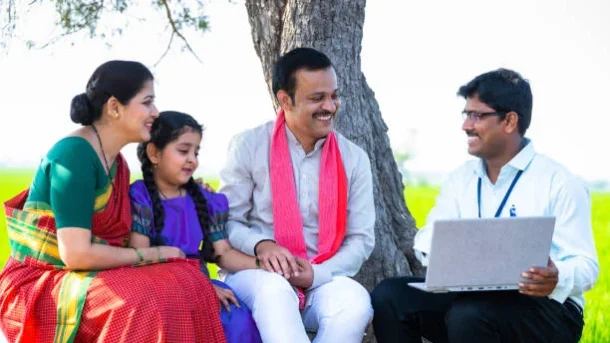
Farmer-Centric Extension Services: By improving the connection between research, extension, and farmers, ATMA hopes to offer farmer-centric extension services. In order to increase agricultural production, sustainability, and revenue, it focuses on providing farmers with timely and pertinent information, expertise, and technologies.

Farmer Empowerment: By encouraging their active involvement in the decision-making process for agricultural growth, the agency seeks to empower farmers. It motivates farmers to take charge of their agricultural operations, adopt better technologies, and make wise decisions in light of their own requirements and regional circumstances.

Convergence and Coordination: ATMA helps different parties interested in agricultural development, such as government agencies, research facilities, NGOs, farmer organizations, and private sector organizations, to come together and coordinate their efforts. To ensure comprehensive and integrated agricultural growth, it encourages cooperation, knowledge sharing, and efficient resource usage.