Pesticides

What are the implications of changing dietary patterns and consumer preferences on agriculture?

changing

Consumer tastes and changing food habits have a big impact on the agricultural industry. Here are some significant ramifications:

Demand Shift for Food Products: There is a change in the demand for various food products as dietary habits change. For instance, there is a rising demand for foods made from plants, such as plant-based meat alternatives, fruits, vegetables, and legumes. This change has an impact on the sorts of crops raised, methods used in raising livestock, and overall agricultural production systems.

Changes in food habits can have an impact on how land is used and how resources are distributed in agriculture. For instance, the growing demand for some crops may result in the need for more land to cultivate them. This may have an effect on deforestation, loss of biodiversity, and natural ecosystems. It also has an impact on how water, fertilizers, and other inputs are distributed to assist the production of favored food items.

Sustainability and Environmental Impact: Changing one’s diet can have both favorable and unfavorable effects on the environment. By switching to a more plant-based diet, one can lessen the effects of extensive cattle agriculture on greenhouse gas emissions, land degradation, and water use. If not managed responsibly, the rising demand for some crops could also result in an increase in pesticide use, nutrient runoff, and soil erosion. It is crucial.

What are the current debates on agricultural subsidies and trade protectionism?

agricultural subsidies

Environmental Impact: Some agricultural subsidies may encourage actions that are bad for the environment, like excessive use of water, pesticides, and fertilizers. According to detractors, it could be more advantageous for long-term sustainability to redirect subsidies towards conservation efforts, environmental preservation, and sustainable farming methods.

Agricultural subsidies may result in trade disagreements and international hostilities. Subsidies, particularly in affluent nations, are criticised for undercutting agricultural producers in developing countries and making it difficult for them to compete on the global market. This worsens trade imbalances and may obstruct the growth of the agriculture industries in developing countries.

Protecting domestic agricultural firms from unfair competition, especially when dealing with imports that are too subsidised or produced to lower standards, is crucial, according to supporters of trade protectionism. They argue that barriers such as tariffs or import limits can defend domestic farmers and uphold the nation’s food security.

Market Errors: Trade protectionist policies, in the opinion of their critics, have the potential to distort markets and hinder the efficiency gains that can be achieved through specialization and comparative advantage. Protectionist measures might artificially drive up costs, limit consumer choices, and make it more challenging for farmers to export their goods, all of which would hamper the growth of the world economy.

How is the use of pesticides and fertilizers being regulated and monitored?

pesticides

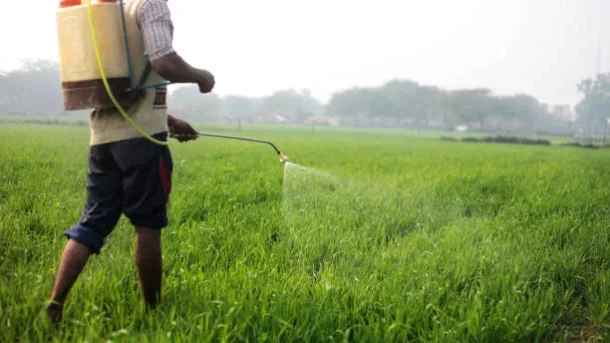
Through a combination of national and international regulatory frameworks, enforcement tactics, and monitoring programmes, the use of pesticides and fertilisers is controlled and monitored. Here are some essential components of the regulation and oversight of pesticides and fertilisers.

Regulatory frameworks: To regulate the registration, resale, and use of pesticides and fertilisers, various nations have put in place regulatory frameworks. These frameworks commonly consist of laws, rules, and policies that establish requirements for product safety, labelling specifications, application procedures, and allowable levels of pesticide residues or nutritional content in agricultural goods. The execution of these regulations is supervised by regulatory authorities, such as the Environmental Protection Agency (EPA) in the United States.

Pesticides and fertilisers must go through a rigorous registration process in order to be marketed and used legally. The provision of scientific data on product effectiveness, safety, and environmental impact is expected from manufacturers and distributors. These data are evaluated by regulatory bodies to ascertain if the products comply with the requirements for registration. Identifying suitable circumstances of usage and evaluating potential dangers connected to product use are both part of the registration procedure.

Labelling requirements: Labelling laws apply to pesticides and fertilisers in order to give users crucial information about how to use them safely and effectively. Application instructions, cautions, handling and storage recommendations, safety information, and environmental danger alerts are frequently found on labels. Additionally, labels may contain details on suggested application rates, scheduling, and targeted pests .

How are machine learning algorithms used for yield optimization?

yield optimization

Increasingly, agricultural yield optimization uses machine learning methods. In order to maximise crop yields, these algorithms analyse vast volumes of data and generate predictions or suggestions. The following are some significant applications of machine learning for yield optimization:

Machine learning algorithms can estimate crop yields by analysing historical and current data on weather patterns, soil conditions, crop traits, and management techniques. These algorithms produce yield estimates by taking into account a number of variables and their interconnections, assisting farmers and agronomists in making defensible choices about inputs, irrigation, and crop management techniques.

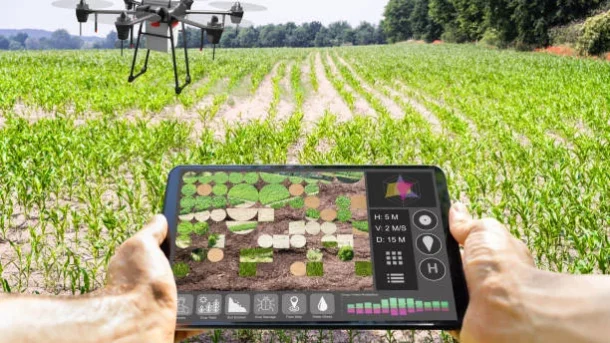
Variable Rate Technology (VRT): Using VRT, inputs like fertiliser, insecticides, and water are applied at different rates depending on the changing field conditions. To produce prescription maps for VRT equipment, machine learning algorithms analyse data from sensors, satellite photography, and previous yield maps. These maps direct the precise application of inputs, maximising yields across several fields and maximising resource utilisation.

Detecting illnesses, pests, and weed infestations in crops can be done by using machine learning algorithms to examine photographs or sensor data. These algorithms learn to identify patterns and anomalies connected to certain diseases or pests by training on labelled data. Early detection enables focused actions, minimising the effect on crop output and the requirement for extensive

How is precision agriculture being implemented in developing countries?

precision agriculture

Precision agriculture is being used in developing nations to handle numerous agricultural difficulties and boost productivity. It entails the use of technology and data-driven approaches to optimise farming practises. Here are a few examples of how precision agriculture is being used in underdeveloped nations.

Mobile technology and data collection: Many developing nations have easy access to mobile technology, including smartphones and tablets. Mobile devices are used by farmers and extension personnel to gather and communicate information about soil characteristics, crop health, insect infestation, and weather patterns. This information can be utilised to customise agricultural practises and is essential for decision-making.

Satellite images and other remote sensing technologies are used to monitor and collect data on crop growth, soil moisture, vegetation indices, and other environmental factors.

Soil and crop sensing: Soil and crop sensors are used to measure important characteristics such soil pH, nutrient content, and moisture levels. By applying the appropriate amount of irrigation and fertiliser exactly where it is needed, farmers can reduce waste and maximise resource efficiency. Crop sensors keep track of the health and development of the plants, enabling farmers to modify their management techniques as necessary.

Variable Rate Technology (VRT): Based on field variability, variable rate technology (VRT) provides precise application of inputs including seeds, fertiliser, and pesticides. Farmers can construct prescription maps that direct VRT-enabled machinery to distribute inputs at the best rates across the field using sensor data. This lowers input costs, has a smaller negative impact on the environment, and enhances crop performance.

How are drones used for spraying pesticides and fertilizers?

spraying

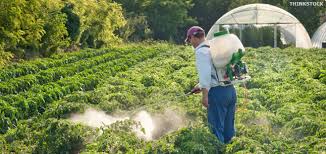
Aerial Application: Drones can spraying transport and disperse pesticides or fertilizers over agricultural fields when outfitted with properly engineered spray systems, which include tanks, pumps, and nozzles. These drones discharge the spray mixture in a controlled manner while flying at a predetermined altitude over the crop canopy. Multiple nozzles that release tiny droplets from the spray system may be used to provide even coverage and reduce drift.

Drones’ ability to fly at low altitudes and adhere to predetermined flight paths allows them to be used in precise applications. Drones are capable of precise navigation and can maintain a constant spray pattern thanks to internal GPS and sophisticated flight control technologies. This accuracy ensures focused coverage of the crops or particular areas of interest, minimises waste, and lowers the chance of overapplication.

Drones’ adaptability and accessibility allow them to enter spaces that could be difficult or hazardous for conventional machinery or human operators to enter, such as fields with uneven shapes or steep slopes covered in dense vegetation. Farmers can efficiently spray crops in difficult locations and make the best use of their property by using drones.

Reduced Human Exposure: By removing the need for human operators to come into close touch with pesticides or fertilisers during spraying operations, drones add an extra layer of protection. When harmful or dangerous substances are used, this serves to safeguard the operators’ health and safety.

Ashy stem blight disease in Dolichos bean crop (Arka)

stem

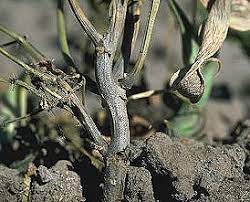
Ashy stem blight is a common disease that affects Dolichos bean (Arka) crops. The disease is caused by the fungus Phomopsis vexans, which can infect the stems, leaves, and pods of the plant.

Symptoms of the disease include brown or black lesions on the stem, which can cause the stem to become brittle and break easily. The leaves may also develop yellow spots, and the pods may become discolored and deformed.

To control the spread of the disease, it is important to implement proper cultural practices such as crop rotation, removing infected plant debris, and avoiding overhead irrigation. Additionally, fungicides can be applied to help control the spread of the disease, with thiophanate methyl and vitavax reduced incidence significantly. Treating the seeds with captan, thiram or benlate is also helpful in reducing the disease( usually 3g/kg og seeds). Organic control implement by treating the seed with biocontrol agents like Trichoderma viride, Pseudomonas fluorescens and Bacillus subtilis show the results. 

How fumigation used in agriculture?

Fumigation

Fumigation is a pest control method used in agriculture to eliminate or control harmful insects, pathogens, and other pests that can damage crops. It involves the use of gaseous or vaporized chemicals, called fumigants, which are applied to soil or stored grain to kill or control pests.

There are different types of fumigation methods, each of which uses a specific type of fumigant and application method. Some common fumigants used in agriculture include methyl bromide, phosphine, and sulfuryl fluoride.

Soil fumigation is a common pest control method for crops such as strawberries, tomatoes, and peppers. The fumigant is applied to the soil before planting, and it penetrates the soil to kill pests that live in or on the soil, such as nematodes, root-knot nematodes, and fungal pathogens.

Grain fumigation is used to control pests in stored grain, such as grain bins or silos. The fumigant is introduced into the grain storage facility to eliminate insects and other pests that can infest and damage stored grain.

Fumigation is an effective pest control method, but it is also highly toxic and requires careful handling and application.

Treatment of four spotted fall armyworms in Sweet  corn.

armyworms

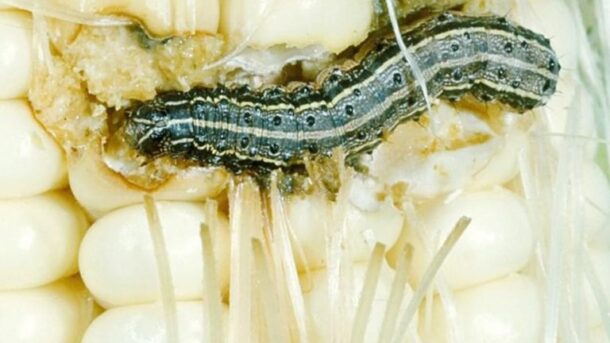
Control of Four-spotted Fall Armyworms can be achieved through a combination of cultural, biological, and chemical methods. Cultural methods include crop rotation, removal of crop residue, and planting of early-maturing varieties of maize..

  • Apply neem cake @ 250 kg/ha at the time of new sowing of the crop in soil. Install one light trap in the field. 
  • Do not take maize after maize crop. Follow crop rotation. 
  • Collect & destroy the egg masses mechanically. 
  • On initiation of the infestation, spray neem base formulation @ 40 ml (1500 ppm) to 10 ml (10000 ppm) per 10 liter of water.
  • On higher incidence, spray chlorpyriphos 20 EC 20 ml or spinosad 45 SC 3 ml or emamactin benzoate 5 SG @ 4 g or chlorantraniliprole 18.5 SC 3 ml per 10 liter of water. See that leaf whorl should be properly covered with spray.

In addition to these control measures, farmers can also take steps to prevent the spread of Four-spotted Fall Armyworms. This includes regularly scouting their fields, early detection and reporting of infestations, and avoiding the movement of infested plant material.

It is also important for farmers to be aware of the potential for insecticide resistance and to implement integrated pest management strategies to minimize the risk of resistance development. 

How aphids damage fennel farming?

aphids

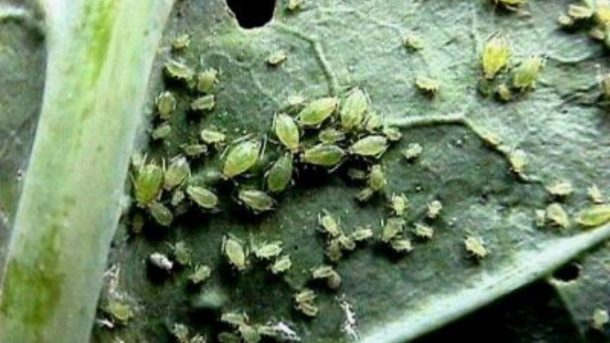
Aphids can damage fennel farming by feeding on the sap of fennel plants, causing stunted growth and wilting. They also secrete a sticky substance known as honeydew, which can promote the growth of sooty mold and attract other pests. 

In severe infestations, aphids can weaken the plants and reduce crop yields. To prevent aphid damage in fennel farming, spray dimethoate 30 EC @ 10 ml per 10 lit of water on 50 percent plants having flowering.The higher activity of honeybees is observed during 12 noon to up to 4.00 evening and hence avoid the spraying during this period.