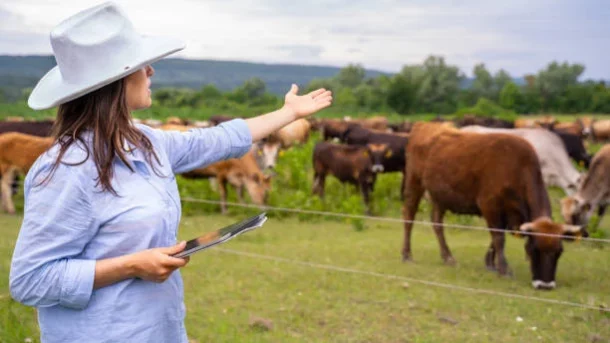
By delivering insightful information, enabling well-informed choices, and enhancing overall performance, data analytics plays a significant part in enhancing livestock management methods. How data analytics improves livestock management is as follows:
Key performance indicators (KPIs) in livestock production may be continuously monitored thanks to data analytics. Farmers can monitor the performance of specific animals, groups of animals, or the entire herd or flock by gathering and evaluating data on factors like weight gain, feed conversion ratio, milk production, or egg production. This monitoring enables the early identification of potential problems, the detection of departures from expected patterns, and the identification of underperforming animals.
Monitoring animal health and managing illness: Data analytics can help with monitoring animal health and managing disease in livestock. Analytics systems can find patterns and spot early indications of disease outbreaks or health problems by integrating data from a variety of sources, such as sensor data, veterinary records, and environmental data. This enables preventative actions to reduce disease spread and effect, such as early treatment, quarantine measures, or modifications in feed and management methods.
Management of reproduction: Data analytics improves management of reproduction in animals. Farmers can determine the ideal breeding periods, spot fertility issues, and decide on breeding plans after carefully examining data on estrus behavior, breeding records, fertility measurements, and environmental conditions. This increases reproductive efficiency overall, decreases calving/lambing intervals, and improves breeding success rates.
Optimization of feed management and nutrition: Data analytics aids in improving feed management and nutrition in the production of livestock. Analytics systems can produce personalized feeding plans and suggest feed compositions to satisfy particular nutritional demands by integrating data on feed composition, animal nutrient needs, and animal performance. Through this optimization, feed efficiency is increased, feed waste is decreased, optimal growth is ensured, and nutritional imbalances are minimized.