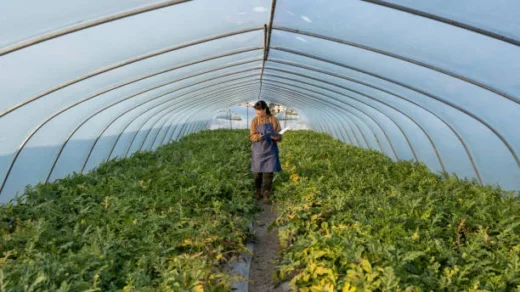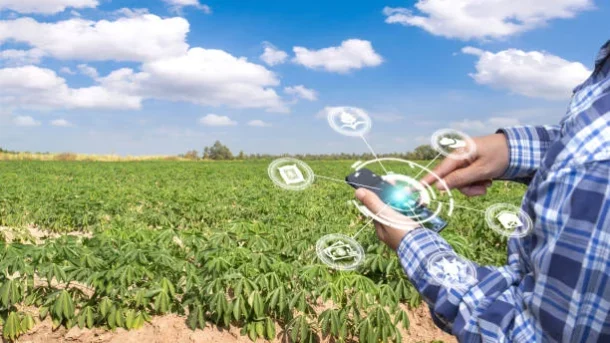
By bringing novel solutions that enhance production, efficiency, and sustainability, artificial intelligence (AI) has the potential to completely transform the agricultural sector. A few possible effects of AI on the agriculture market are listed below:
Precision farming uses AI-powered tools to offer real-time information on crop health, soil conditions, and weather patterns. These tools include drones, satellite photography, and remote sensing. With the help of this information, farmers can utilize precision farming techniques to boost crop yields and optimize resource consumption, such as the targeted application of pesticides and fertilizers.
Crop Management: AI algorithms can evaluate massive volumes of data from sensors and IoT devices to track crop growth, identify diseases, and anticipate pest infestations. Crop losses can be avoided, and total farm output can be raised, with the help of early identification and management.
Automated equipment and robotics: AI can facilitate the creation of self-driving equipment and robots that can do a variety of agricultural jobs, such as planting, harvesting, and weeding. Automation can save labor expenses and help with the agricultural labor crisis.
Climate Prediction and Adaptation: In order to make more precise predictions of climate trends, Artificial Intelligence can examine historical weather data and climate models. With the aid of this knowledge, farmers can modify their methods in response to varying weather patterns and lessen the negative effects of climate change on agriculture.