POSTEDITOR OFFICE

Which government initiative focuses on promoting the use of bio-fertilizers and bio-pesticides in agriculture?

government

The “National Project on Organic Farming” (NPOF) is one government program that emphasizes encouraging the use of bio-fertilizers and bio-pesticides in agriculture. The Department of Agriculture, Cooperation & Farmers Welfare of the Government of India administers the NPOF, a program that is centrally financed.

The National Project on Organic Farming’s main goals are as follows:

Promotion of Organic Farming: The initiative’s goal is to spread awareness of organic farming techniques, which place a focus on using natural inputs and biological approaches to crop nutrition and pest control. It promotes the use of organic inputs like bio-fertilizers and bio-pesticides while reducing or eliminating the use of synthetic chemical inputs.

Building awareness and capacity: The program’s main objective is to educate farmers and other stakeholders about organic agricultural practices. It offers training courses, seminars, exhibits, and extension services to inform farmers about the advantages and practices of applying bio-fertilizers and bio-pesticides in farming.

Technology Demonstration and Dissemination: To demonstrate the efficient application of bio-fertilizers and bio-pesticides, the NPOF promotes the creation of model organic farms and demonstration plots. It encourages farmers to embrace these practices and makes it easier for successful organic farming methods to spread.

Research and Development: The initiative supports studies and experiments on new bio-fertilizers and bio-pesticides, as well as research and development in the area of organic farming. It promotes research initiatives, partnerships with academic institutions, and the selection of appropriate bio-agents.
Name a scheme that provides financial assistance for the development of cold storage facilities.

cold storage facilities

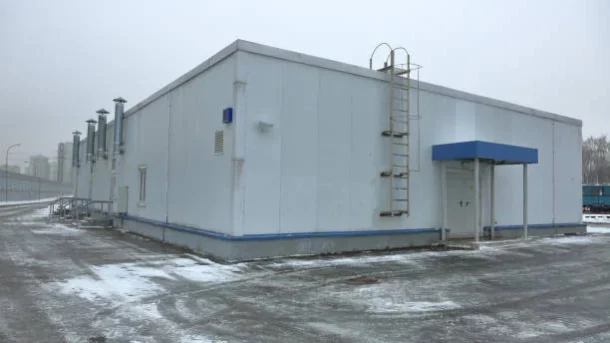
The “Pradhan Mantri Kisan SAMPADA Yojana” (PMKSY) is one program that offers financial support for the construction of cold storage facilities in India. The Government of India introduced the PMKSY, a comprehensive program, to assist the growth of the food processing industry, including the building of cold chain infrastructure.

The financial support provided under PMKSY for the construction of cold storage facilities includes a number of different features, such as:

Capital Investment Subsidy: The program offers qualifying applicants a capital investment subsidy for the construction of new cold storage facilitie or the extension or upgrading of existing ones. The project cost and other predetermined criteria are used to determine the subsidy amount.

Technical Assistance and Training: To ensure the efficient planning, design, and operation of cold storage facilitie, PMKSY provides technical assistance and training to the beneficiaries. This assistance aids in maintaining the quality of the perishable produce that is stored while also maximizing the use of the infrastructure.

Quality Certification and Standards: The program makes it easier for cold storage facilities to accept quality certification and standards. 

What is the main objective of the National Mission on Agricultural Extension and Technology (NMAET)?

Agricultural Extension and Technology

In order to increase the distribution of agricultural technologies and knowledge to farmers, the National Mission on Agricultural Extension and Technology (NMAET) in India seeks to strengthen and improve the agricultural extension system. NMAET strives to close the knowledge gap between agricultural research and farmers by facilitating the efficient dissemination of contemporary agricultural knowledge, methods, and technologies that will increase farm production and farmers’ standard of living.

The National Mission on Agricultural Extension and Technology primary goals typically consist of:

Enhancing Extension Services: NMAET focuses on enhancing the ability, expertise, and knowledge of extension employees in order to strengthen the agricultural extension system. It strives to improve their capacity to efficiently convey to farmers scientific knowledge, technical breakthroughs, and best practices.

Farmer Education and Training: To improve farmers’ knowledge and abilities in contemporary agricultural methods, the mission places a strong emphasis on programs that educate and teach farmers. It supports projects that encourage the use of better technology and methods, such as field demonstrations, training courses, workshops, and exposure tours.

Agriculture and Information and Communication Technology (ICT): NMAET encourages the use of ICT tools in agriculture to enhance extension services. In order to give farmers timely and pertinent information on weather forecasts, market pricing, crop management techniques, and other agricultural services, it promotes the creation and usage of digital platforms, mobile applications, and other ICT-based solutions.

Which scheme aims to promote agroforestry and provide support for tree planting on farmlands?

tree planting on farmlands

The “National Agroforestry Policy” in India is one program that tries to promote agroforestry and offer funding for tree planting on farmlands. I can give you information about the National Agroforestry Policy based on its goals and usual elements, even if my understanding is limited and my knowledge cutoff is in September 2021, and there may have been updates or new efforts after then.

Promoting Agroforestry Systems: The goal of the strategy is to encourage the development of agroforestry systems, which entail the purposeful blending of trees with agricultural fields. In order to gain various benefits, including improved soil health, increased biodiversity, climatic resilience, and increased farm output, it encourages farmers to plant trees next to their crops or in specified patterns.

Enhancing Carbon Sequestration: Agroforestry is essential for reducing carbon emissions, preventing climate change, and encouraging environmentally friendly land management techniques. To increase carbon sequestration and help national and international climate change goals, the program encourages planting trees on farmlands.

Diversifying Income Sources: Through the sale of lumber, fruits, nuts, fodder, and other tree planting on farmlands, agroforestry systems give farmers access to new revenue streams. 

Agroforestry methods aid in preventing soil erosion, enhancing water retention, and efficiently managing available water supplies. The strategy encourages planting trees with extensive root systems because they help to stabilize the soil, stop nutrients from draining, and improve water penetration.

What is the primary goal of the Livestock Insurance Scheme?

Livestock Insurance Scheme

The main objective of the Livestock Insurance Scheme is to give livestock farmers financial security in the event that their animals pass away from natural or unintentional causes. The program aims to reduce the hazards involved in raising livestock and offer a safety net for farmers who depend on animals for a living.

Typically, the Livestock Insurance Scheme main goals are as follows:

Risk Reduction: The program aims to reduce the financial risks that livestock farmers suffer as a result of the death of their animals. It offers a way to compensate farmers for the loss of their cattle, preventing them from suffering substantial financial losses.

Income Stabilization: The program aids in stabilizing the income of livestock farmers by compensating them for animal losses. It makes sure they have a safety net in place to deal with unforeseen situations and carry on with their livelihood activities.

Investment Encouraging: The provision of livestock insurance enables farmers to make more secure investments in livestock rearing operations. It promotes increasing involvement and investment in the livestock industry by fostering a sense of security and lowering the fear of financial losses.

Enhancing animal Productivity: By offering farmers financial security, the program indirectly helps to enhance animal productivity. Farmers may be more inclined to adopt better husbandry practices, make investments in animal healthcare, and take other actions if they are given the certainty of compensation in the event that their livestock is lost.

Name a government program that focuses on the development of sericulture in India.

sericulture in India

The “Central Silk Board’s Sericulture Development Program” is one government initiative that aims to advance sericulture in India. The development and promotion of sericulture in India are carried out by the Central Silk Board (CSB), an agency of the Ministry of Textiles.

The Sericulture Development Program of the Central Silk Board has the following primary goals:

Development of Mulberry Sericulture: The program intends to advance mulberry sericulture, which entails cultivating mulberry plants as a source of food for silkworms. It focuses on increasing mulberry cultivation areas, raising mulberry yield, and giving farmers who are growing mulberries technical support.

Production of cocoons and the development of silkworm rearing: These activities are supported by the program. It offers sericulturists education, technical support, and financial aid for the creation of silkworm rearing facilities, cocoon production, and cocoon quality improvement.

Technology Adoption and Research: The initiative encourages the use of cutting-edge sericulture tools and gear to boost output and efficiency. It promotes sericulture-related research and development initiatives, such as the creation of disease-resistant silkworm kinds, enhanced rearing procedures, and the creation of silk of the highest caliber.

Which scheme provides financial assistance for the establishment of agriculture export zones in India?

Agriculture Export Policy

The “Agriculture Export Policy” is the program that offers financial aid for the creation of agricultural export zones in India. In order to double agricultural exports and include Indian farmers and their goods into global value chains, the Government of India introduced the Agriculture Export Policy in 2018.

According to the farm Export Policy, financial support is given in a variety of ways to create farm export zones, including:

Infrastructure Development: In farm export zones, the policy is focused on creating infrastructure facilities such cold chains, storage facilities, packaging facilities, and processing units. These infrastructural facilities are established with financial support in order to raise the caliber and value of agricultural products.

Export Promotion: Through financial assistance for activities including market expansion, participation in trade shows and exhibitions, branding and marketing initiatives, and export promotion campaigns, the scheme seeks to increase the export of agricultural products. Exporters are given financial support to widen their customer base and boost exports.

The Agriculture Export Policy places a strong emphasis on the value of capacity building and training for farmers, exporters, and other industry participants. To improve farmers’ and exporters’ ability to export, financial aid is given to run skill development programs, training seminars, and awareness campaigns.

What is the purpose of the National Mission for Sustainable Agriculture (NMSA)?

Sustainable Agriculture (NMSA)

The National Mission for Sustainable Agriculture (NMSA) in India was established to promote sustainable agricultural methods and to solve the problems that Indian agriculture faces in relation to resource conservation, climate change, and agricultural productivity. One of the eight tasks included in the Government of India’s National Action Plan on Climate Change (NAPCC) is NMSA.

The following are the main goals of the National Mission for Sustainable Agriculture:

Increasing production and protecting natural resources: NMSA seeks to boost agricultural output while assuring the wise use of resources like water, land, and soil. To maximize resource usage and reduce environmental damage, it focuses on developing effective irrigation methods, conservation agriculture techniques, and soil health management.

Climate change adaptation: The mission attempts to increase Indian agriculture’s resistance to the effects of climate change. It encourages the implementation of climate-smart agriculture techniques, such as the use of agroforestry systems that can endure climatic pressures and lessen vulnerability to extreme weather events, as well as crop diversification and climate-resilient crop types.

Promoting integrated farming systems: To increase production and give farmers more options for income, Sustainable Agriculture (NMSA) supports integrating crops, livestock, and fisheries. To optimize resource usage and boost farm profitability, it encourages the implementation of integrated farming systems, such as mixed farming, agroforestry, and livestock-based treatments.

Name a government initiative that aims to promote beekeeping and provide financial assistance to beekeepers.

promote beekeeping

The “National Beekeeping and Honey Mission” (NBHM) is one government program that tries to encourage beekeeping and give financial aid to beekeepers. The Government of India established the NBHM program to promote beekeeping in the nation and aid beekeepers in a variety of beekeeping endeavors.

The National Beekeeping and Honey Mission’s main goals are as follows:

Promote beekeeping: The goal strives to educate farmers and rural communities about the advantages of beekeeping and its potential for money production. It promotes the use of cutting-edge beekeeping techniques and the development of bee colonies.

Building capacity: NBHM offers beekeepers training programs and efforts to increase their capacity in beekeeping practices, honey production, colony management, and value-added honey products.

Financial support: The mission provides financial support to beekeepers for a range of beekeeping-related operations, including the acquisition of bee colonies, beehives, equipment, and machinery. Additionally, it offers assistance with the development of honey extraction and processing facilities.

Research and development: In order to improve bee health, increase honey output, and investigate the potential of honeybee byproducts, NBHM fosters research and development in the field of beekeeping. Research initiatives and partnerships with academic institutions and research organizations are supported.

What is the main objective of the Paramparagat Krishi Vikas Yojana (PKVY)?

Krishi Vikas Yojana

The Paramparagat Krishi Vikas Yojana (PKVY)’s primary goal is to encourage organic farming in India. The Ministry of Agriculture and Farmers Welfare introduced the PKVY program as a government initiative in 2015. The English translation of “Paramparagat Krishi Vikas Yojana” is “Traditional Farming Development Scheme”.

The following are the main objectives of PKVY:

Promote organic farming: The program’s goal is to persuade farmers to switch to organic agricultural methods and lessen their reliance on synthetic pesticides and fertilizers. It aims to promote ecologically friendly, soil-health-supporting sustainable agricultural practices.

Boost farm productivity: PKVY seeks to do this by implementing organic farming methods. These methods emphasize increasing soil fertility through the use of organic manure and compost as well as crop rotation, mixed cropping, and biological pest control strategies.

Produce certification: The program also assists farmers in securing organic certification for their output. This certification guarantees the authenticity and high caliber of organic products while facilitating farmers’ access to premium markets.

Building capacities and providing training: To assist farmers in understanding organic farming methods, managing soil health, and utilizing conventional and local resources, PKVY offers training, capacity building, and technical assistance. The program seeks to equip farmers with the information and abilities they need to successfully implement organic farming.