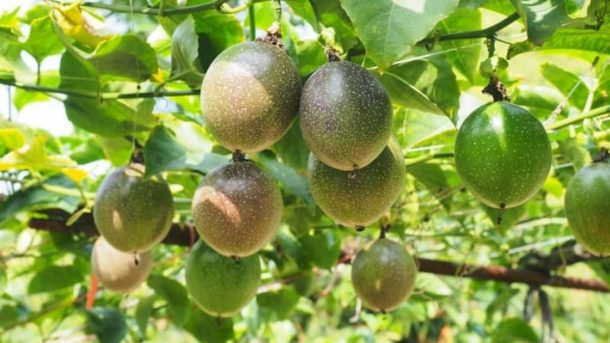
Flowers grow alone in the leaf axils on the last parts of the new growth. The two main fruiting seasons are August-December and March-May. Fruits should be harvested along the stem. Economic production begins 1-2 years after planting healthy vines with about 150-180 fruits per year. Pruned tree fruits are full size and colorful – when light wrinkles appear; they are in their best condition, so pick fruit when the skin starts wrinkling.
ScientificFarmingWeb
How to control fruits shriveling in passion fruit to boost crop yield?
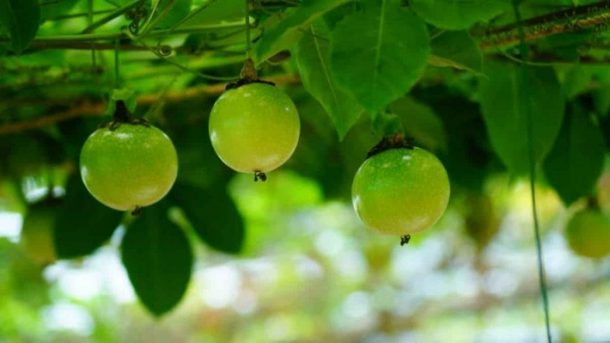
shriveling fruits are common for passion fruits, especially ripe ones when they fall to the ground. But, if this happens earlier, it could be due to fruit fly damage, sucking insect damage, poor pollination, lack of boron, and insufficient irrigation when the heavy crop is set. Ensure your vines are provided with the proper nutrients for maximum and full growth, free from pests and diseases.
Why the leaves of the passion fruit vines turn yellow?
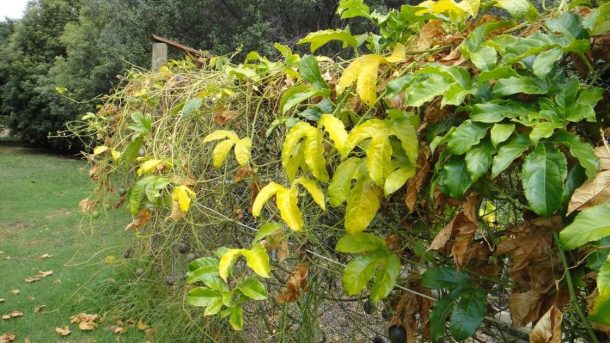
It may be a sign that your vines have been infected with the passion fruit woodiness virus. It can be caused by magnesium deficiency, nitrogen deficiency on sandy soils, or extremely cold weather combined with low humidity. Due to the lack of nutrients, vines turn yellow differently depending on the stage of leaf development. For example, sulfur (S) or copper deficiency is always evident if your new leaves have yellow veins. However, if the yellowing affects the area between the veins, it indicates insufficient iron (Fe) or Molybdenum (Mo) deficiency.
Yellowing of old leaves, especially between the veins, is a sign of magnesium deficiency. A fertilizer rich in magnesium (Mg) is a suitable treatment for this problem. On the hand, yellowing the veins in old leaves is a sure sign of nitrogen deficiency and should be corrected accordingly. There are situations where both the old and new leaves of your favorite fruit vines turn yellow. The best fertilizer for passion fruit vines is Granulated fertilizer, Urea, Potassium sulfate, Diammonium phosphate and Organic fertilizers like manure and vegetable compost.
How training and pruning in the Passion fruit vines enhances yield?
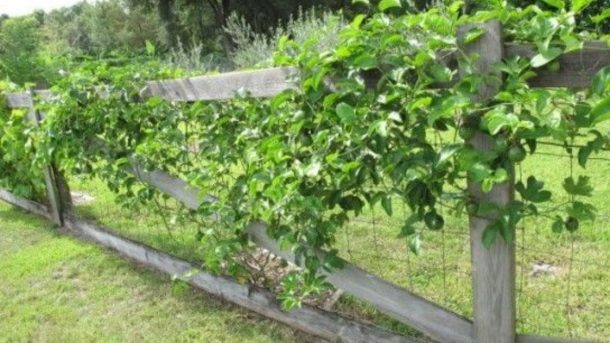
Training is essential in managing production and supporting the vine during its economic life. Poor and inadequate construction of the trellis can lead to bending and damage the vines. The passion fruit influences the current season’s growth and encourages systematic pruning of vines of new growth that results in regular and high fruit production. Passion fruit vines should be trained on a strong trellis or fence to hold the vine’s weight without bending too far, leading to breakage of branches and possible damage to the plant.
What are the causes for Passion fruit and flower drop?
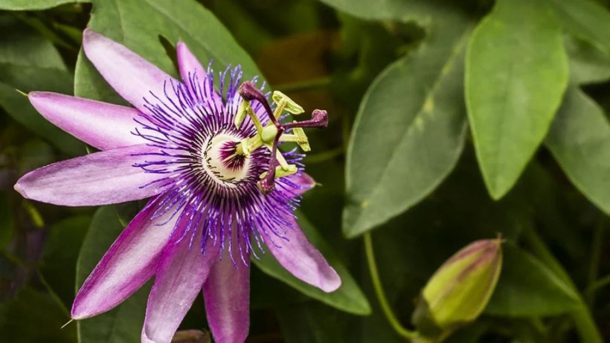
Premature fruit drop can be due to one of the following reasons. Irregular watering can cause the fruit to fall off because when the fruits are near maturity, the ripe fruits need more water. Fruits dry out and fall off as a result of water stress. Continuous irrigation and increasing organic matter in the soil can significantly improve water availability for vines. Other possible causes include fungal diseases, nutrient deficiency, and loss of fruit flies and mites.
How Fertilizer management is done for healthy plant growth of passion fruit?
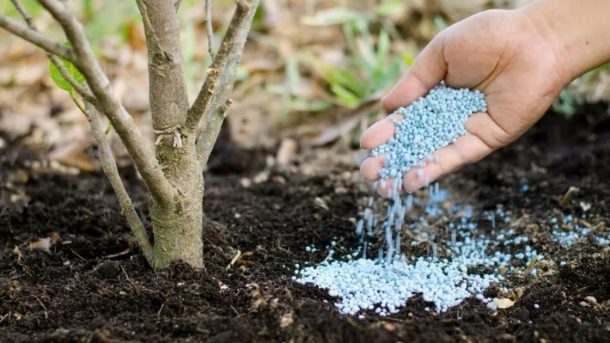
Passion fruit vines provide heavy food, which means they need plenty of fertilizer to ensure healthy growth during their growing season. A balanced 10-10-10 or similar all-purpose formula should be applied every three weeks. But, again, be careful when fertilizing because the fruit vines are susceptible to salt buildup in their soil. The nutritional requirements of the passion fruit depend on the age and stage of development, viz., Vegetative growth, plant coming in bearing, and total production stage. N 150, P 100, and K 200 kg/hectare is the approximate nutrient requirement of passion fruit. Nutrients should be distributed after harvesting.
Organic manures are essential for strong and productive plants with regular and maximum yields. Oil cake is also applied in some areas. 10 kg FYM per vine is recommended during the first year of planting and 15 kg FYM per vine from the second year. A mixture of FYM and vermicompost in the ratio of 4: 1 or 3: 1 and oil cake gives excellent results, but most farmers are not applying it due to the limited availability of vermicompost. Manure should be used in February-March. Nutrient management depends on the age and stage of growth of the vines. Organic manures should be added more for better fruit production. Keep the soil evenly moist to produce the best fruit. If the soil dries out, the fruit will shrink and drop. Passion fruit is a heavy feeder. Too much nitrogen will result in reduced leaf growth and fruit set.
How Flowering and fruiting stage improves passion fruit productivity?
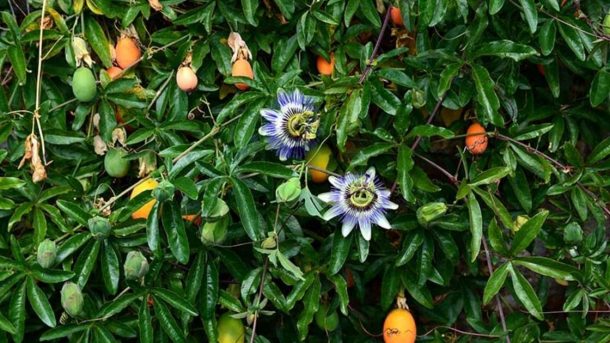
Once the passion fruit reaches the age of 12-13 months, it will continue to bloom throughout its life. As other flowers turn into fruits, other flowers are formed. It will continue for 3-4 years then its productivity will start declining. The fruiting phase will start from 12 or 13 months and continue for 3-5 years. As the plant ages, it will increase the number of fruits until it reaches its peak in the 4th year. Then, it will start to reduce the number of fruits produced.
How Plant spacing is done for improving Passion fruit crop yield?
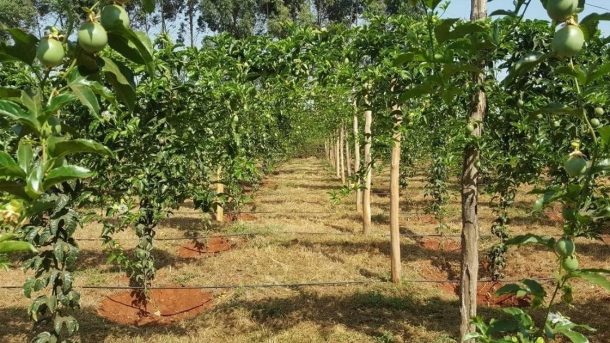
The passion fruits are vigorous growers. A vine can grow up to 30 to 40 feet tall. Train the vines to avoid tangling the stems of different plants. Training vines on trails will make harvesting easier.
How to Select the propagation method for Passion fruit?
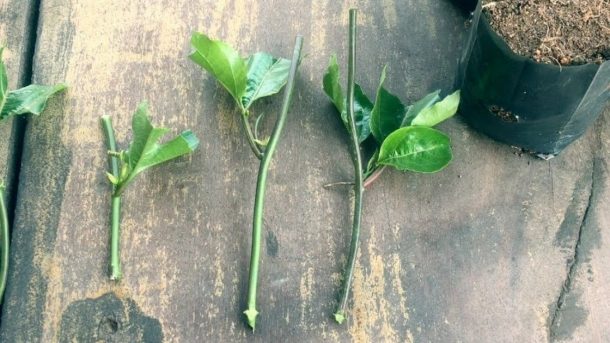
It is usually propagated by cutting. However, seeds are also used as propagating material despite the genetic variation. Softwood grafting is promising in realizing the benefits of rootstock. The yellow passion fruit, which tolerates soil-borne diseases, is the most common rootstock of the purple passion fruit.
What are the Planting tips followed for better Passion fruit production?
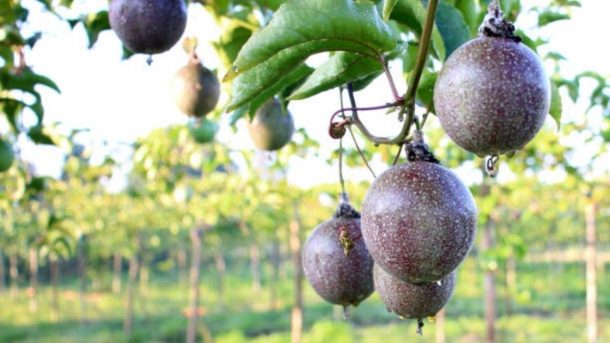
Spring is the best time to plant passion fruit vines. Before planting, prepare your soil by applying chicken manure and compost in an area one to two meters wide. Mulch around the plant base with sugarcane, bark chips, or pea straw, but do not let it form around the stem.