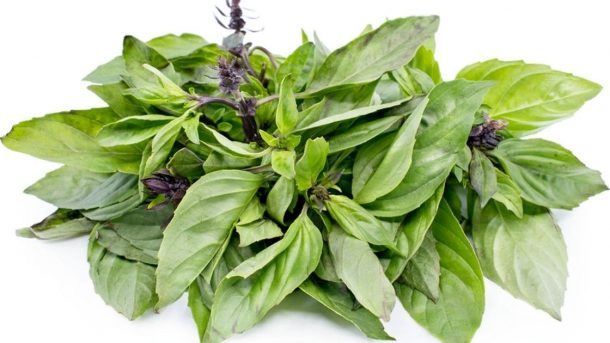
Thai Basil is the cultivar of Tulsi. Thai Basil is perennial, aromatic, and culinary type species of basil plants. The plant has green color pointed leaves, a reddish-purple color stem, and dark purple flowers.
ScientificFarmingWeb
What is Tukashmiya Tulsi and it belongs to which cultivar?
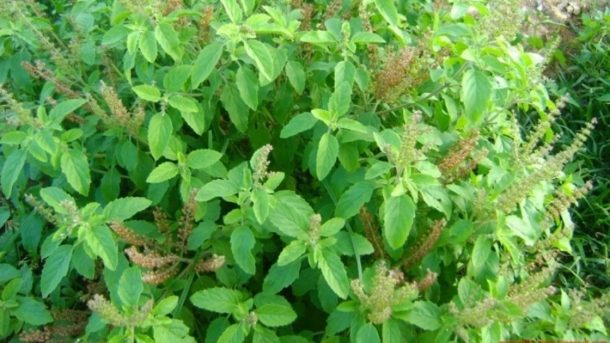
Tukashmiya Tulsi is the cultivar of Tulsi. It is found in the Western regions of India and Persia. It is used to cure throat disorders and acidity.
What is Kapoor Tulsi and it belongs to which cultivar?
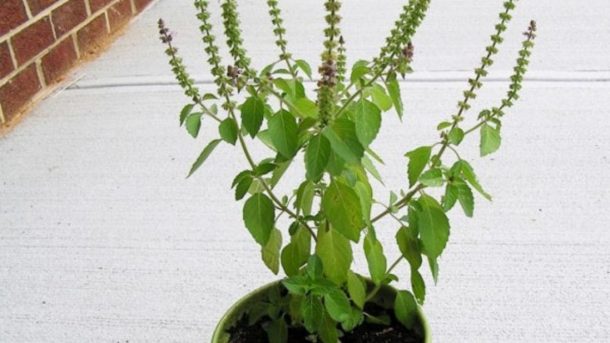
Kapoor Tulsi is the cultivar of Tulsi. Common to Indian households, this plant variety also does well in containers. Also, this variety is easy and quick to grow.
What is Sweet Basil and it belongs to which cultivar?
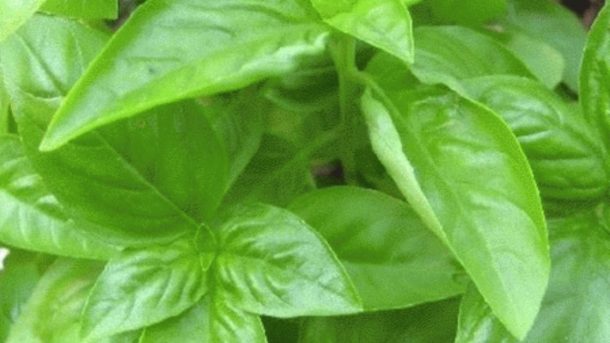
Sweet Basil is the cultivar of Tulsi. It is the most commonly grown perennial plant, aromatic and culinary type species of basil, the plant has bigger green color leaves and stems.
What is Krishna Tulsi and it belongs to which cultivar?
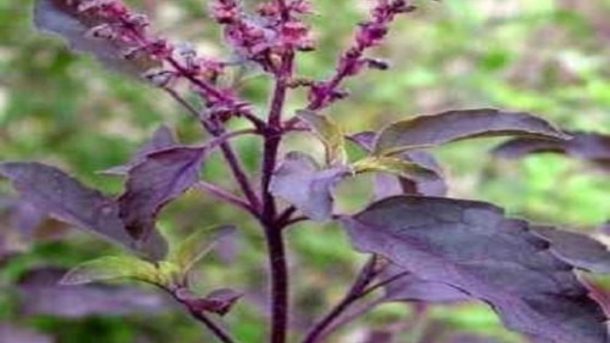
Krishna Tulsi is the cultivar of Tulsi. Krishna Tulsi is also called purple leaf basil. It is less common than the greener variety. It is useful for curing respiratory ailments, ear infections, and skin problems. It grows slower than other plant varieties, which may contribute to its spicy and pungent flavor. It is also less bitter and astringent than other cultivars. This plant variety has more medicinal uses than Rama Tulsi. The leaves and stems of this Tulsi are purple, hence the name. Also, the leaves are broad and carry a pungent aroma.
What is Rama Tulsi and it belongs to which cultivar?
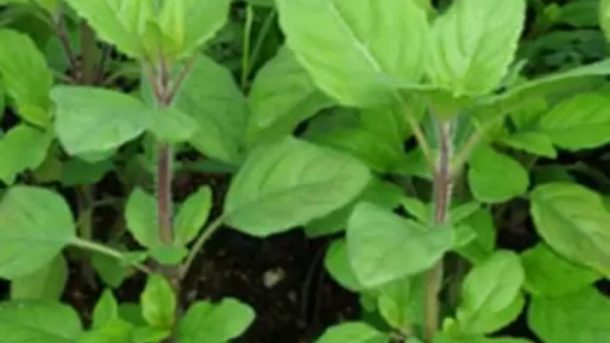
Rama Tulsi is the cultivar of Tulsi. Rama Tulsi is also called Bright Tulsi. It is a broader leaf variety and can be found in parts of China, Nepal, India, and Southern South America. Rama Tulsi is mainly used to promote healthy digestion and has a milder flavor. The leaves of these plants are light green in color and a little asymmetric. This plant variety grows well in pots and cultivated for its medicinal and religious purposes.
How Nursery Raising of Seedlings is done for Tulsi Farming?
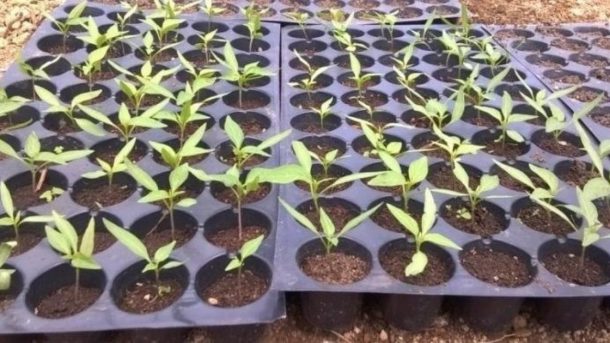
Prepare the nursery bed size of 4.5 m x 1.0 m x 0.2 m and apply Farm Yard Manure of 2 kg/square meter. Make sure the nursery bed/soil is covered with partial shade. Soil should be prepared to a fine tilth and worked up to 25 cm to 30 cm depth. As the basil seeds are very small in size, mix the seeds with sand in the ratio of 1:4. Then seeds should be sown in beds 8 weeks in advance of the monsoon. Generally, these seeds germinate in 1 week to 2 weeks and seedlings become ready for transplanting in the main field in about 6 to 7 weeks time @ 3 to 5 leaf stage.
How Post-harvest management is done in Growing Holy Basil?
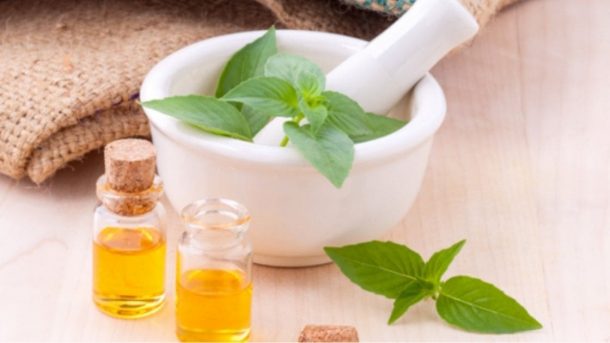
After cutting the crop, it has been allowed to wilt in the field for 4 hours for minimizing the moisture level in the leaves. Leaving the crop for a long time after harvest (more than 8 hours) may drastically reduce the quality of oil and yield. Steam distillation is used extract the oil and the oil is decanted and filtered. The distilled tulsi oil is treated with common salt @ 20 grams/litre oil to remove the moisture content. Usually, the filtered oil is stored in cool and dry place in glass bottles or clean containers.
What is the average yield of Holy Basil?
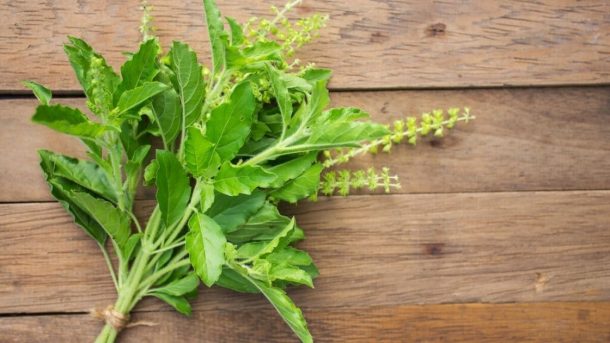
The yield of holy basil crop or Tulsi herbage depends on soil type, irrigation, climate and variety of basil along with cultivation management practices. On an average, one can obtain 9 to 10 tons of fresh herbage per acre in 2 to 3 harvests per year.
The essential tulsi oil yield varies with type, season and place of origin. You can recover the oil from 0.3 to 0.4%.
When and how harvesting is done in Holy Basil?
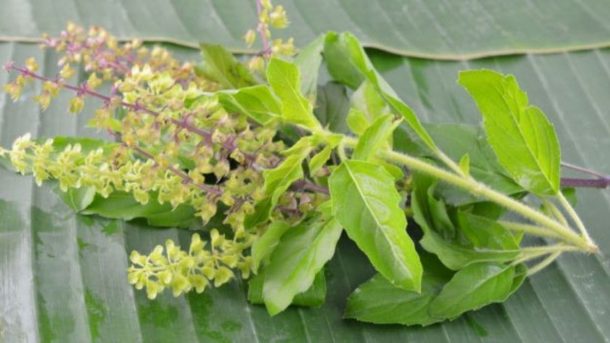
Basil crop will be ready for first harvest after 3 months of planting. Subsequent harvesting should be carried out for every 70 to 75 days interval. By using any sharp object, cut the crop 20 cm above the ground level. Avoid harvesting the crop in case there was rain on the previous day. Make sure to harvest at full-bloom stage for better yield of oil and quality. Harvest only on sunny days.