Agricultural schemes

What are the advancements in livestock genomics for breeding programs?

breeding programs

Breeding programs have been considerably impacted by improvements in livestock genomics, which have made the selection of desirable traits in animals more exact and effective. These significant developments in livestock genomics for breeding programs are listed below.

Genome sequencing: Livestock genomics has undergone a revolution as a result of the capacity to sequence an entire species’ genome. Reference genomes are now readily available, allowing researchers to find and investigate genetic differences linked to particular features, illnesses, or performance qualities.

Marker-Assisted Selection (MAS): MAS identifies genomic regions linked to desirable features by using genetic markers, such as single nucleotide polymorphisms (SNPs). The genetic potential of an animal can be predicted using these indicators, which can also help breeders make choices. By enabling the early selection of animals with desirable features, MAS quickens the breeding process by eliminating the need for time-consuming and expensive phenotypic tests.

genetic Selection: Genomic selection is a breeding technique that determines an animal’s breeding value using genetic data, often obtained by high-density genotyping or sequencing. The precision of forecasting an animal’s genetic merit for particular traits is increased through genomic selection by taking into account genetic markers dispersed across the genome. This strategy permits more rapid genetic advancement and effective management of breeding programs.
How is 5G technology being implemented in smart farming applications?

5G technology

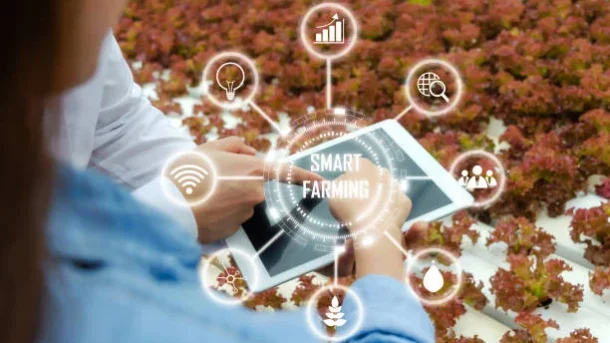
Smart farming apps are using 5G technology to revolutionise agricultural methods and make innovative technologies more widely adopted. The following are some significant applications of 5G in smart agriculture.

Enhanced Connectivity: 5G technology overcomes the drawbacks of conventional networks by offering incredibly fast and dependable connectivity. It makes it possible for seamless real-time data flow between numerous devices and sensors, which makes it easier to include numerous smart agricultural technologies. With this improved connectivity, the various parts of the ecosystem for smart farming can communicate and exchange data easily.

Integration of the Internet of Things (IoT): 5G enables the widespread use of IoT equipment in agriculture. Sensors, drones, robots, and autonomous machines are just a few examples of the gadgets that produce and communicate enormous amounts of data. Real-time monitoring, decision-making, and automation in agricultural operations are made possible by the high-speed and low-latency capabilities of 5G IoT devices.

Remote Monitoring and Control: 5G technology makes it possible to remotely monitor and manage machinery and systems used in agriculture. High-resolution cameras, drones, and other sensors can be used by farmers to remotely monitor their crops, livestock, and infrastructure. They have access to up-to-the-minute information on things like soil moisture, temperature, humidity, and animal health, which enables them to take prompt judgements and action. Precision farming techniques are made easier by remote control of machinery and equipment made possible by 5G connectivity.

How are AI-driven decision support systems used in agricultural planning?

AI-driven

AI-driven decision support systems are being used more and more in agricultural planning to boost productivity and decision-making. The following are some applications of AI-driven decision support systems in agricultural planning:

Yield Prediction and Optimisation: To anticipate agricultural yields, AI systems examine a variety of data sources, including historical yield data, weather patterns, soil conditions, and crop management techniques. These systems can continuously learn and improve their predictions over time by using machine learning techniques. These yield forecasts can help farmers make the best planting choices, choose the right crop kinds, allocate resources wisely, and manage crop rotations.

Crop Planning and Selection: AI-driven decision support systems help farmers choose the best crops for their unique conditions and objectives. To suggest the ideal crops, these algorithms take into account variables including soil type, climate, market demand, and profitability analyses. These systems assist farmers in making well-informed decisions about crop selection and planning by analysing enormous amounts of data and taking into account many aspects.

Irrigation Management: AI-based decision support systems that analyse data from a variety of sources, such as weather forecasts, soil moisture sensors, and crop water requirements, aid in the optimisation of irrigation practises. To guarantee that crops receive the proper amount of water at the proper time, these devices can offer real-time advice for irrigation scheduling. This raises crop output, reduces water waste, and increases water usage efficiency.

How is blockchain technology being used for fair trade in agriculture?

fair trade

Blockchain can be used to store and verify certifications for fair trade, organic farming, sustainability standards, and other morally upstanding practises. It is simpler to verify the validity and compliance of items by digitising and safely preserving certification data on the blockchain, which lowers the risk of fraud and misrepresentation.

Fair Pricing and Direct Transactions: Blockchain technology can let farmers and buyers conduct direct transactions, doing away with the need for middlemen and enabling direct transactions. Self-executing contracts known as “smart contracts,” which are kept on the blockchain, can automate and enforce agreed-upon terms to guarantee that farmers are fairly compensated for their output.

Auditing and Dispute Resolution: Blockchain-based technologies can support effective and transparent dispute resolution processes. The permanent records on the blockchain and smart contracts can assist automate and streamline the dispute resolution process, assuring fair treatment for all parties. Additionally, blockchain-based auditing can facilitate effective supply chain practises monitoring and offer verifiable proof of conformity with fair trade rules.

Fair trade projects in agriculture can improve transparency, traceability, and accountability by using blockchain technology, encouraging moral and sustainable practises. Blockchain fosters fair pricing for farmers, gives them the ability to make educated decisions, and opens up potential for financial inclusion and direct commerce. In the end, blockchain technology promotes trust and helps to establish a more fair and sustainable agriculture supply chain.

What are the benefits of using controlled environment agriculture?

controlled

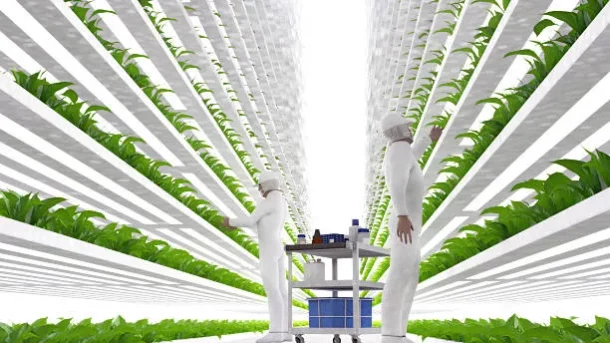
Growing crops in an enclosed space where environmental factors like temperature, humidity, light, and CO2 levels are strictly regulated, such as greenhouses or vertical farms, is known as controlled environment agriculture (CEA). The following are some advantages of employing agriculture in a controlled environment:

Crops may be produced year-round under CEA, regardless of seasonal fluctuations and environmental conditions. Farmers can lengthen the growing season, grow crops in areas with difficult climates, and guarantee a steady and dependable supply of fresh produce all year long by managing the environment.

Increased Crop Yields: Crops grow best in the regulated environment of the CEA, which increases crop yields. Temperature, light intensity, humidity, and CO2 levels may all be precisely adjusted to meet the unique requirements of each crop, resulting in a faster and more vigorous rate of growth. Furthermore, the absence of illnesses and pests that are typically associated with open-field agriculture helps to protect crops, further increasing yields.

Water Conservation: CEA systems are made to use very little water. The use of water is reduced using methods like hydroponics and aeroponics, which are frequently utilised in CEA. These methods provide precise amounts of water right to the roots of plants. Additionally, compared to conventional irrigation methods, closed-loop irrigation systems in CEA reduce water loss through evaporation and enable water recycling.

How is satellite navigation technology used in precision agriculture?

satellite

Field Mapping and Surveying: Farmers can precisely map and survey their fields using Global navigation satellite system (GNSS) receivers installed on farm equipment or portable devices. Farmers can detect areas with changes in soil fertility or topography, construct accurate field border maps, and create digital field maps for precision management by gathering exact location data.

Precision Guidance and Auto-Steering: With the help of Global navigation satellite system (GNSS) based guidance systems, farmers may precisely direct their agricultural equipment along pre-determined courses throughout the fields. This minimises input wastage, guarantees precise row spacing, prevents overlaps or gaps during sowing, spraying, or fertilising activities. Agricultural equipment’s location and direction can be managed automatically by auto-steering systems, allowing farmers to concentrate on other duties while maintaining accurate navigation.

Yield Monitoring and Mapping: As harvesting equipment moves through the field, GNSS-enabled yield monitoring devices gather real-time data on crop production. Farmers can produce yield maps that display the spatial diversity in crop performance by fusing yield data with exact location data. These maps aid in the analysis of yield patterns over time, the identification of locations with high or low yield, and the formulation of site-specific management strategies.

Global navigation satellite system (GNSS) technology can be utilised to improve variable rate irrigation techniques in precision agriculture. Aerial photography or soil moisture sensors combined with GNSS positioning can be used by farmers to identify differing irrigation needs for different parts of the field. This makes it possible to use variable rate irrigation, in which water is dispersed precisely in response to crop water requirements, soil moisture levels, and topographic factors.

 How is data-driven decision making transforming agriculture?

data-driven

Precision Agriculture: Data-driven decision making enables farmers to use practises that allow them to target their activities and inputs to certain fields. Farmers may administer inputs (such as fertilisers, water, and pesticides) precisely where and when they are required by gathering and analysing data on soil characteristics, moisture levels, nutrient content, and crop health. This optimisation improves overall efficiency while minimising resource waste and environmental effect.

Crop management: By offering insights into crop health, growth trends, and prospective yield, data-driven decision making promotes improved crop management. Farmers can monitor crop conditions, spot early indications of illnesses or pest infestations, and spot nutrient deficits using data obtained from sensors, drones, satellite imagery, and field observations. Farmers can use this knowledge to implement timely interventions.

Farm Management and Automation: Effective farm management and automation are supported by data-driven decision making. Farmers can monitor and analyse a variety of farm operations, such as equipment usage, labour productivity, financial performance, and inventory management, using data analytics and farm management software. Farmers can detect inefficiencies, streamline processes, and make well-informed decisions about investment, expansion, or diversification with the assistance of these insights.

Continuous Learning and Improvement: Data-driven decision making encourages an agricultural culture of ongoing learning and development. Farmers can find trends, patterns, and best practises that produce better results by collecting and analysing data over time. Farmers and other interested parties can exchange this knowledge, fostering creativity, learning as a group, and the adoption of improved farming practises and technologies.

What are the latest advancements in agricultural drones and their applications?

agricultural drones

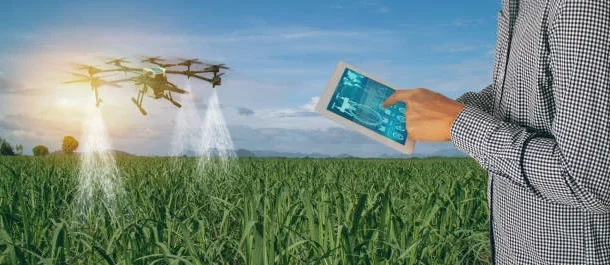
Longer flight periods, bigger payloads, and better stability and manoeuvrability are just a few of the improved flight capabilities that contemporary agricultural drones have. These developments enable drones to operate in hazardous environments, cover wider regions, and transport more advanced sensors and equipment.

High-Resolution Imaging: Drones used for agriculture are outfitted with high-resolution cameras and sensors that can take precise aerial photos of crop areas. The health, growth, and stress levels of plants can all be inferred from this imagery. Computer vision and machine learning algorithms can process the photographs to provide maps and useful information for farmers.

Agricultural drones are now equipped with multispectral and hyperspectral sensors that take pictures in a variety of spectral bands. Indicators of crop health like chlorophyll content, water stress, nutritional deficiency, and pest and disease infestations can all be found and measured by these sensors. Using multispectral and hyperspectral imaging, farmers may spot crop health problems early on and take action, resulting in more focused interventions and better yield results.

Drones using thermal cameras can take thermal images, which can be used to detect temperature differences across a field. For spotting irrigation problems, determining plant stress, finding water leaks, and keeping tabs on livestock health, thermal imaging is especially helpful. Farmers can improve irrigation techniques, deal with water stress, and spot anomalies in animal behaviour by identifying problem regions.

 What is the role of data analytics in optimizing agricultural production?

data analytics

Data-driven decision-making: Data analytics enables farmers to make well-informed decisions based on precise and current data. Farmers can learn a lot about crop performance, resource use, and market demand by analysing a variety of data sources, including weather patterns, soil conditions, crop health, and market trends. With the use of these insights, they are able to decide on the type of crop to grow, the timing of planting and harvesting, and how to manage irrigation and fertiliser applications.

Precision agriculture and resource optimisation rely on applying the appropriate inputs at the right time and in the right amount to maximise resource utilisation and reduce waste. Precision agriculture is made possible by data analytics. Farmers can accurately control the application of fertiliser, pesticides, and irrigation by analysing data from sensors, satellite imagery, and historical records.Data analytics can be used to create predictive models that project agricultural yields based on historical data, current circumstances, and numerous affecting factors.

Predictive analytics algorithms can estimate projected yields with a certain level of accuracy by examining weather patterns, soil properties, crop genetics, and management techniques. Farmers can use this information to organise their activities, determine the supply of the market, manage storage and logistics, and make wise economic decisions.

How is nanotechnology being applied in agriculture?

nanotechnology

Nanotechnology is utilised to create formulations of insecticides and fertilisers that are applied at the nanoscale. Nanopesticides deliver active substances with precision, increasing their efficacy and minimising their negative effects on the environment. Nanofertilizers are used to fertilise plants more effectively, reducing nutrient loss and enhancing nutrient uptake. These nanoscale compositions can improve fertiliser management and crop protection while using fewer pesticides overall.

Controlled-Release Systems: The creation of controlled-release systems for the delivery of fertilisers, insecticides, and other agricultural inputs is made possible by nanotechnology. To ensure a prolonged and regulated release of active compounds, substances can be constructed into nanocarriers or nanocapsules that release them gradually over time. Because of the more accurate application and decreased treatment frequency made possible by this technique, resources are used more effectively, and environmental pollution is decreased.

Crop Enhancement: Nanotechnology is used to enhance the performance and improve the properties of crops. To improve seed germination, root growth, and overall plant growth, nanomaterials can be added to plant growth regulators or seed treatments, such as nanoparticles or nanoclays. Additionally, by enhancing the bioactivity and bioavailability of bioactive substances, these nanomaterials can support plant health and stress resistance.

Nanosensors are used in agriculture to monitor a number of characteristics, such as soil moisture, nutrient levels, pH, and pest infestations. These sensors offer real-time information on the state of the environment and the health of the plants, enabling accurate monitoring and decision-making. IoT devices that use nanosensors can remotely monitor and manage agricultural operations using data.