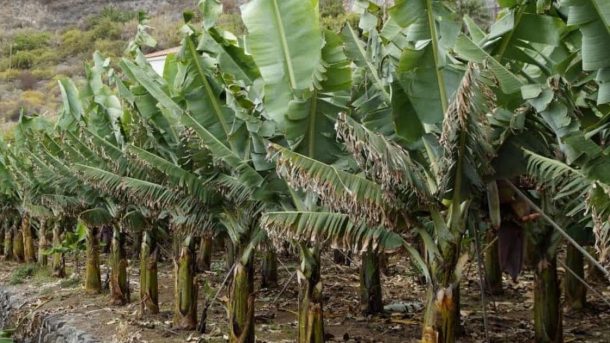
Pruning of surplus leaves helps to reduce the disease from spreading through old leaves. Leaf pruning can change light and temperature factors of microclimate. Pruning of leaves before bunch initiation delays flowering and harvesting cycle. For maximum yields a minimum of 12 leaves are to be retained.
farming practices
Why Desuckering is done in banana?
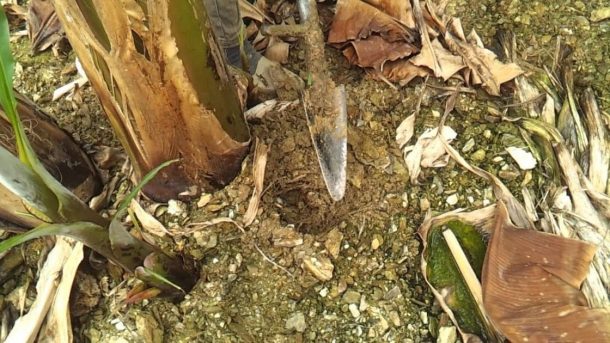
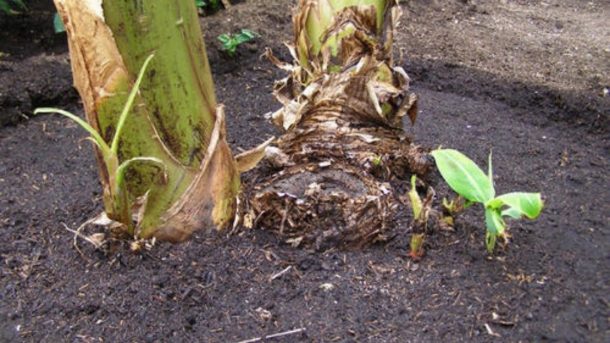
During the life cycle, banana produces number of suckers from the underground stem. If all these suckers are allowed to grow, they grow at the expense of the growth of the main plant and hence the growth of the sucker should be discouraged. Removal of unwanted suckers is one of the most critical operations in banana cultivation and is known as desuckering. Such suckers are removed either by cutting them off or the heart may be destroyed without detaching the sucker from the parent plant. Removal of suckers with a portion of corm at an interval of 5-6 weeks hastened shooting and increases the yield.
How Suckers Disinfection is done through Hot water Treatment?
In the absence of Tissue Culture banana seedlings, sword suckers can be used as the propagation material. Sword suckers are shoots with narrow leaves with height of about 1 m and 15 cm diameter at the base. Sword suckers are sourced from existing banana orchards therefore it is necessary to treat the suckers with hot water to eliminate nematodes & banana weevils. This process involves the Trimming of all the roots, cutting off 1 cm of tissue around the corm until you get clean white tissue, prepare hot water, and immerse the trimmed corm in the hot water bath at 50 – 55 0C for 20 minutes.
How pollination occurs in Mango?
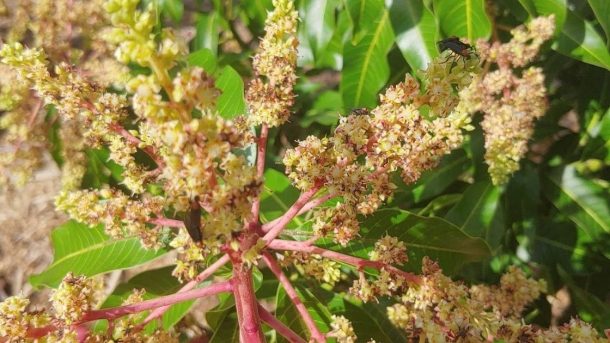
Wind and insects such as wasps, ants, flies, and bees are the main pollinators in mango. Temperatures below 10°C (50°F) during flowering are not conducive to production of viable pollen, and temperatures below 15°Cduring pollination can prevent effective pollen tube growth and fertilization of the ovary. Pollen is generally compatible within and between varieties.
What is the yield of snake gourd per hectare?
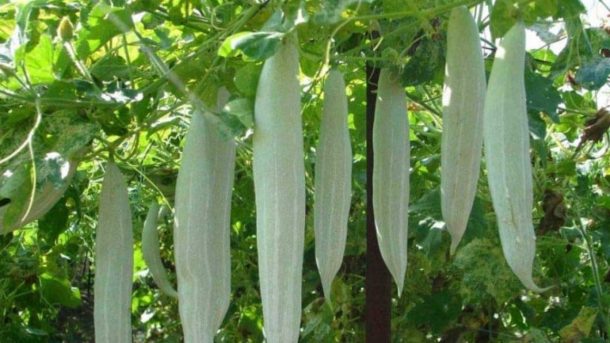
A single plant of traditional cultivar yields about 6-10 fruits and of improved cultivar up to 50 fruits. Single fruit weight varies from 300 g to 1.0 kg and average fruit yield is 10 to 15 t/ha, however, the yield as high as 50 t/ha may be obtained with good agronomic practices.
How training of vines is carried out in snake gourd?
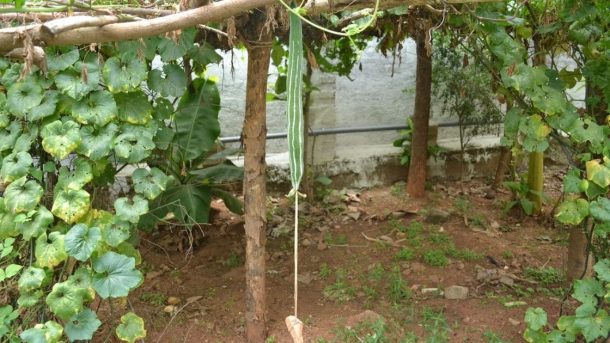
When, Snake gourd fruits are very long, slender, and soft, thus, training is an essential practice to allow the fruits to grow downward and to keep them straight. Vines are trailed on a high trellis to avoid fruit twisting or coiling. The plant training over bower system is considered the best for this crop. Overhead trellises are made at about 2.0 m height. A small weight can be tied to the bottom end of developing fruit to make them grow straight.
How plant population density can be maintained in snake gourd?
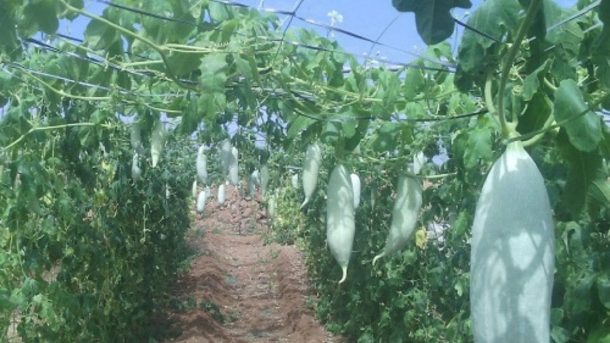
In snake gourd, population density varies from 3,500 to 10,000 plants per hectare, depending upon varieties and methods of cultivation. Adopting suitable training practices about 8,000- 10,000 plants can be accommodated in area of one hectare.
At which time snake gourd is sown?
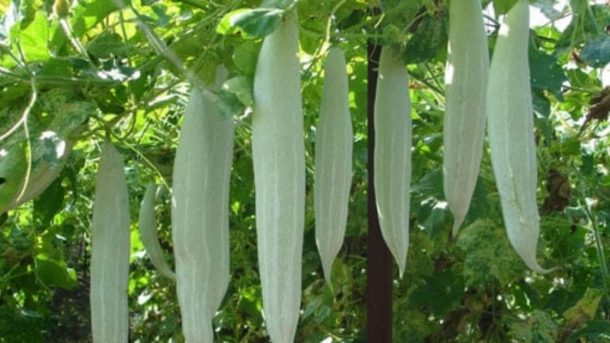
In south India, it is grown during both spring-summer and rainy season. The spring-summer crop is sown in December-January and rainy season crop in June-July. In northern India, generally one crop is taken during rainy season, which is sown in June-July. It is also planted in October- November where winters are very mild.
How grafting is done in Aonla cultivation?
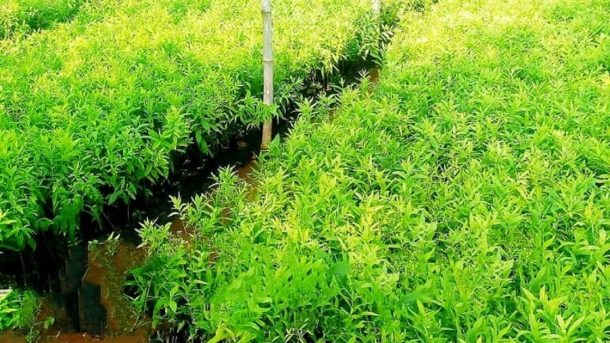
Grafting is also one of the methods for raising good propagules. Soft wood grafting has been attempted with 70 per cent success at the site of terminal shoot of the rootstock raised in situ. It would be advisable to raise seedling rootstocks in situ and graft them with superior types of scions particularly in dry areas where mortality of budded plants is usually high. Besides, veneer and cleft grafting has also been attempted successfully.
How budding is done in Amla cultivation?
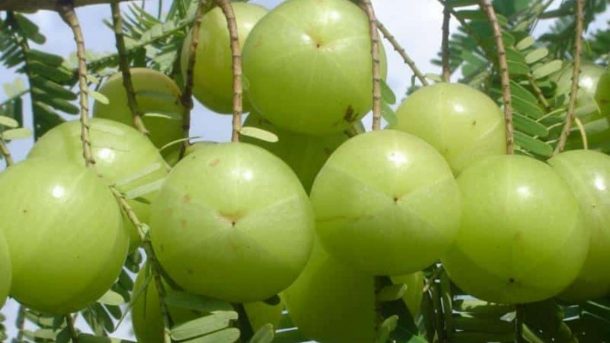
Of various methods of vegetative propagation, budding has been found to be most practical. Shield budding and patch budding are the commercial methods of aonla propagation. One year old seedlings with a girth of about 1 cm should be shield budded in early July with healthy and plump buds from new growth. Shield budding gives a success of 70-80 per cent. Higher percentage of bud-take has been recorded with patch methods under Jammu conditions.