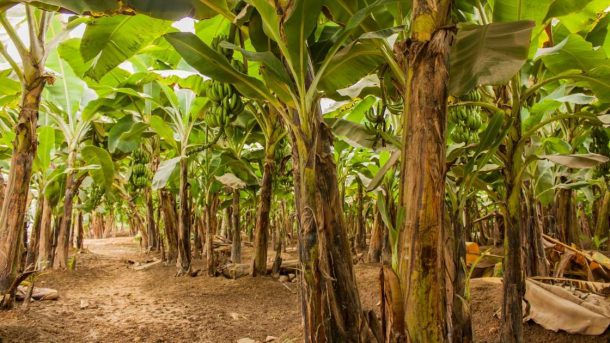
Propping can simply be defined as a cultural operation of plantain / banana plant which give additional support of the plant , which bear heavy load during bunching (flower period).Plants are generally weak during the dry season and strong winds, nematodes and stem borers also increase the rate of loss. For these reasons, bearing plants always need support from 1 or 2 wooden props, usually made of bamboo. At the time of bunch emergence , pseudo-stem requires support from props. Tall varieties which produce heavy bunches need propping. Bamboo or casuarinas poles which have effective life of 3-4 years are commonly used for propping. Coir or polythene wire can also be used for propping.
farming practices
How de-suckering is practiced in banana?
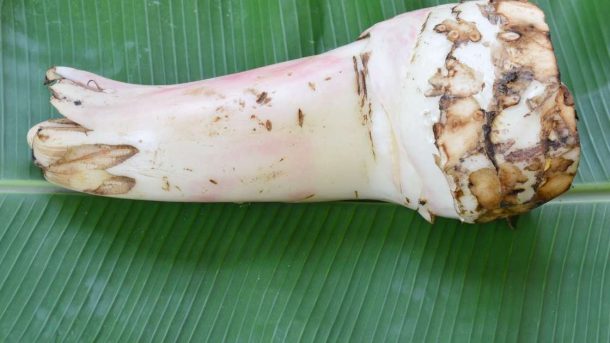
De-suckering is removal of surplus and unwanted suckers from banana plant. Suckers are removed from the mother either by cutting the sucker at ground level or by destroying the heart of the suckers without detaching the sucker from the plant. De-suckering can also achieved by pouring kerosene oil into the heart of the sucker. Under garden land and wet land cultivation, de-suckering is done at monthly intervals. In hill banana ,two bearing plants and two suckers per clump are considered as the optimum condition and the rest are de-suckered. Only one sucker is retained per plant and set for ratooning.
Why de-suckering is practiced in banana?
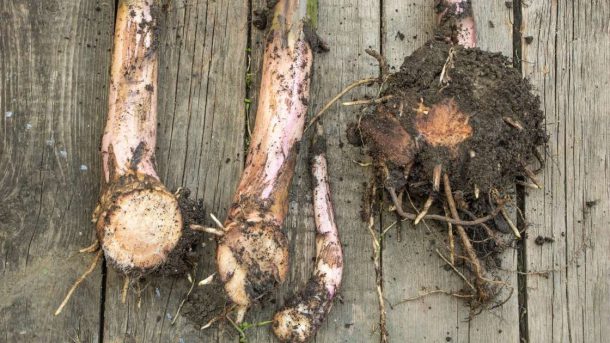
De-suckering is the process of removal of suckers. A number of suckers from the underground stem are produced during the life cycle of banana resulting in intra-mat competition through creation of multiple sinks and intensification of root and rhizome competition for space, water and nutrients. Therefore, growth of excess suckers should be discouraged before they become too large and unmanageable to interfere with growth of the parent plant.