Pests

How bark eating caterpillar causes damage in Aonla and how it can be managed?

causes damage

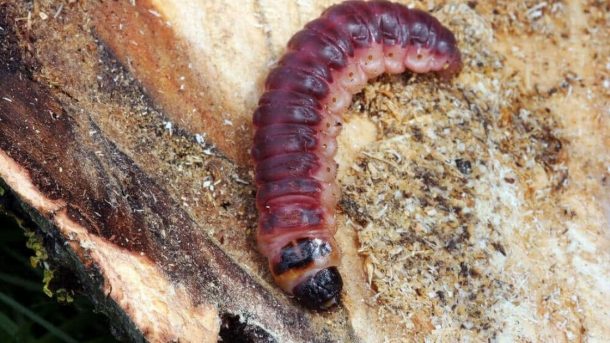
It affects the main trunk of the plant and makes tunnels. Feed on the bark under silken ribbon-shaped webs. It causes damage up to 80 percent.

It can be managed through clean cultivation, avoiding the overcrowding of branches. Spraying 0.03% endrin or furadan or injecting kerosene oil or petrol in the holes and plugging them with cotton or wet soil during September-October or February-March.
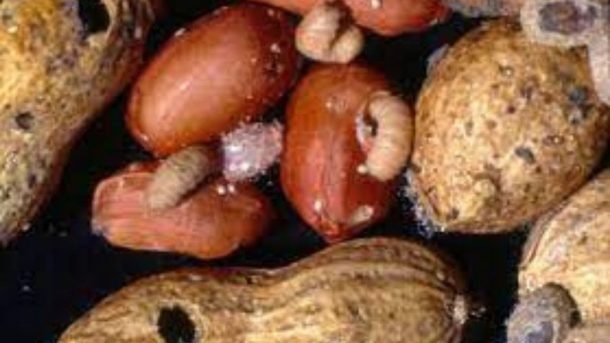
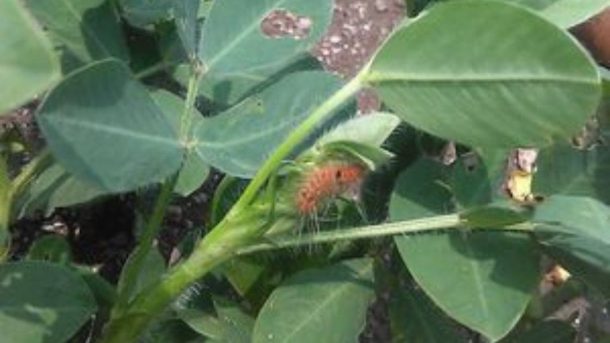
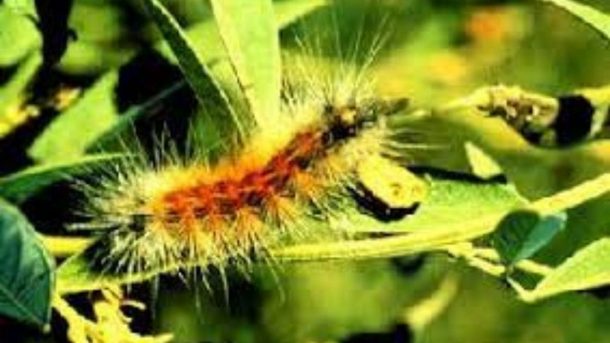
How red hairy caterpillar is managed in Groundnut?

caterpillar

Pre-monsoon deep ploughing (two/three times) will expose the hibernating pupae to sunlight and predatory birds.  Removal and destruction of alternate wild hosts which harbour the hairy caterpillars.  Use trap crops around main crop E.g.: Cowpea.  Monitor the emergence of adult moths through light trap. Organize bonfires on community basis from 7.30 PM to 11.0 PM to attract the newly emerging moths for 3 or 4 succeeding days when good showers are received.  Collect and destroy egg masses and early instars larvae. Dust Quinalphos or Carbaryl @ 25 kg /ha to control early instars of the caterpillar. To control grown up larvae, spray Dimethoate @ 2.0 ml or Monocrotophos1.6 ml/l of water. Trap and kill the migrating larvae in deep cut straight trenches by dusting Methyl parathion 2% in the trench around the field.

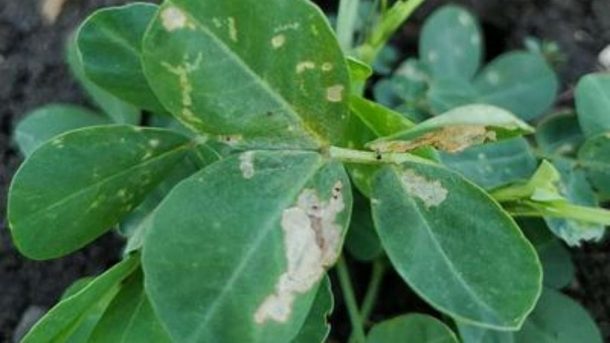
What are the damage symptoms of leaf miner in groundnut?

leaf miner

The leaf miner is also one of the major pests of importance on groundnut crop all over India especially when raised under rainfed conditions. Bunch variety is generally severely infested. The larva mines into tender leaflets or it webs together adjacent leaflets and feeds on the tissue. The leaflets get distorted and due to feeding get dried up in course of time. In a very severely infested crop, the whole field presents a burnt-up appearance and the small adults could be seen flying in large numbers when one walks through the crop. The loss in yield of pods is also considerable.

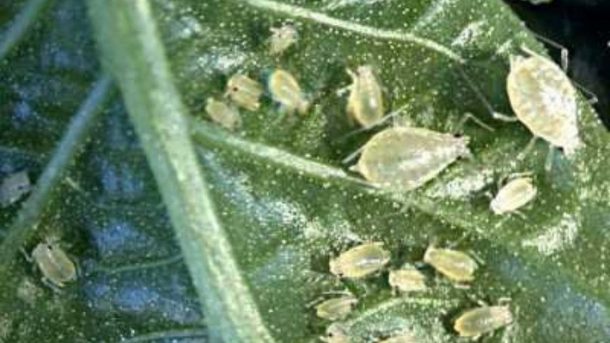
What are the damage symptoms of groundnut aphid?

aphid

This is one of the most serious pests of groundnut. The nymphs and adults suck the sap, usually from the underside of leaves. Infestation in the early stages causes stunting of the plants as well as reducing their vigour.  When the attack occurs at the time of flowering and pod formation, the yield is reduced considerably. Infestation on the groundnut crop usually occurs 4-6 weeks after sowing. The aphid is also vector of rosette disease of groundnut.

How nematode causes damage to plum crop and which rootstocks are resistant to it?

nematode

Nematode namely Meloidogyne incognita infestation leads to malfunctioning of the roots, as a result of which the above ground parts of plants show stunting and yellowing of leaves. Proper rootstock selection can reduce the damage caused by root knot nematode. Marianna 2624, Myrobalan 29C, and Nemaguard are resistant rootstock. Carbofuran granules are also applied (100–300 g/tree) after the harvest of the crop.

What are the damage symptoms of San Jose scale and how it can be controlled?

San Jose

The adults feed on sap from limbs, twigs, and fruits. Small greyish specks appear on the bark covered with a grey layer of overlapping scales that appear as if they were sprayed with wood ash. Dead leaves adhering to fruit spurs during the dormant season indicate the presence of the San Jose scale. Spraying of universal oil during the spring @ 10 litres in 490 litres of water during the dormant season can give effective control. Insecticides such as chlorpyriphos (0.4%) and dimethoate (0.03%) can be sprayed to kill the crawlers during May.

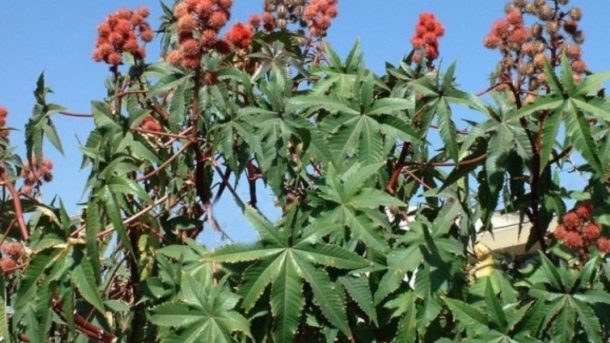
What are the different varieties of Castor?

Castor

The varieties of castor change depend on the branching habits of the plant, stem colour, the nature of capsules like smooth or shiny and size of the seed.

High yielding castor varieties are NPH-1 (Aruna), GAUCH-4 and TMVCH.

Newly released Castor hybrid varieties are cultivation in Tamil Nadu is TMVCH by Oilseeds Research Station of the Tamil Nadu Agricultural University (TNAU) Tindivanam. This hybrid matures in 160 to 170 days. Its seeds have 51.7% oil. It is susceptible to semi looper pest and resistant to wilt and grey mold.

How Pest, Weed and fertility management is done in Conservation agriculture?

fertility

In any agricultural system pest, weed and fertility management are critical issues. Any limitation related to pest, weed and soil fertility should be assessed and addressed before implementing conservation agriculture.

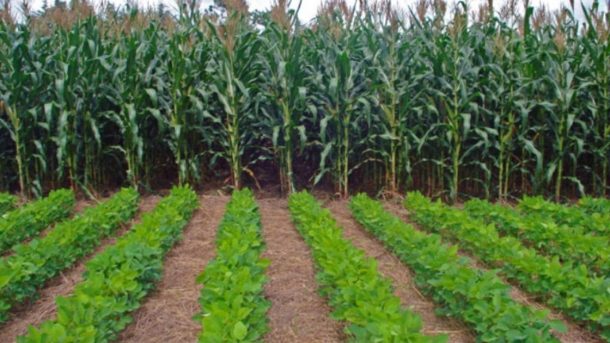
In case of a lack of resources, some solutions have been found by farmers. They are weed control, crop rotations, use of manure and other crops for soil fertility etc. Combining conservation with organic agriculture has been adopted by small scale farmers.