Soil

What are the benefits of using biochar in soil?

biochar in soil

Numerous advantages for soil health, crop productivity, and environmental sustainability come from using biochar in soil amendment. Some of the main advantages of applying biochar to soil are as follows:

Increased availability and retention of nutrients are two ways that biochar improves soil fertility. Because of the high cation exchange capacity (CEC) of its porous structure, it can draw in and store nutrients like nitrogen, phosphorus, and potassium. This encourages nitrogen retention in the root zone, which reduces nutrient leaching and increases nutrient availability to plants over time.

Enhanced soil water-holding capacity is made possible by biochar’s porous structure. It can hold onto moisture and release it gradually to plant roots, lowering the requirement for irrigation and increasing the amount of water accessible to plants during dry spells. 
Numerous advantages for soil health, crop productivity, and environmental sustainability come from using biochar as a soil amendment. Some of the main advantages of applying biochar to soil are as follows:

Increased availability and retention of nutrients are two ways that biochar improves soil fertility. Because of the high cation exchange capacity (CEC) of its porous structure, it can draw in and store nutrients like nitrogen, phosphorus, and potassium. This encourages nitrogen retention in the root zone, which reduces nutrient leaching and increases nutrient availability to plants over time.

Enhanced soil water-holding capacity is made possible by biochar’s porous structure. It can hold onto moisture and release it gradually to plant roots, lowering the requirement for irrigation and increasing the amount of water accessible to plants during dry spells. 
 What is biochar and how is it used in agriculture?

biochar

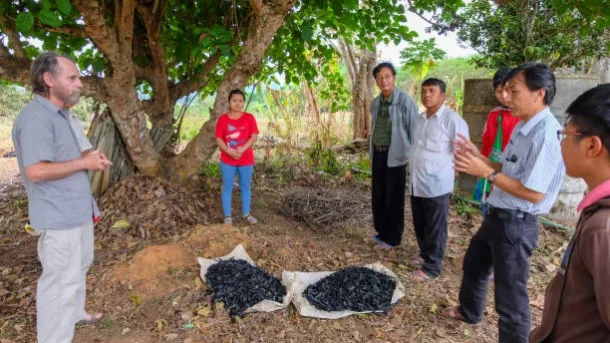
By heating biomass (such as wood, agricultural waste, or organic waste) in a low-oxygen environment via a technique known as pyrolysis, a porous, carbon-rich substance known as biochar is created. The biomass is transformed into a stable form of charcoal by this process. Both horticulture and agriculture can benefit from the addition of biochar to the soil.

Biochar is largely employed in agriculture due to its beneficial effects on the fertility and health of the soil. Using biochar in agriculture looks like this:

Biochar is used as a soil amendment to enhance the physical, chemical, and biological qualities of the soil. It improves the availability of nutrients, water retention, and soil structure. Biochar’s porous structure serves as a habitat for helpful microbes, enhancing soil fertility and fostering soil biodiversity.

Retention of nutrients: Due to its high cation exchange capacity (CEC), biochar is able to draw in and hold onto nutrients, avoiding leaching and nutrient runoff. As a result, agricultural systems may require less fertilizer and use nutrients more effectively.

Water management: Biochar’s has a high water-holding capacity, which enables it to keep moisture in the soil and lower evaporation rates. This can be especially helpful in desert or drought-prone areas since it promotes water conservation and increases plant survival during dry spells.

Regulation of pH: Biochar functions as a pH regulator by buffering the pH of the soil. It can assist in neutralizing acidic or alkaline soils, improving the environment for plant growth and nutrient availability.

How can IoT improve farm management and efficiency?

farm management

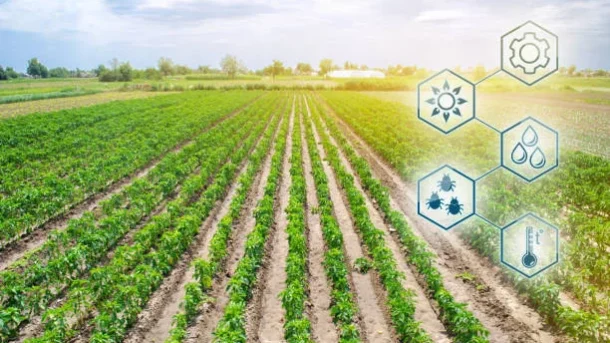
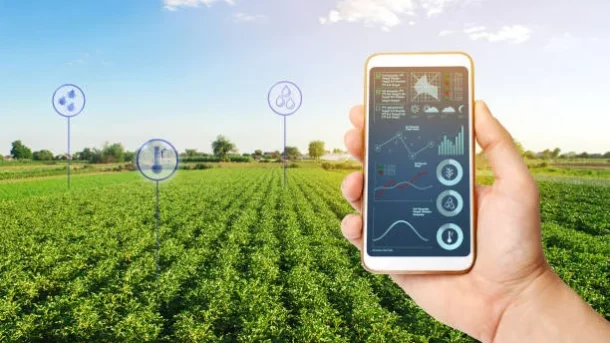
The Internet of Things (IoT), which offers real-time data, automation, and remote monitoring capabilities, has the potential to greatly increase farm management and efficiency. Several methods that IoT can improve agricultural management are listed below:

Precision farming: Real-time data collection on soil moisture, temperature, humidity, and nutrient levels is possible using IoT sensors and devices. To make irrigation schedules, nutrient treatments, and crop management procedures more effective, this data can be examined. With the help of precision agriculture, farmers can make informed decisions that maximize crop yields and ensure that resources are used effectively.

Remote management: Farmers can remotely monitor and manage their farms thanks to IoT. Farmers may obtain data regarding environmental conditions, crop health, and livestock status at any time, anywhere, thanks to connected equipment and sensors. 

Systems for automation and control: IoT technology makes it possible to automate and farm management a variety of farm operations. Connected devices can control greenhouse settings, irrigation systems, lighting cycles, and livestock feeding systems. Automation lessens the need for manual labor, boosts operational effectiveness, and provides precise and constant management of crucial activities.

Management of livestock: IoT devices can be used to track the whereabouts of livestock, track their health, and offer real-time information on their activity. Wearable sensors and other connected devices can track eating habits, look for disease symptoms, and offer information on the general health of the animals. Farmers may improve livestock management techniques, identify health issues early, and optimize feeding regimens with the use of this information.

How does CEA optimize resource utilization?

resource

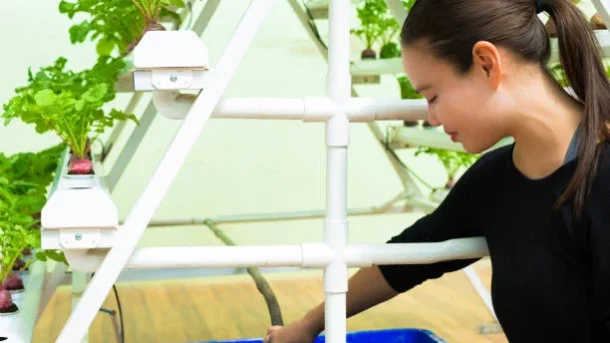
Controlled environment agriculture (CEA) effectively manages inputs like water, energy, nutrients, and space to maximize resource usage. Here is how CEA systems optimize resource:

Efficiency in terms of water use: Compared to conventional agriculture, CEA systems use less water. Water is reused within the system through technologies like hydroponics and recirculating irrigation systems, lowering overall demand. Recirculating nutrient-rich water reduces surplus discharge. Furthermore, CEA permits precision irrigation management, providing water to the root zone directly, avoiding evaporation, and eliminating water waste.

Energy effectiveness: CEA systems put an emphasis on energy-efficient procedures to lower energy usage. It is usual to utilize LED lighting because it uses the least amount of energy while yet giving the right kind of light spectrum for plant growth. In order to maximize energy efficiency, climate control systems use insulation.

Management of nutrients: CEA systems, particularly hydroponic and aquaponic ones, maximize nutrient uptake by giving plants precisely the right amounts of nutrients. Plants are able to efficiently absorb the necessary nutrients thanks to the careful formulation of nutrient solutions and their delivery to the roots. This targeted distribution reduces nutrient loss and leaching, improves nutrient uptake, and has a smaller negative impact on the environment.

Space usage: CEA systems maximize space utilization, especially in cities or other places where there is a shortage of available land. High plant densities are possible with vertical farming, which grows plants in stacked layers or shelves to make efficient use of vertical space. By removing the need for soil and allowing plants to grow in a smaller area, hydroponic and aeroponic systems maximize available space. Increased space efficiency allows CEA systems to produce more food in a less amount of space.

What are the advantages of aeroponic systems?

systems

When compared to alternative growing techniques, aeroponic systems have a number of advantages that make them a desirable option in some situations. Some of the major benefits of aeroponic systems include the following:

Effective use of water: One of the most water-efficient growing techniques is aeroponics. Aeroponic systems distribute water directly to the plant roots in a highly targeted manner using a thin mist or spray. With this focused application, less water is wasted and water usage can be precisely managed. Aeroponics may conserve a lot of water as compared to hydroponics or conventional soil-based farming.

Maximum oxygen availability: Aeroponics suspends the roots in the air, which supplies them with a constant flow of oxygen. This encourages strong root growth and effective nutrient uptake.

Improved nutrient uptake: In aeroponics, the roots may acquire nutrients more quickly thanks to the misting or spraying of nutrient-rich water. Better interaction between the nutrient solution and the root surface is made possible by the small droplets penetrating the root zone. In comparison to other growing techniques, this makes it easier for nutrients to be absorbed quickly by plants. Aeroponic systems can therefore encourage quicker development and greater nutrient uptake effectiveness.

Disease risk is decreased thanks to aeroponic systems, which are more resistant to soil-borne infections and illnesses. Having no direct touch with soil or a growing media, the roots reduce the possibility of pathogen spread. Aeroponics’ intermittent misting or spraying of the nutrient solution also prevents pathogen growth and contributes to the development of an adverse environment.

How does aeroponics differ from hydroponics?

aeroponics

Modern agriculture uses both soilless growth techniques, hydroponics and aeroponics, but they differ in how they supply water and nutrients to plants. The following are the primary distinctions between hydroponics and aeroponics:

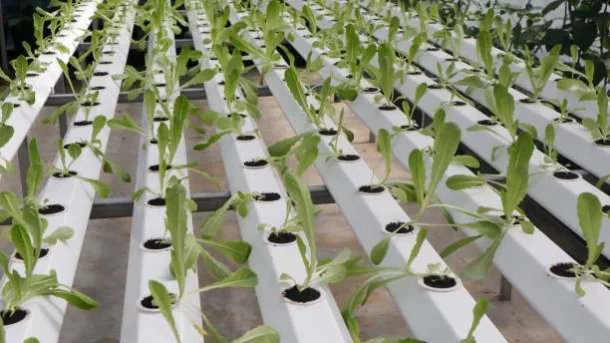
Water and fertilizer delivery: In hydroponics, plants are grown either directly in a nutrient-rich water solution or in a soilless media (such as perlite, coco coir, or rockwool). The nutrition solution is continuously submerged or partially submerged over the roots, supplying them with water and vital nutrients.

Plants are grown with aeroponics while having their roots floating in the air. Instead of being submerged in a nutrient solution, the roots are periodically sprayed or misted with nutrient-rich water using specialist misting or fogging devices. 

Air gaps in the growing media or an oxygenating system are two common ways that hydroponic systems deliver a steady flow of oxygen to the plant roots. The constant interaction of the roots with the nutrient solution in hydroponics, however, can reduce the amount of oxygen available.

The roots of aeroponic systems are very air-exposed. Due to the roots’ direct access to oxygen in the surrounding air, oxygen availability is maximized. In aeroponics, the nutrition solution is intermittently misted or sprayed, ensuring that the roots obtain water and nutrients while still having plenty of access to oxygen.

Environment and growth of the roots: In hydroponics, the roots are frequently formed and fully or partially submerged in the nutrient solution or growing media.

 What are the advantages of hydroponic farming?

farming

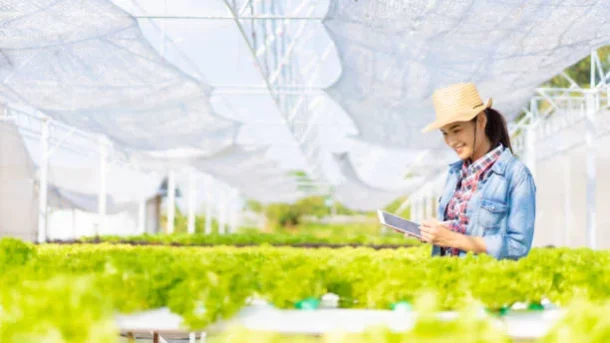
There are a number of benefits to hydroponic farming over conventional soil-based agriculture. The following are some major benefits of hydroponic farming:

Effective use of water: Compared to conventional soil-based agriculture, hydroponic systems significantly use less water because water is circulated inside the system. Because the water is fed directly to the plant roots, hydroponics can use up to 90% less water by reducing evaporation and runoff. Hydroponics’ regulated atmosphere also stops water from being wasted through overwatering or ineffective irrigation techniques.

Control of nutrients: In hydroponic farming, vital nutrients are dissolved in water and delivered right to the roots of the plants. This makes it possible to precisely manage the content, concentration, and pH levels of the nutrients, ensuring that plants get the right amount of nutrients for growth. 

Increased crop yields: Plants thrive under hydroponic systems’ perfect growing conditions. In comparison to conventional agriculture, plants can grow more quickly and create better yields with the proper ratio of nutrients, water, and sunshine. Hydroponics’ carefully regulated environment rids plants of soil-borne pathogens and pests, lowering crop losses and enabling them to grow to their full potential.

Hydroponic systems are created to make the most of available space. In contrast to conventional soil-based techniques, plants are grown vertically or closely together in these arrangements. Because of this, hydroponics is especially well suited for metropolitan settings or places where there is a shortage of available land. Hydroponics can grow more food with less space by stacking systems and utilizing vertical space.

 What are the key technologies used in precision agriculture?

precision

A variety of technologies are used in precision agriculture to collect information, make defensible judgments, and implement site-specific management techniques. Here are some crucial technologies that are frequently applied in precision agriculture:

Global Positioning System (GPS): GPS technology enables precise and accurate location tracking, allowing farmers to pinpoint the specific coordinates of their machinery, sensors, and crop monitoring equipment. GPS enables accurate mapping and geolocation data, which forms the basis for many precision agriculture applications.

Geographic Information System (GIS): GIS technology combines other agricultural data with spatial data, such as soil mapping, topography, and field borders. It enables site-specific decision-making and precision management techniques by enabling farmers to visualize, analyze, and manage data in a spatial context.

Using sensors on satellites, drones, or aircraft, remote sensing involves gathering information about crops and fields. Remote sensing techniques including thermal imaging, multispectral and hyperspectral imaging, and Light Detection and Ranging (LiDAR) can gather useful data on a variety of factors, including crop health, biomass, water stress, and nutrient content. Making targeted management decisions and spotting crop variability are both made easier by this data.

Drones, also known as unmanned aerial vehicles (UAVs) or drones, are being employed in precision agriculture more and more often. They can gather information on crop health, plant population, and other characteristics as well as high-resolution aerial photography. Monitoring crops, spotting anomalies, and evaluating field conditions may all be done effectively and economically with drones.

How does precision agriculture help increase crop yields?

agriculture

Site-specific management: Precision agriculture collects comprehensive data about particular fields using technology like GPS, sensors, and remote sensing. These details cover crop health, soil properties, moisture content, and nutrient levels. Farmers may apply inputs (such water, fertilizer, and pesticides) precisely where and when they are required, maximizing their use and reducing waste, with the help of this data. Farmers may ensure that crops grow in the best conditions possible, increasing yields, by adjusting inputs to the unique needs of various places within a field.

Application at a variable rate: Farmers using precision agriculture can alter the pace of inputs in different parts of their fields in response to variations in the soil and crop conditions. Instead of evenly dosing insecticides or fertilizers over.

Remote sensing and images: Cutting-edge tools like drones and satellite imagery give farmers up-to-the-minute details on the health, growth, and stress levels of their crops. Farmers can identify early indications of crop illnesses, nutrient deficits, or water stress by studying this data. Farmers can take immediate action to solve these problems, reducing yield losses and maximizing crop productivity, with fast intervention and focused management strategies.

Systems for making decisions: Precision agriculture uses sophisticated systems for making decisions that combine information from many sources, including crop models, soil moisture sensors, and weather forecasts. These systems give farmers useful information and suggestions so they may choose wisely when it comes to planning irrigation schedules, managing nutrients, controlling pests, and planting techniques. Farmers may improve their methods and reduce risks by depending on data-driven decision-making, ultimately.

What is the primary goal of the National Mission on Agricultural Extension and Technology (NMAET)?

Agricultural Extension

The National Mission on Agricultural Extension and Technology (NMAET)’s main objectives are to improve agricultural extension services in India and encourage farmers to adopt cutting-edge agricultural technologies. Through efficient extension and technology distribution, the objective is to increase agricultural productivity, increase farmers’ income, and ensure sustainable agricultural growth.

The National Mission on Agricultural Extension and Technology’s main goals are as follows:

Enhancing the quality and scope of extension services will help NMAET achieve its goal of strengthening the current agricultural extension system. Enhancing the knowledge and abilities of extension staff, creating efficient communication channels, and employing information and communication technology (ICT) are all necessary to make it easier for farmers to receive agricultural information.

Dissemination and acceptance of technology: The objective is to encourage farmers to adopt cutting-edge agricultural technologies and best practices. By easing the flow of technology and knowledge from research centers to the field, it seeks to close the knowledge gap between farmers and academic institutions. Promoting the use of enhanced seeds, effective irrigation methods, crop management practices, mechanization, post-harvest technologies, and other innovations that help raise agricultural productivity and sustainability are a few examples of this.

NMAET places a strong emphasis on training and capacity development programs for farmers in order to improve their knowledge and abilities in contemporary agricultural methods. These training courses cover a wide range of subjects, such as methods for crop production, management of soil and water quality, control of pests and diseases, farm mechanization, value addition, and marketing tactics.

Increasing farmer empowerment through Farmer Producer Organizations (FPOs): To increase farmer empowerment, increase their negotiating power, and promote collective decision-making, the mission supports the development and strengthening of Farmer Producer Organizations (FPOs). Farmers can access inputs, loans, technology, and markets through FPOs, which helps to improve their socioeconomic circumstances.