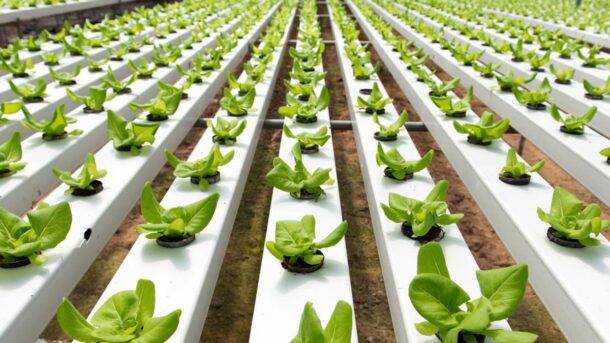
A hydroponic system is a method of growing plants without the use of soil. Instead, plants are grown in a nutrient-rich solution, typically water, which is delivered directly to the roots. There are several different types of hydroponic system, but they all share the basic principle of providing plants with the nutrients they need to grow without the use of soil.
The most common types of hydroponic systems include:
- Deep water culture: In this system, plants are grown in a container of nutrient-rich water, and their roots are suspended directly in the water. An air pump is used to provide oxygen to the roots.
- Flood and drain: Also known as ebb and flow, this system uses a container of nutrient solution that is periodically flooded and drained. The plants are grown in a growing medium, such as clay pellets or rockwool, which is used to support the roots.
- Drip irrigation: This system uses a network of tubing and emitters to deliver nutrient solution to the plants. The solution is dripped directly onto the roots, and any excess is collected and recirculated.
- Aeroponic: This system uses a mist of nutrient solution to deliver nutrients to the roots. The plants are grown in a growing medium, such as clay pellets or rockwool, and their roots are suspended in the air.
All hydroponic systems require a specific combination of light, temperature, humidity, and nutrients to be successful. They are used to grow a variety of plants including vegetables, herbs, fruits, and flowers. The main advantage of hydroponics is the ability to control the growing environment, which leads to higher yields and faster growth than traditional soil-based gardening.