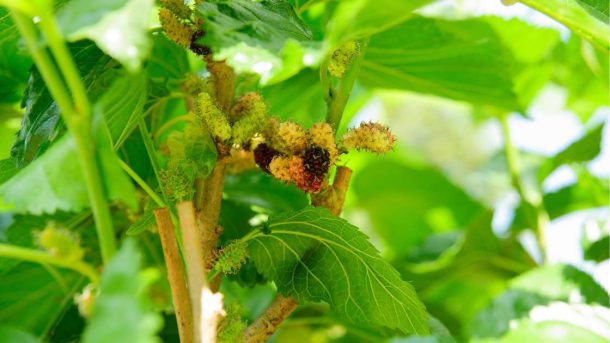
Termite colonies are located and destroyed by removing queen termite. Mounds are treated with 50 ml chlorpyriphos 20 EC. Swabbing or drenching of established plants at the base with 50 ml chlorpyriphos 20 EC.
What type of soil is required for cultivating jute ?
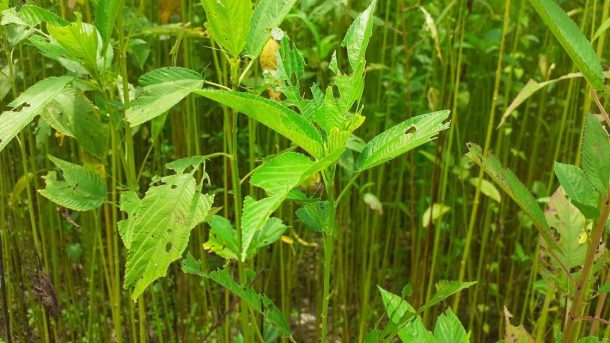
Jute production thrives in alluvial sandy loam and clay loamy soils. Capsularis jute can grow in standing water, especially at the end of its life cycle. In standing water, Olitorius jute will not grow. Because it is more drought resistant, it is planted in lighter soils.
What are herbaceous perennials?
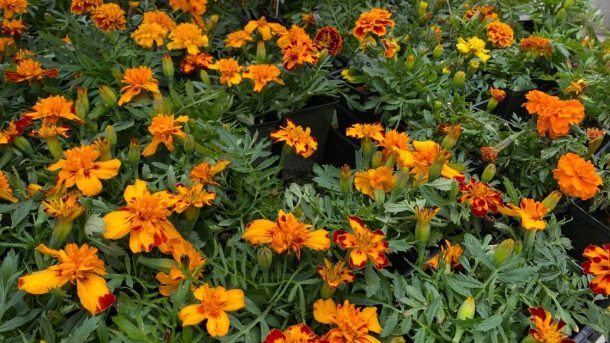
Perennial plants with soft succulent stems are known as herbaceous perennials (as compared to shrubs which have woody stems). Seeds, cuttings, offsets, and slips are used to reproduce them. They’re great for herbaceous or mixed borders, as well as pot culture.
What are annual plants ?
Balsam and Cosmos are examples of annuals, which complete their life cycle in one season or year. Annuals are a type of plant that grows to maturity, flowers, then dies in a single year or season. They usually finish their life narrative in 3 to 6 months. They are a collection of some of the most beautiful and easy-to-grow plants, with a wide range of form, growth habit, and colour. Rainy season annuals, chilly season or winter annuals, and warm weather annuals are the three types of annuals.
What are the advantages of green manuring ?
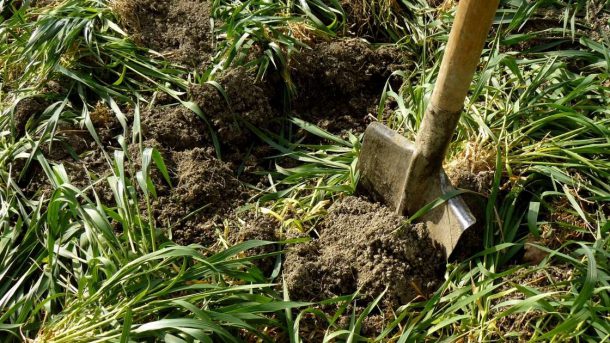
Green manuring helps in improving soil structure, increasing water holding capacity and decreases soil loss by erosion. Growing of green manure crops in the off season reduces weed proliferation and weed growth. Green manuring helps in reclamation of alkaline soils. It also helps in controlling root knot nematode.
What is green manuring ?
Green undecomposed material used as manure is called green manure. It is obtained by growing green manure crops or by collecting green leaf from plants grown in wastelands, field bunds and forest. Green manuring is growing in the field plants usually belonging to leguminous family and incorporating into the soil after sufficient growth. The plants that are grown for green manure known as green manure crops. The most important green manure crops are sunnhemp, dhaincha, etc.
What is broadcast seeding ?
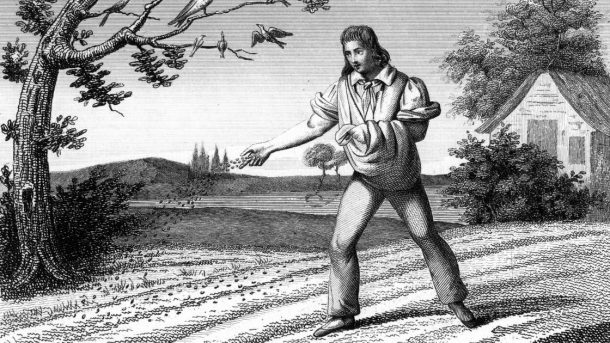
Broadcast seeding is spreading seed over a large and imprecise region, either by hand or mechanically. Broadcast seeding is easier and faster than row planting. It takes more seed and can result in overcrowding and uneven plant cover distributions. It’s suitable for plants that don’t require specific spacing or depth. This method of sowing is also used in plants that can be thinned simply after germination.
How manuring is done in phyllanthus cultivation ?
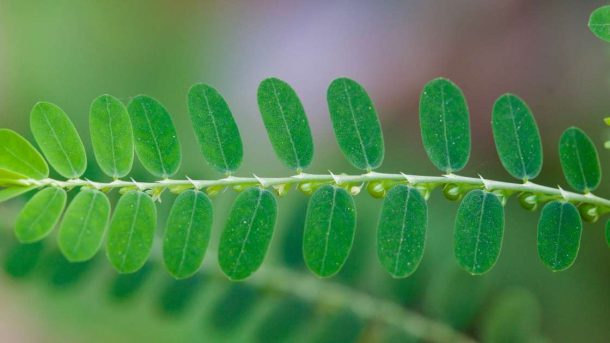
Apply 10-20 tonnes of FYM, 50 kg N, and 25 kg each of P2O5 and K2O per hectare to support strong vegetative development. The remaining N is delivered in two divided doses, the first at the 30th day and the second at the 60th day, with half the dose of N, the entire dose of P, and the complete dose of K applied as a basal dose.
What happens due to sugarcane K deficiency?
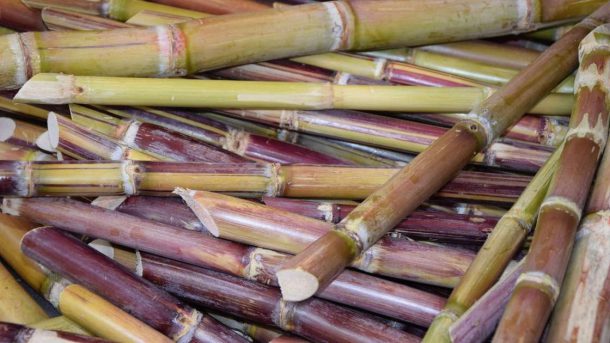
Sugarcane K ( potassium ) results in formation of slender stalks as a result of slowed growth, yellowing, and marginal drying of older leaves. The elder lower leaves take on an orange, yellow hue as they acquire multiple chlorotic patches that eventually turn brown with a dead centre. The epidermal cells of the upper surfaces and midribs of the leaves have a crimson colour. The juvenile leaves appear to have formed from a single point, creating the impression of a “bunched top.” Root development is poor, with fewer root hairs.
Why and how trash mulching is done in sugarcane ?
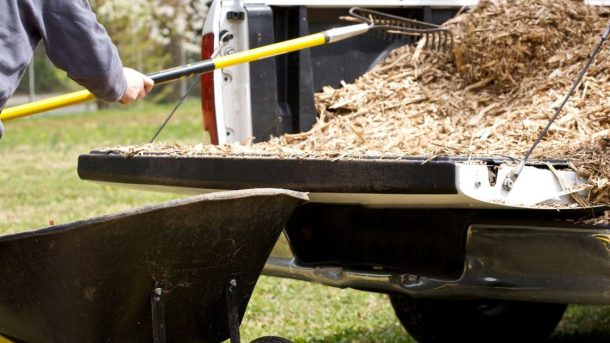
Within a week of planting, uniformly mulch the ridges with cane trash to a thickness of 10 cm. It aids in drought relief, moisture conservation, weed control, and the prevention of shoot borer infestations. After 21 days of planting in heavy soil and wetland conditions, mulch the field with trash. Avoid using trash mulching in places where termites have been discovered.