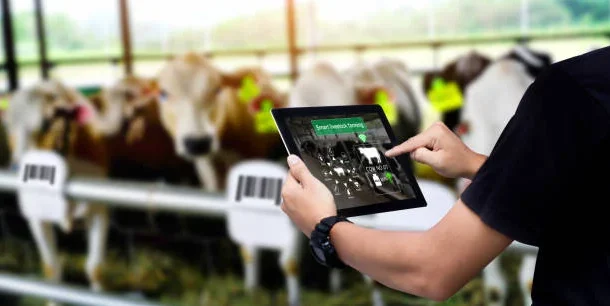
The use of smart sensors in livestock farming has a number of benefits that can enhance farm management, productivity, and animal welfare. Using intelligent sensors in this situation has the following major benefits:
Monitoring the health of animals: Livestock’s vital signs, such as body temperature, heart rate, and breathing rate, can be continually tracked using smart sensors. By enabling for fast intervention and early diagnosis of health risks, this real-time data lowers the likelihood of disease outbreaks. Farmers can give focused care and use less antibiotics or other treatments by carefully monitoring each animal.
Enhanced welfare and behavior monitoring: Intelligent sensors can monitor animal feeding, drinking, and movement habits. Abnormal behavior might be a symptom of distress or health issues, allowing for prompt intervention.
For the best control of reproduction, sensors can be used to monitor oestrus cycles and spot indicators of heat in cattle. Farmers can increase reproductive effectiveness, identify the ideal insemination timing, and optimize breeding plans using this information. Farmers can maximize breeding success rates and overall production by carefully monitoring the health of their reproductive systems.
Environmental monitoring: In livestock facilities, smart sensors can assess environmental variables including temperature, humidity, and air quality. Using this information, producers can provide the animals with the best possible living circumstances, assuring their comfort and lowering the likelihood of stress-related problems. Improving productivity and growth rates is also facilitated by maintaining healthy environmental conditions.