Beneficial organisms

How do chemical fertilizers affect the microbial life in the soil?

microbial life

Unbalanced nutrient levels can result from the over use of chemical fertilizers, especially those based on nitrogen. High nitrogen concentrations can promote the growth of nitrophilic microbes, which proliferate quickly, while suppressing the growth of other microbial life species. The composition of the microbial community may change as a result, which may have detrimental effects on the variety and functionality of soil microorganisms.

Changes in pH: Chemical fertilizers, particularly those that are very acidic or alkaline, can change the pH of the soil. Microbial activity and community composition are directly influenced by the pH of the soil. Different microbial life communities react differently to pH variations. Alkaline fertilizers can raise the pH of the soil, thereby decreasing the activity of acidophilic microbes, whereas acidic fertilizers can drop the pH of the soil, encouraging acid-tolerant microorganisms.

Reduced Organic Matter Inputs: While chemical fertilizers do not add organic matter to the soil, they do supply a majority of inorganic nutrients. For soil microbes, organic matter is an essential source of energy and nutrients. Over time, the amount of organic matter in the soil may decrease as a result of ongoing usage of chemical fertilizers without organic matter additions. The biomass, diversity, and activity of microorganisms may be significantly impacted by this decrease in the availability of organic materials.

Nitrogen-Fixing Bacteria’s Effect: Some chemical fertilizers, especially nitrogen fertilizers, can stop microbes from fixing nitrogen in the environment. High concentrations of easily available nitrogen can prevent nitrogen-fixing bacteria from cooperating with plant roots, such as rhizobia in legumes.
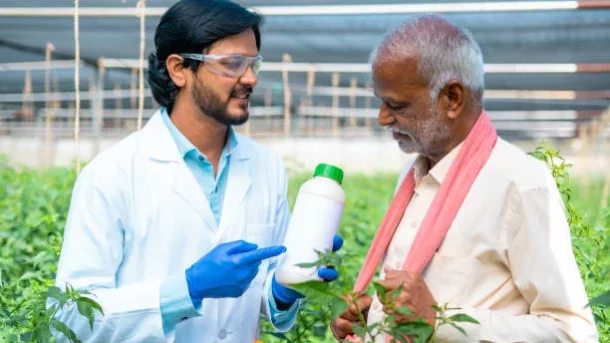
How are chemical fertilizers typically applied in agricultural practices?

applied

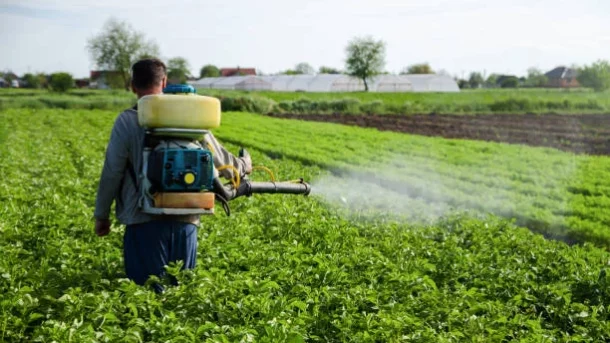
Spreading fertilizer over the soil’s surface uniformly entails broadcasting, which uses dry or granular fertilizers. This technique is sometimes paired with tillage operations to mix the fertilizer into the topsoil and is frequently employed for broad-acre crops. Spreading or applied can be done manually or with the aid of mechanical spreaders, such as spreaders for broadcasting or spreaders for spreading fertilizer placed on tractors.

Banding: When fertilizer is applied in little bands close to seed or plant rows, it is referred to as banding. By concentrating the fertilizer in the root zone, this technique ensures that the crop will efficiently absorb nutrients. Fertilizer can be banded during planting by putting it either in the planting furrow itself or in a different band next to the seed rows. Row-crop planters and fertilizer are examples of specialist equipment that can be used to do it.
Side-dressing: Side-dressing is the practice of applying nutrients to plants that are in growth. This technique is frequently employed for crops with a longer growing season or when more nutrient supplementation is required at particular growth stages. Using specialized tools, such as side-dress applicators mounted on tractors, or manually applying fertilizer along the plant rows are both acceptable methods of side-dressing.

Application of nutrients through irrigation systems is known as fertilization. It entails injecting liquid fertilizers into irrigation water to distribute nutrients precisely and under control to the crop’s root zone. High-value crops, greenhouse production, and drip irrigation systems all frequently use fertilization. It calls for specific tools like proportioning pumps or fertilizer injectors.

How do chemical fertilizers contribute to increasing crop yields?

yields

Chemical fertilizers supply plants with concentrated versions of readily available and necessary nutrients. By doing this, it is made sure that plants receive a sufficient and balanced amount of the nutrients they need to grow and develop. The three main macronutrients found in chemical fertilizers, nitrogen, phosphorus, and potassium, are essential for plant growth and have a crucial impact on activities like photosynthesis, root growth, and energy transmission. Chemical fertilizers assist overcome nutritional deficits and promote healthy plant growth, which results in improved agricultural yields, by giving these minerals in the right amounts.

Enhanced Plant Nutrition: Plants can absorb nutrients from chemical fertilizers more quickly and effectively than from organic sources. Chemical fertilizers’ highly soluble nature makes it possible for plants to efficiently absorb nutrients through their roots. This quick availability of nutrients makes for ideal
Improved Crop Quality: Chemical fertilizers can improve the quality of harvested produce in addition to increasing crop yields. The protein content and nutritional value of crops can be increased by providing enough nutrients, especially nitrogen. Phosphorus encourages the development of flowers, fruits, and seeds, improving crop quality and output. Fruits and vegetables with more potassium have better size, color, flavor, and shelf life. Chemical fertilizers help to produce higher-quality crops that satisfy consumer needs by providing adequate nutrient availability.

Increased Photosynthetic Efficiency: The process through which plants turn sunlight into energy, known as photosynthesis, depends on nitrogen, a fundamental ingredient in chemical fertilizers. A lack of nitrogen can hinder photosynthetic activity and affect a plant’s capacity to create biomass and carbohydrates. Chemical fertilizers boost photosynthetic activity by delivering nitrogen.

What are the main components or nutrients present in chemical fertilizers?

chemical fertilizers

The development of leaves, stems, and other vegetative organs depends on the nutrient nitrogen (N), which is essential for plant growth. The synthesis of proteins, photosynthesis, and general plant metabolism all depend on it. Lack of nitrogen can cause stunted growth, leaf yellowing, and decreased yield. Different types of nitrogen, such as ammonium (NH4+), nitrate (NO3), or urea, which are easily absorbed by plants, are frequently included in chemical fertilizers.

Phosphorus (P): For several metabolic activities in plants, such as energy transfer, root growth, flowering, and fruiting, phosphorus is crucial. It facilitates in the movement of energy from one area of the plant to another and encourages the development of robust roots. A lack of phosphorus can cause delayed maturation, poor root growth, and smaller seeds.
Potassium (K): Potassium is essential for a variety of plant processes, including the activation of enzymes, control of water and nutrient transport, and disease resistance. It helps plants be more resilient to stress and have greater overall health. Lack of potassium can cause crops to produce less well, weaken their stalks, and become more vulnerable to pests and diseases. Potassium is provided via chemical fertilizers in the form of potassium sulfate or potassium chloride (Muriate of Potash).

Chemical fertilizers can include secondary nutrients like calcium (Ca), magnesium (Mg), and sulfur (S) in addition to these macronutrients. They can also include micronutrients like iron (Fe), manganese (Mn), zinc (Zn), copper (Cu), boron (B), molybdenum (Mo), and others. Chemical fertilizers’ precise nutrient makeup varies based on their formulation and the needs of the targeted crops.

What are chemical fertilizers and how are they different from organic fertilizers?

organic fertilizers

Chemical Fertilizers: Industrial methods are used to create chemical fertilizers, commonly referred to as synthetic or in organic fertilizers. They are designed to give plants particular nutrients in easily assimilated forms. The three main macronutrients that plants need, nitrogen, phosphorus, and potassium, are often concentrated in chemical fertilizers. These vitamins and minerals come from non-renewable resources like coal, oil, and natural gas.

Organic Fertilizers: Natural materials including animal dung, compost, bone meal, fish emulsion, and plant remnants are used to make organic fertilizer. They contain a mix of micronutrients, organic matter, and nutrients like nitrogen, phosphate, and potassium. As organic fertilizer decompose or are broken down by microbial activity in the soil, nutrients are steadily released over time. They help to enhance the soil ecosystem’s overall health as well as the soil’s ability to retain water.

Chemical fertilizers are often thought to be less sustainable and more harmful to the environment than organic fertilizers. They increase soil fertility, encourage advantageous microbial activity, lower the possibility of nutrient runoff, and prevent water pollution. However, compared to chemical fertilizers, organic fertilizer often have lower nutrient concentrations and slower nutrient release, which means that it takes longer for nutrients to become available to plants.

What are the current advancements in seed technology, such as marker-assisted breeding or gene editing, and their potential impact on agriculture?

breeding

Marker-assisted breeding (MAB) is a process that involves utilizing DNA markers to more quickly select plants with desired features. DNA markers are distinct areas of the genome linked to an important feature. Breeders can screen a huge number of plants and choose the ones that have the required features by recognizing these markers. By requiring less time and money to create new types, this technique expedites the breeding process. MAB can aid in the creation of crops that have increased yield, disease resistance, abiotic stress tolerance, and other desired features.

Techniques for gene editing (like CRISPR-Cas9): Gene editing enables precise alterations to a plant’s DNA sequence.
RNA interference (RNAi) is a biological technique that can be used to silence particular plant genes. RNAi controls gene expression by introducing tiny RNA molecules that target particular gene sequences, which may enhance desired features or reduce undesirable ones. Using RNAi-based techniques, it is possible to create crops with improved post-harvest attributes, increased nutritional value, and increased insect resistance.

Utilizing genomic data to forecast an animal’s or plant’s performance is known as genomic selection. Breeders can more precisely choose individuals with desired features for breeding by studying an organism’s full genome, including DNA markers linked to significant traits. Genomic selection makes selection more accurate and effective, which speeds up genetic progress and leads to the creation of superior kinds.

How does the limited availability of affordable and efficient energy sources impact agricultural productivity?

affordable

The productivity of agriculture can be significantly impacted by the scarcity of affordable, effective energy sources. The following are some ways that this problem may impact agricultural operations:

Water management and irrigation: Access to affordable, dependable electricity is essential for irrigation systems, particularly in regions with irregular or insufficient rainfall. Pumps, irrigation systems, and water distribution to crops all require energy to run. Farmers might have trouble properly irrigating their crops without access to energy, which might result in a shortage of water, lower crop yields, and worse agricultural output.

Farm Mechanization and Equipment: Tractors, harvesters, and other processing equipment are examples of the types of farm machinery and equipment that require energy to operate. Agriculture may become much more productive, efficient, and labor-saving with mechanization.

Value Addition in Agro Processing: Agro Processing processes including milling, grinding, and food processing all require energy. Farmers may raise the value of their agricultural products, expand their market options, and diversify their sources of revenue by having access to economical energy sources. Agro-processing activities may be hindered by a lack of energy, which could limit the potential for value addition and economic development in rural areas.

Sustainable Farming Methods: A lot of sustainable farming methods depend on cheap and effective energy sources, including precision agriculture, controlled environment agriculture, and renewable energy integration. For accurate nutrient management, remote monitoring, and energy-efficient heating, cooling, and lighting systems, energy fuels the technology and sensors. The adoption of sustainable farming methods may be hampered by a lack of access to such energy sources, which would limit productivity increases and environmental sustainability.

What are the challenges faced by farmers in adapting to technological advancements and digitalization in agriculture?

digitalization

Farmers must overcome a number of obstacles to adapt to the digitalization and technology improvements in agriculture. Here are some typical difficulties:

Access to Technology: For many farmers, especially those who operate in distant or underdeveloped locations, access to technology—including hardware, software, and digital infrastructure—remains a substantial challenge. Farmers’ capacity to adapt and profit from technology improvements is hampered by their limited access to dependable internet connectivity, smartphones, computers, and other digital gadgets.

Affordability: Using technology frequently entails spending money on equipment purchases, software licenses, and ongoing maintenance charges. It may be difficult for farmers to cover these expenditures, especially small-scale and resource-constrained farmers, which makes it tough for them to invest in and embrace modern technologies.

Data management and privacy: The digitalization of agriculture generates a lot of data, such as information about farms, the weather, and market trends. Farmers might be concerned about data ownership, privacy, and information security. Appropriate data governance frameworks and unambiguous policies are needed for the efficient management and preservation of data in order to address these issues.

Infrastructure and Reliability: Technological improvements depend on a strong and dependable infrastructure, including network coverage, access to electricity, and internet connectivity. However, access to continuous and dependable infrastructure is difficult in many farming areas, especially in rural and isolated places, which restricts the efficient use of digital technology.

How does the absence of effective policies and regulations hinder sustainable agricultural practices?

policies and regulations

Absence of Standards and Guidance: Sustainable farming practices are guided and held to standards by policies and regulations. Farmers may find it difficult to comprehend and efficiently execute sustainable practices if there are no clear rules. The adoption of sustainable practices across the agricultural industry may be uneven or insufficient in the absence of clear criteria and benchmarks.

Limited Incentives: Laws and regulations can operate as a motivator for farmers to embrace sustainable farming practices and as a source of support. Financial aid, tax reductions, subsidies, or access to technical support and training are a few examples of these incentives. Without such incentives, farmers could be less inclined to spend money on sustainable practices, especially if they think those practices will cost a lot of money or take a lot of time.

Social Impacts: In order to be sustainable, agriculture must take into account a variety of social factors, including the welfare of the community and the safety of farm workers. By enforcing labour standards, encouraging fair trade, and assisting local communities, effective laws and regulations can address these social issues. Without such regulations, social injustices, worker exploitation, and a disregard for community welfare may continue.

Lack of Coordination and Collaboration: In order to coordinate and promote collaboration among the numerous stakeholders in the agriculture industry, policies and regulations and laws are essential. Governmental organizations, farmers, researchers, business associations, and civic society are all included in this. Collaboration, knowledge exchange, and group action towards sustainable agriculture can be facilitated by effective policies. Without them, there might be disorganization and a lack of coordination among stakeholders, which would impede the development of sustainable agriculture practices.

What are the problems caused by inadequate post-harvest handling and storage facilities in agriculture?

storage facilities

Social Impacts: In order to be sustainable, agriculture must take into account a variety of social factors, including the welfare of the community and the safety of farm workers. By enforcing labour standards, encouraging fair trade, storage facilities, and assisting local communities, effective laws and regulations can address these social issues. Without such regulations, social injustices, worker exploitation, and a disregard for community welfare may continue.

Lack of Coordination and Collaboration: In order to coordinate and promote collaboration among the numerous stakeholders in the agriculture industry, policies and laws are essential. Governmental organizations, farmers, researchers, business associations, and civic society are all included in this. Collaboration, knowledge exchange, and group action towards sustainable agriculture can be facilitated by effective policies. Without them, there might be disorganisation and a lack of coordination among stakeholders, which would impede the development of sustainable agriculture practices.

Challenges with market time: In agriculture, market timing is essential for achieving the best price realization. Without sufficient storage facilities, farmers would be forced to sell their harvest right away, even when there is little market demand or when pricing are unfavorable. Farmers’ capacity to profit from market opportunities and price variations is constrained by their inability to store produce for longer periods of time.

Seasonal Glutes and Price Volatility: Lack of storage space, particularly for perishable crops, can lead to seasonal glutes. When supply outpaces immediate demand during peak harvest times, farmers may have trouble getting reasonable pricing for their goods. Price volatility, financial losses, and the waste of agricultural resources can all arise from this.