Chemical fertilizers

What is the use of slag in agriculture?

agriculture

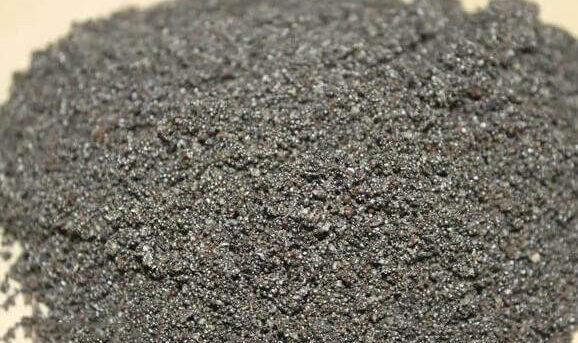
Slag, a byproduct of metal smelting and refining, can be used as a fertilizer in agriculture. The minerals in slag, such as iron, magnesium, and calcium, are beneficial to plants and can help to improve soil fertility. Additionally, slag is alkaline, which can help to neutralize acidic soils.

However, it’s important to note that slag can also contain harmful heavy metals, such as lead and cadmium, that can contaminate crops and be harmful to both human health and the environment. As a result, it’s important to test slag before using it in agriculture to ensure that it is safe and suitable for the intended purpose.

When used correctly, slag can be an effective and cost-effective fertilizer for farmers, but caution must be taken to avoid any potential negative effects on the environment and human health.

What are the fertilizer recommendation for tea cultivation?

tea

Tea responds to manuring and it has been estimated that to produce 100kg of made tea. The plant utilizes, on average 10.2, 3.2 and 5.4kg of Nitrogen, Phosphorus and Potash per ha.

Starts manuring from the nursery stage itself. Once they strike roots (after 4 months) 30g of soluble mixtures (Ammonium phosphate (20:20) 35 parts, potassium sulphate and Magnesium sulphate each 15 parts and zinc sulphate and Magnesium sulphate each 15 parts and zinc sulphate – 3 parts) is dissolved in 10 litres of water and is applied with rosecan for about 900 plants. This must be repeated at 15 days intervals.

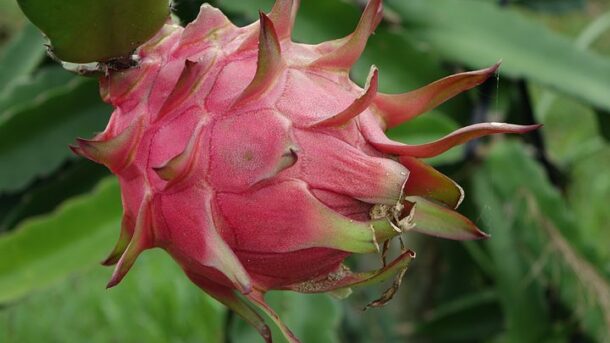
Manure and fertilizers used for Dragon fruit cultivation.

Dragon fruit

Dragon fruit is a nutrient-demanding crop that requires regular applications of fertilizer to achieve optimal growth and yields. Organic matter plays a very important role in dragon fruit development and growth. Each plant  should be applied with 10-15 kg of organic compost. Thereafter, increase the amount by 2kg per year

This crop requires inorganic fertilizers for rapid growth in vegetative parts. In vegetative stage, this fertilizer ratio is as follows,muriate of potash :super phosphate :urea =40:90:70 grams/plants.

Low amounts of nitrogen and large amounts of potash should be sprayed during the fruit-bearing period to increase yield.

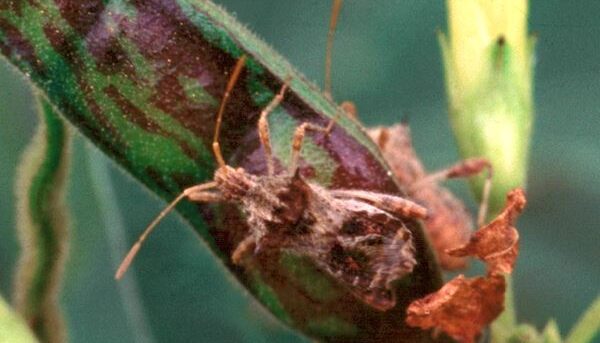
Do you know how pod bugs damage red gram (Tur dal)?

damage

Pod borer insects can cause damage to red gram crops. These pests lay their eggs in the pods of the plant and when the larvae hatch, they feed on the seeds, reducing both the yield and quality of the harvest.To control these pests, farmers can use a combination of cultural, biological, and chemical methods, such as crop rotation, using resistant varieties, and applying insecticides

Application of Spinosad or imidacloprid gives control upon pod bug damage. Spraying of quinalphos 25% EC @ is effective against pod fly and pod borer. Spraying of effective molecule like Indoxacarb 14.5 SC % @ 300 ml/ha or Emamectin benzoate 5% SG @ 11 a.i gm/ha or Spinosad 45 SC @ 56-73 a.i gm/ha is effective against Pod borer complex. 

However, it’s important to implement integrated pest management practices to minimize the negative impact on the environment and human health.
What is black tip in mango and how it can be controlled?

black tip

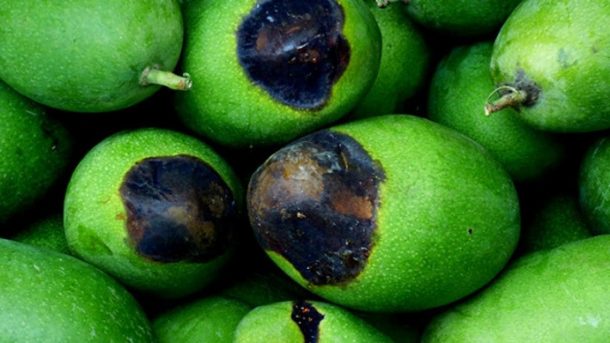
Black tip is a serious disorder of mango particularly in the cultivar Dashehari. The affected fruits become unmarketable and reduce the yield to a considerable extent. Black tip disorder has generally been detected in orchards located in the vicinity of brick kilns. It can be controlled by planting of mango orchards in North-South direction and 5 to 6 km away from the brick kilns may reduce incidence of black tip to a greater extent. Spraying borax (1%) or other alkaline solutions like caustic (0.8%) or washing soda (0.5%) is also effective. The first spray of borax should be done positively at pea stage followed by two more sprays at 15 days interval.

How bordeaux mixture is prepared?

mixture

A quantity of 400 g of copper sulphate should be dissolved in 20 litres of water, and 400 g of lime should be dissolved in another 20 litres of water. By constantly stirring the mixture, the copper sulphate solution should be added to the lime solution. Metallic containers should not be used, and only earthen or wooden vessels and plastic containers should be utilised. A polished knife should be dipped in the mixture for one minute and then removed to see if the proportions are proper. If there is a reddish brown copper deposit in the knife, more lime should be added until there is no deposit.

What are the uses of silver hydrogen peroxide?

silver hydrogen

Silver hydrogen peroxide provides high efficacy in killing of microorganisms in all possible media applications of air, water, surface, and soil. It works as an antibiotic, fungicide, virucide, amoebicide, and algaecide against a wide variety of microorganisms. The hazardous pesticidal residues are removed after harvesting using silver hydrogen peroxide.

Powdery mildew, downy mildew, botrytis blight, anthracnose, bacterial leaf spots and cankers, as well as pests such as worms and mites, are all well-known among farmers, and using silver hydrogen peroxide for a comprehensive field sanitation eliminates them.

What is the significance of phosphate ?

phosphate

Phosphate is one of the most important ingredients in fertiliser. After nitrogen, it is the second most important nutrient for plants, and it is frequently a limiting factor. It’s crucial for long-term agriculture since it can boost soil fertility and crop yields. Photosynthesis, energy transfer, signal transduction, macromolecular biosynthesis, and respiration are all processes that require phosphorus. It’s necessary for root ramification and strength, as well as seed development and disease resistance. Phosphorus is found in both inorganic and organic forms in the soil and accounts for about 0.05 percent of soil biomass.

Phosphorus fertilisers are the primary source of inorganic phosphorus in agricultural soils, with inorganic phosphorus accounting for 70–80 percent of phosphorus in cultivated soils. People have turned to other sources since long-term usage of phosphate-containing chemical fertilisers causes eutrophication and depletes soil microbial life.