climate

What are the benefits of using robots in agriculture?

robots in agriculture

Numerous advantages that can change farming methods and solve some of the problems facing the sector are provided by the employment of robots in agriculture. The following are a few major advantages of using robots in agriculture:

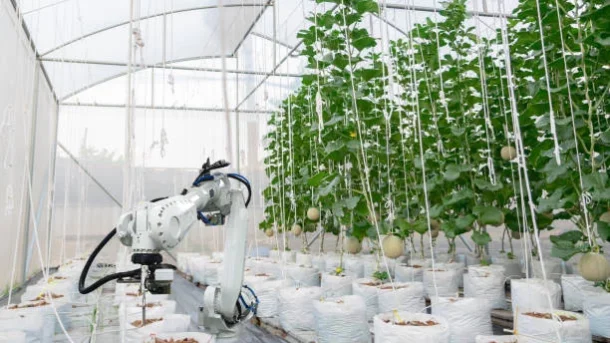
Robotics can automate repetitive and labor-intensive operations, lowering the need for manual labor and increasing labor productivity. They can efficiently and precisely carry out tasks including planting, harvesting, pruning, weeding, and spraying. Robots can boost production, lower labor costs, and solve labor shortages in agriculture by supplementing or replacing human labor.

Increased Precision and Accuracy: Tasks may be carried out by robots with a great degree of precision and accuracy thanks to their superior sensors, cameras, and AI algorithms. They can apply fertilizers, pesticides, or herbicides precisely where they are needed, reducing waste and harm to the environment.

Robotic workers are more productive because they can work continuously without taking breaks or resting, in contrast to human employees. They are able to operate in bad weather or off-peak hours, guaranteeing prompt assignment completion. This is especially helpful when performing time-sensitive tasks like planting or harvesting.

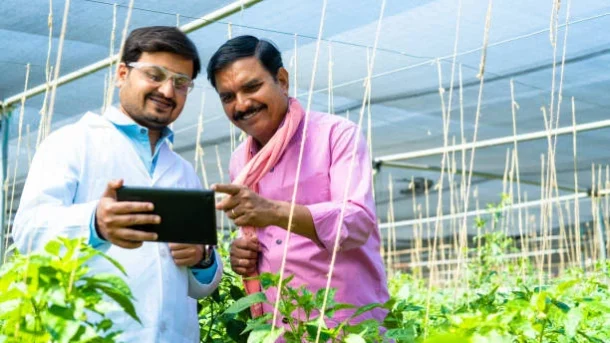
Robots with sensors and imaging systems can gather a huge quantity of information on crops, soil conditions, and weather-related variables. To get insights into crop health, growth trends, insect infestations, nutrient deficits, or disease outbreaks, this data can be examined using AI algorithms. Using data-driven decision-making, farmers may carry out focused interventions, allocate resources more effectively, and manage their farms more effectively overall.
How does weather data assist in crop management decisions?

crop

Decisions on crop management are greatly influenced by weather information since it offers useful knowledge that enables farmers to maximize their agricultural methods. Here are a few ways that weather information might help in crop management:

Making planting decisions: Farmers can choose the best time to sow their crops by using weather information. Farmers can choose the best planting window by using the data on average frost dates, soil temperature, and moisture levels that is provided. For instance, certain crops need a certain range of temperatures to germinate and develop.

Irrigation management: The use of weather information by farmers to plan their irrigation systems. Farmers can modify their irrigation operations by studying variables including precipitation, evapotranspiration rates, and soil moisture levels. They can prevent over- or under-watering, saving water resources and avoiding crop damage.

Management of pests and diseases: The occurrence and spread of pests and diseases in crops are influenced by the weather. Farmers can predict and keep tabs on the occurrence of specific pests and illnesses by monitoring meteorological data. For instance, specific humidity and temperature ranges are ideal for certain insects. Farmers who are aware of these circumstances can take prompt preventive action, such as using the proper pesticides or implementing integrated pest control techniques.

Application of fertilizer: Weather information offers insights into the availability of soil nutrients and losses caused by variables like rainfall or temperature, which help to optimize fertilizer application. For instance, prolonged rain can wash away nutrients from the soil, requiring the administration of extra fertilizer. Farmers can adapt their fertilizer management programs to the needs of the crop by fusing weather data with soil tests.

What are the advantages of using weather forecasting in agriculture?

forecasting

In agriculture, weather forecasting is essential since it benefits farmers and agricultural techniques in many ways. Some of the main benefits of employing weather forecasting in agriculture include the following:

Weather forecasts that are accurate aid farmers in making well-informed choices regarding crop planning and management. Farmers can choose the ideal time for planting, irrigation, fertilization, and harvesting by anticipating the weather. In order to maximize crop yield and quality, they might time their agricultural efforts to coincide with favorable weather windows.

Weather forecasts give farmers the ability to foresee and control weather-related risks. Farmers can get ready for extreme events like storms, frost, heat waves, or droughts by keeping an eye on weather patterns. They can put into practice the right protection measures for infrastructure, livestock, and crops, minimizing potential losses and harm.

Weather forecasts are useful for effective irrigation management. Farmers can modify irrigation schedules and amounts by taking expected rainfall and evapotranspiration rates into account. This promotes water use efficiency, lowers the risk of water stress or waterlogging in crops, and helps prevent overwatering or underwatering.

Management of pests and diseases: Prevalence and activity of pests and diseases are influenced by weather conditions. Farmers may learn a lot from weather forecasts about the probability of pest outbreaks, fungus infections, or other disease stresses. This enables the prompt application of integrated pest management (IPM) techniques, such as the targeted use of pesticides or other preventative measures.

How can precision irrigation systems optimize water usage in agriculture?

precision irrigation

By precisely and carefully directing water to crops, precision irrigation technologies are essential for maximizing water use in agriculture. Here are some ways that precise irrigation systems can help reduce water waste:

Application of water precisely: Precision irrigation techniques, including drip irrigation or micro-irrigation, distribute water to plants’ roots in a controlled and strategic way. By ensuring that water is only applied where it is necessary, water loss due to evaporation, runoff, or unnecessarily watering non-crop areas is reduced.

Controlling the timing and amount of water given to crops is possible with the help of precision irrigation systems. Depending on the needs of the plants, the climate, and the moisture content of the soil, farmers might modify irrigation schedules. 

Uniform water distribution: Precision irrigation systems are made to distribute water evenly across the field. By ensuring that each plant receives an even flow of water, this helps to avoid under- or overwatering. The risk of plant stress or decreased production due to water shortages or excesses is decreased by uniform water distribution, which also encourages more effective water usage.

Reduced water loss: Runoff and evaporation are kept to a minimum using precision irrigation systems. In contrast to overhead sprinkler irrigation, drip irrigation, for instance, delivers water directly to the soil surface or through underground pipes, reducing evaporation. Water use efficiency is increased since less water is lost and more water is delivered to the root zone.

 What are the potential benefits and concerns associated with GMOs?

GMOs

Different viewpoints on genetically modified organisms (GMOs) have emerged as a result of both their potential advantages and related problems. An outline of the key arguments is provided below:

Possible advantages of GMOs:

Crop productivity can be increased by genetically modifying organisms (GMOs) to have features like resistance to pests, diseases, or environmental challenges. This may alleviate concerns about food security by increasing yields and improving food production.

Resistance to pests and diseases: Genes that provide resistance to pests or diseases can be included into GMOs. In addition to promoting sustainable pest management and reducing the need for chemical pesticides, this may also result in cheaper production costs for farmers.

Herbicide tolerance: Some GMOs are designed to withstand a particular class of herbicides, enabling farmers to control weeds more successfully and with less harm to the environment. This can help with improved resource use efficiency, less soil erosion, and effective weed management.

Added nutritional value: Crops can be enriched with particular nutrients, including vitamins or minerals, using genetic engineering. This could help vulnerable communities that are deficient in certain nutrients, improve consumer health, and increase the nutritional content of staple foods.

How does CEA optimize resource utilization?

resource

Controlled environment agriculture (CEA) effectively manages inputs like water, energy, nutrients, and space to maximize resource usage. Here is how CEA systems optimize resource:

Efficiency in terms of water use: Compared to conventional agriculture, CEA systems use less water. Water is reused within the system through technologies like hydroponics and recirculating irrigation systems, lowering overall demand. Recirculating nutrient-rich water reduces surplus discharge. Furthermore, CEA permits precision irrigation management, providing water to the root zone directly, avoiding evaporation, and eliminating water waste.

Energy effectiveness: CEA systems put an emphasis on energy-efficient procedures to lower energy usage. It is usual to utilize LED lighting because it uses the least amount of energy while yet giving the right kind of light spectrum for plant growth. In order to maximize energy efficiency, climate control systems use insulation.

Management of nutrients: CEA systems, particularly hydroponic and aquaponic ones, maximize nutrient uptake by giving plants precisely the right amounts of nutrients. Plants are able to efficiently absorb the necessary nutrients thanks to the careful formulation of nutrient solutions and their delivery to the roots. This targeted distribution reduces nutrient loss and leaching, improves nutrient uptake, and has a smaller negative impact on the environment.

Space usage: CEA systems maximize space utilization, especially in cities or other places where there is a shortage of available land. High plant densities are possible with vertical farming, which grows plants in stacked layers or shelves to make efficient use of vertical space. By removing the need for soil and allowing plants to grow in a smaller area, hydroponic and aeroponic systems maximize available space. Increased space efficiency allows CEA systems to produce more food in a less amount of space.

What are the different types of CEA systems?

CEA systems

The term “controlled environment agriculture” (CEA) refers to a variety of structures and technologies that offer plants regulated settings for growth. Here are a few examples of the various CEA systems types:

Greenhouses: A controlled environment for plants is provided by enclosed structures made of glass or other transparent materials that enable sunlight to enter. In order to control temperature, humidity, and airflow, they use ventilation, heating, and cooling systems as well as natural light, supplemented when necessary by artificial lighting. A flexible and popular kind of CEA systems that can accommodate a variety of crops and production methods is provided by greenhouses.

Indoor vertical farms: Indoor vertical farms use artificial illumination to grow plants vertically in stacked layers or shelves. These farms frequently employ hydroponic or aeroponic systems, making effective use of available space in crowded cities.

Container farms indoors: Container farms are independent structures often housed inside of shipping containers. These small systems come complete with hydroponic or aeroponic systems, lighting, and climate control. Urban farming, rural farming, or farming in areas with limited space can all benefit from container farms’ mobility and adaptability.

Plant factories, also referred to as growth chambers, are completely regulated indoor spaces where plants are grown with the help of artificial lighting, temperature control, and exact nutrition supply. These systems, which offer the best conditions for plant growth, are frequently employed in research, seedling propagation, and the growth of crops with high market value.

 How does CEA allow for year-round production?

year-round

Crop production is made possible year-round by controlled environment agriculture (CEA), which establishes and sustains ideal growing environments independent of the weather outside. Here is how CEA makes it possible to produce crops all year long:

Climate control: To control temperature and humidity, CEA systems make use of cutting-edge climate control technology as heating, ventilation, and air conditioning (HVAC) systems. This enables gardeners to establish and sustain the perfect environment for plant growth all year long. Crops in CEA systems can be grown in a controlled environment with ideal humidity and temperature conditions, regardless of changes in the outside weather.

Light supplementation: CEA systems use artificial illumination to supply the appropriate light spectrum and intensity for photosynthesis. These lights are typically energy-efficient light-emitting diodes (LEDs). With the help of artificial lighting, growers can extend the photoperiod or add extra light to their crops during low-light seasons like winter or in places with little direct sunlight. A year-round supply of light for plant growth and development is guaranteed by CEA systems by adjusting lighting settings.

Protection against harsh weather: CEA buildings, such greenhouses or indoor facilities, offer defense from extreme weather occurrences like frost, hailstorms, intense heat, or heavy rains. Crops are protected by these structures from harmful elements, enabling continuous growth and lowering the possibility of crop failure or damage brought on by erratic weather patterns.

Disease and pest control: The controlled environment provided by CEA helps to reduce disease and pest outbreaks. The risk of pests and illnesses is decreased by CEA by using physical barriers, such as screens or netting, and by keeping a clean and regulated environment. The use of proactive and sustainable integrated pest management (IPM) strategies, such as biological controls and monitoring systems, can help manage pests and diseases further, ensuring crop health and reducing crop losses.

What is controlled environment agriculture (CEA)?

environment

A controlled atmosphere must be established and maintained for plant growth in controlled environment agriculture (CEA), regardless of the weather outside. To generate the perfect conditions for plant growth, CEA systems make use of a variety of technologies to regulate and optimize elements like temperature, humidity, light, CO2 levels, and fertilizer delivery. Maximizing crop output, quality, and resource efficiency is CEA’s main goal.

Controlled environment agriculture’s essential elements and characteristics include:

Climate control: To maintain the ideal temperature and humidity levels for plant growth, CEA systems use cutting-edge climate control technology, such as heating, ventilation, and air conditioning (HVAC) systems. The CEA permits year-round agriculture and offers protection from extreme weather by regulating these environmental elements.

Artificial lighting: To supply the requisite light spectrum and intensity for photosynthesis in CEA, artificial lighting systems like light-emitting diodes (LEDs) are utilized. These lighting systems allow growers to optimize light conditions and lengthen the day, boosting plant growth even in low-light or indoor circumstances. They can be customized to individual crop requirements.

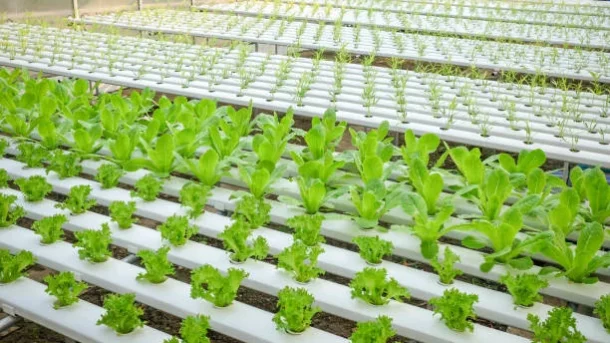
Growing without soil or in water: CEA frequently uses soilless growing methods like hydroponics, in which plants are grown in nutrient-rich water solutions or growing mediums like coco coir, perlite, or rockwool. Soilless farming enables precise control of water availability, pH levels, and fertilizer delivery, which optimizes plant development and minimizes resource loss.

Automation and environmental monitoring systems use sensors and monitoring equipment to continually monitor and control environmental factors. Temperature, humidity, CO2 levels, light intensity, and nutrition levels are just a few of the variables that these sensors keep an eye on. Automation systems maintain exact and constant conditions for plant growth by controlling and adjusting these variables in accordance with established set points or algorithms.

What are the benefits of aquaponics?

aquaponics

Comparing aquaponics to hydroponics or standalone aquaculture, as well as traditional agriculture, there are various advantages. The following are some of the major advantages of aquaponics:

Utilizing resources effectively: By integrating plant and fish cultivation in a symbiotic system, aquaponics increases resource efficiency. By recycling the nutrients in fish waste and using them as fertilizers for plant growth, the demand for external inputs like synthetic fertilizers is decreased. Water is continuously recirculated between the fish tanks and the plant beds in the closed-loop system to reduce water usage. Aquaponics is incredibly sustainable and environmentally benign due to this effective resource usage.

Water usage is decreased since aquaponics need so little water to operate. With just minor water losses from evaporation and transpiration, the system continuously recycles the water. 

Produce that is chemical- and organic-free: Aquaponics encourages organic farming methods because it does away with the need for artificial fertilizers, pesticides, and herbicides. Natural nutrients from fish waste are used by plants to develop, and the plants also serve as a biological filter to clean the water for the fish. Produce produced as a result is chemical-free and naturally cultivated, which may appeal to consumers looking for wholesome and sustainable food options.

Crop production all year round: Aquaponic systems can be installed in climate-controlled spaces like greenhouses or indoor facilities. This makes crop production year-round and independent of seasonal changes and outside weather conditions. Farmers can establish ideal growth conditions by regulating the temperature, humidity, and lighting, providing a steady supply of fresh vegetables all year long.