Organic Inputs

What are the Manures and Fertilizers required for Gerbera Farming?

Gerbera

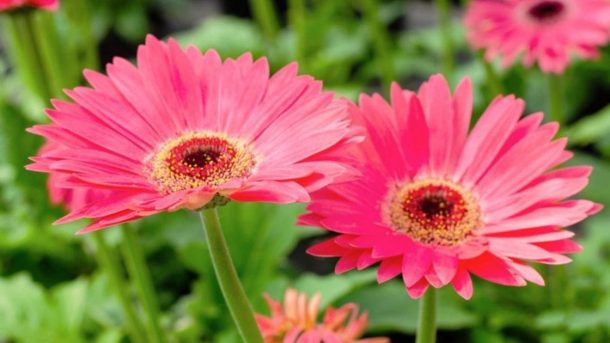
In order to have better growth and excellent yield of Gerbera flowers, field/soil should be incorporated with plenty of organic manure and other major, minor nutrients. Following is the manures and fertilization schedule in Gerbera cultivation.

Apply 8 to 9 kg of Farm Yard Manure (FYM)/square meter. Apply NPK in 12:15:20 grams/square meter during first three months after plantation. Apply NPK in 15:10:30 grams /square/month from fourth month when flowering starts, apply in two split doses @ 2 weeks interval.

Apply micro-nutrients: Spray calcium, boron, copper & magnesium @ 0.15 percent, which is 1.5 grams/liter of water once in 4 weeks gives excellent quality Gerbera flowers.
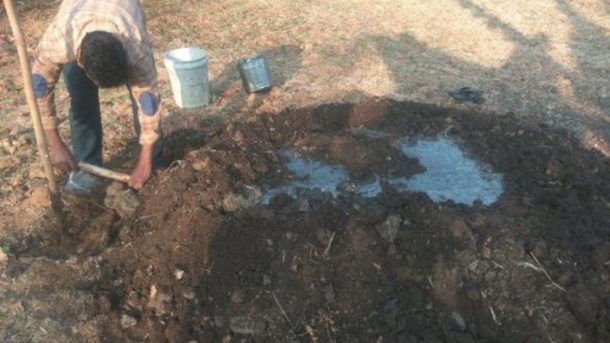
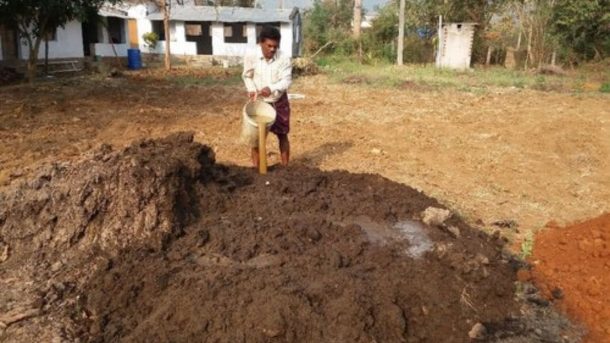
What is Ghana Jeevamrutham Type II?

Jeevamrutham

Collect 200 kg Dried and sieved Powered Cow dung Farm Manure from a cowshed. Spread it slightly on a clean surface and Sprinkle 20 lit Jeevamrutham over it. Mix it well using a spade thoroughly and form a heap in the shade of this mixture and keep away from water and direct sunlight for about 48 hrs. If the temperature drops below 12 degrees, this heap needs to be covered with rug sack to maintain a constant temperature for the conducive climate of microorganisms. After 48 hours, spread it and dry the mixture under the sun and mix it during the day at regular intervals.

What is Ghana Jeevamrutham type I ?

Take 100 kg of Desi Cow Dung (Cow dung is good only for 21 days if its kept moist. sprinkle water and store in shade) and add 1 Kg Jaggery and 1 kg Besan. Mix the mixture well and store it as a heap for 48 hrs in a shade. If the temperature drops below 12degrees, the heap should be covered with rug sack to maintain constant Temperature for conducive climatic conditions for micro-organisms.

How Beejamrutha is useful?

Beejamrutha

Beejamrutha is used as a treatment for seeds, seedlings or any planting plant material. It is very effective in protecting young roots from fungus and other microbes as well as from soil-borne and seed-borne diseases that commonly affect plants after the monsoon season. Beejamrutha is composed of similar ingredients as Jeevamrutha – local cow dung that is a powerful natural fungicide and cow urine which a strong anti-bacterial liquid, lime, and soil. It is nothing but the Jeevamrutha applied as a seed treatment.

How to prepare Jeevamrutha?

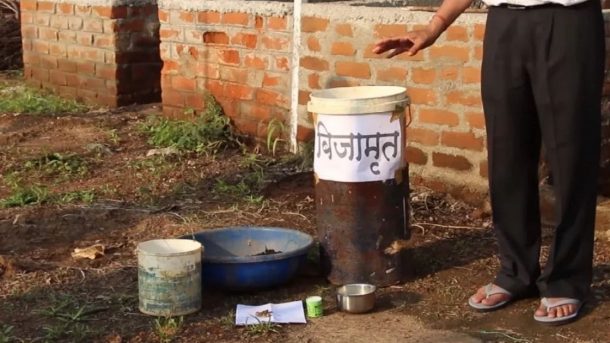
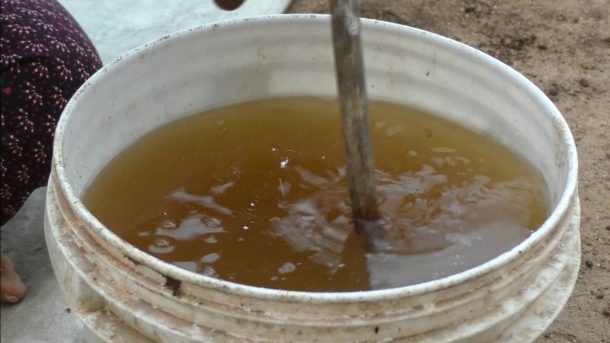
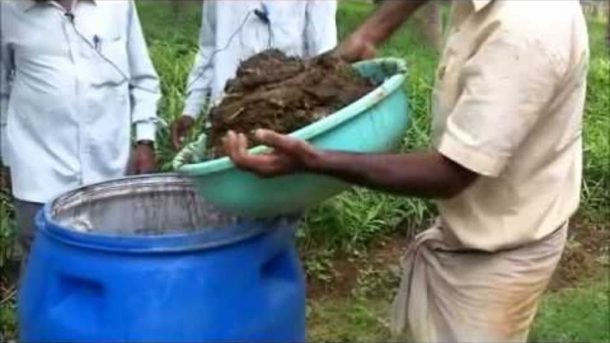
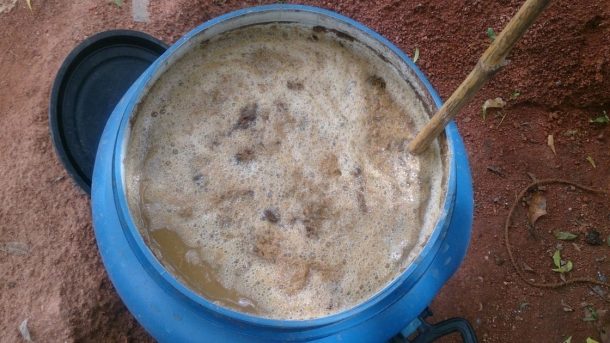
Add 200 liters of water into a barrel. Then, add 10 Kg fresh local cow dung and 5-10 liters of aged cow urine. Further, 2 Kg of Jaggery and 2 kg of pulse flour and a handful of soil from the bund of the field. Stir the solution at regular intervals well and let it ferment for 48 hours in the shade. Now Jeevamrutha is ready for application on the plants or to the field. 200 liters of Jeevamrutha is enough for one acre of land.

What is Jeevamrutha?

Jeevamrutha

Jeevamrutha is a fermented mixture of microbial culture. It provides nutrients, and importantly, acts as a catalytic agent which promotes the activity of microorganisms in the soil, as well as increases the activity of earthworms living in the soil. After the 48 hour fermentation process, the aerobic and anaerobic bacteria present in the cow dung and cow urine multiply as they eat up organic ingredients (like pulse flour). A handful of undisturbed soil is also added to the preparation that acts as a inoculate of native species of microbial organisms. It also helps to prevent the disease caused plants by fungal and bacterial plant pathogens. Jeevamrutha is only needed for the first 3 years of the organic farming system, after which the soil system becomes fertile and self-sustaining.

What are the Manures and Fertilizers required for Carnation Flower Growing?

Manures

Carnations are highly responsive to manures and fertilizers. This crop is very sensitive to boron and calcium deficiency. Nitrogen, Phosphorous, and Potash should be given in the ratio of 30:20:30 grams/sq.mts/year. Carnation’s crop requires almost equal parts of nitrogen and potash. Should supply trace element boron and calcium in adequate quantities for healthy flowers. This can be done through a growth medium. This crop requires well decomposed manure of 25 to 30 tonnes per 1 hectare. This can be supplemented in the soil during land or soil preparation. A basal dose of N:P:K of 20:20:10 grams/sq.mts should be given at the time of planting and the remaining fertilizer should be applied in equally distributed dosage over the period.

What are the Manures and Fertilizers required for sesame Farming?

Fertilizers

Add 5 to 6 tonnes of Farm Yard Manure (F.M.Y) or well rotten compost at the time of soil preparation. Fertilizers for rainfed and irrigated conditions are as follows. For rainfed crop ½ basal, N 40 kg/hectare, P 60 kg/hectare (30 to 35 days after sowing) and K 40 kg/hectare. For irrigated crop ½ basal, N 60 kg/hectare. P 61 kg/hectare (30 to 35 days after sowing). K 40 kg/hectare.

How Organic fertilizers plays a significant role in Nutmeg production?

Organic

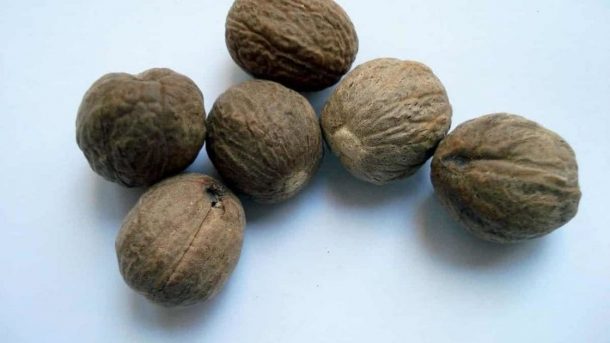
Nutmeg requires heavy fertilizer for proper growth and production. FYM (Farmyard manure) or compost can be applied at the rate of 10 kg per plant during the first year of planting. The fertilizer application quantity should be increased every year so that a Nutmeg tree about 15 years of age or older can get 50 kg of organic manure. Reduces the incidence of soil-borne diseases and improves the availability of phosphorus and other nutrients.