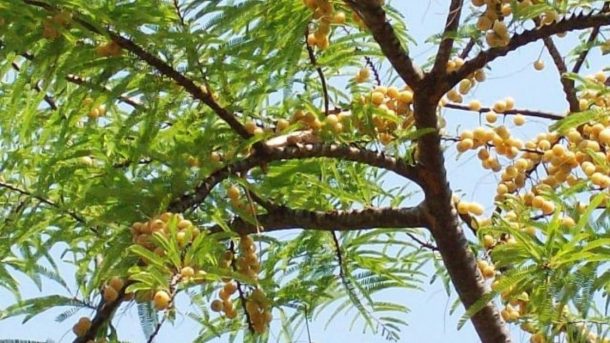
Fruit drop occurs at different stages. The first fruit drop commences from June to September due to lack of pollination and fertilization. Pre-harvest fruit drop is of economic importance and begins from third week of August until October.
Sustainable agriculture
Why internal fruit necrosis occurs in Aonla and how it can be managed?
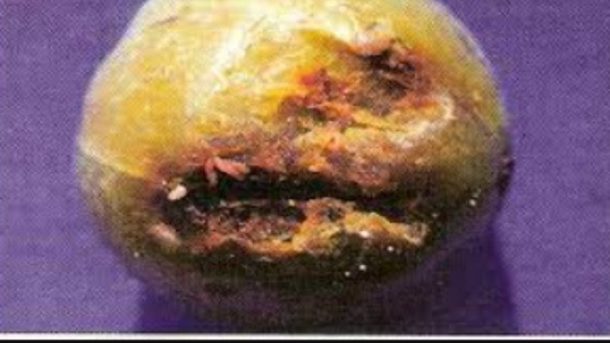
Necrosis is a physiological disorder. It is characterized by browning of innermost part of mesocarpic tissues followed by browning of the epicarp. In severe cases, mesocarp of affected fruit turns black and becomes corky and gummy pockets develop. This is due to deficiency of boron.
It can be managed by Spraying of 0.4-0.6% borax or zinc sulphate (0.4 %) + copper sulphate (0.4 %) thrice during September and October at 10-15 days interval.
What is the irrigation requirement for Snake Gourd cultivation?
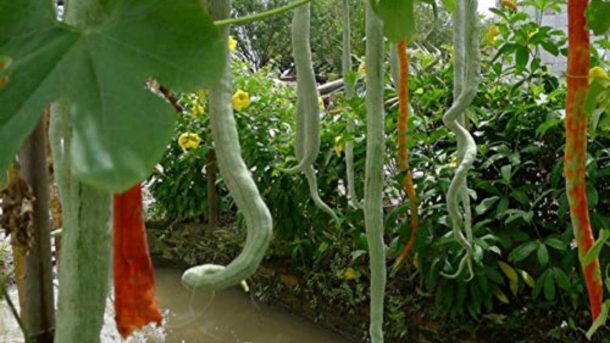
Snake gourd in its entire crop duration requires a steady supply of moisture but is sensitive to excessive water application or water logging conditions, thus, providing frequent but shallow irrigation is rather beneficial. The first irrigation may be given immediately after sowing, if moisture in the field at the time of sowing is not sufficient for proper germination of seeds.
For spring-summer crop, regular irrigation at 3-5 days intervals is necessary to uphold the desired soil-moisture level. At the time of fruit set and fruit development, sufficient moisture should be maintained, and there should not be any dry spell during this period.
What are the symptoms of Aonla rust disease and how it can be managed?
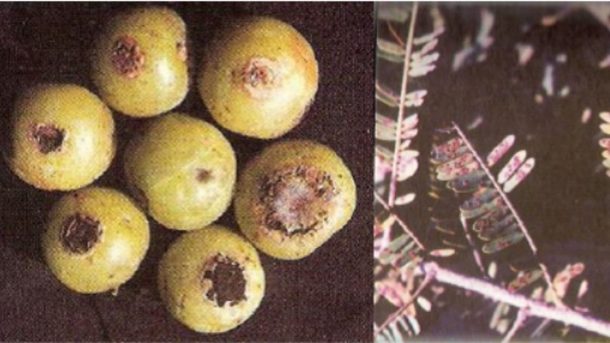
It is also known as ring rust of aonla. It is caused by Ravenelia emblicae var. fructoidae. The conspicuous black pustules appear on leaflets and fruits which later form a ring, join together covering a large area. Pustule’s rupture exposing black spore mass. Pinkish pustules develop on leaves which may be isolated or in group. The affected fruits drop off prematurely. Desi variety is highly affected but Chakaiya and Banarasi are free from it.
It can be controlled by 3-4 sprays of wettable sulphur @ 5 g/l of water at an interval of one month or mancozeb @ 2.5 g/l of water at an interval of 15 days.
Which soil is suitable for Amla cultivation?
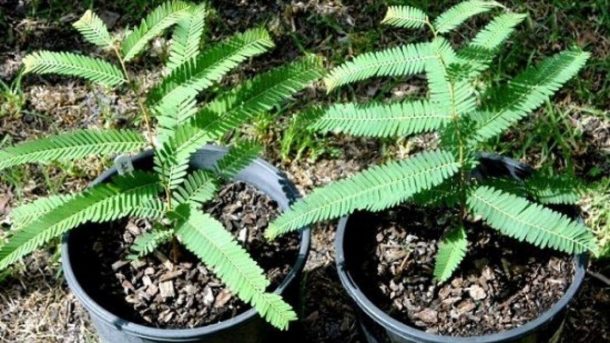
Well drained fertile loamy soil is ideal for aonla cultivation although, it can be successfully grown in light as well as heavy soils except very sandy one. Slightly acidic to saline soils (pH 6.5-9.5, EC 5dsm, ESP 30-40) are suitable for its cultivation. Heavy soils with high water table are not suitable for its cultivation. In recent years, aonla has been identified as an ideal plant for various kinds of wastelands viz., moisture stress, eroded, ravines, upland, riverbeds and areas with undulated topography. Its deep root system and deciduous nature is helpful in providing vertical drainage and improving physical, chemical and biological soil properties. Introduction of aonla in the natural rangelands has shown its suitability for rehabilitation, particularly through popularization of agri-silvihorticulture land use system. Aonla can also be planted on roadsides, strip lands. Experiments on salt tolerance of aonla showed that the aonla has immense possibility for commercial growing on salt affected wasteland which covers an area of 7.0 million hectares in India.
What is the climatic requirement of Aonla plantation?
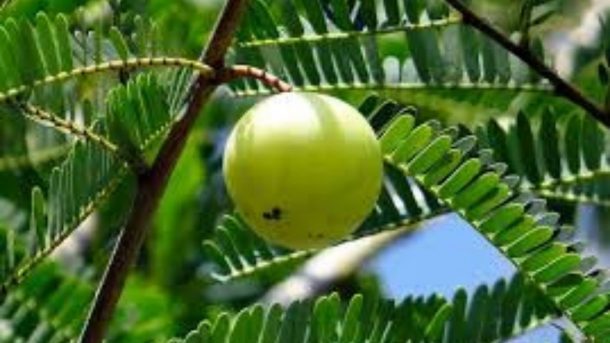
Aonla is a tropical plant. Annual rainfall of 630-800mm is ideal for its growth. The young plants up to the age of 3 years should be protected from hot wind during May- June and from frost during winter months. The mature plants can tolerate freezing temperature as well as a high temperature up to 46°C.
What is the climatic requirement for groundnut farming?
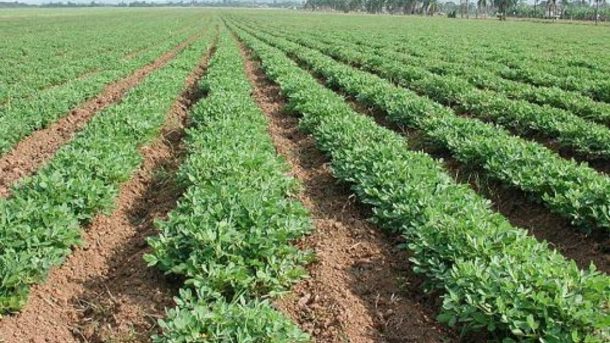
Groundnut is a tropical plant requires a long and warm growing season. It grows well in areas receiving 50 to 125 cm of well-distributed rainfall during growing season, abundance of sunshine and relatively warm temperature. Soil temperature is an important factor and its effects are critical on seed germination, emergence of seedlings, early plant growth, rate of flowering, and pod development. When soil temperature goes below 19°C, emergence of seedlings is low. The optimum temperature for vegetative growth of groundnut is ranging in between 26 to 30°C depending on the cultivar. Reproduction growth is maximum at 24-27°C. The maximum rate of growth of pods between 30 to 34 °C as it requires about a month of warm and dry weather. Light influences both photosynthesis and respiration in groundnut. The opening of flowers and number of flowers both depend on light.
How flowering and fruiting occurs in Plum crop?
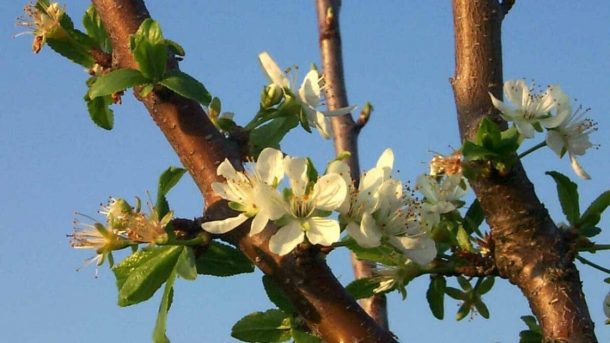
Flowering in plum cultivars usually take place in the second half of February in the north India plains. Plum flower profusely hence there are sufficient number of hermaphrodite flowers to set fruit. Usually there is very heavy fruit set in plums. However, it is cultivar dependent. For example, Kala Amritsar is heavy bearer but Alu Bokhara is shy bearer.
Plum follows a double sigmoid curve of fruit growth. Immature fruits are very acidic. As the fruit mature the acidity start decreasing and TSS goes on increasing. Simultaneously the skin colour specific of cultivar start developing.
How pruning is done in Plum cultivation?
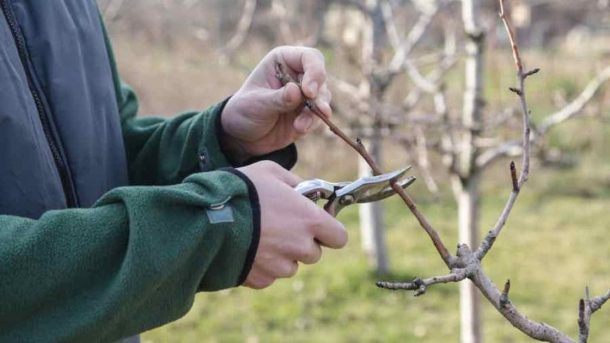
Plums bear on one year old shoots and short spurs depending upon the nature of cultivar. Normally no pruning may be given in the first year of bearing. Remove only criss- crossing shoots and water shoots. Do not to open the tree from inside in the first year of bearing. Remove only criss-crossing shoots and water shoots. Do not to open the tree from inside, let the thin branches have leaves which contribute toward the maturity of other shoots and spurs.
A little pruning to the out growing branches may be done in fifth year onward. The severity of pruning depends upon the planting distance. When plum is planted as filler in pear it may require early severe pruning due to lesser planting distance than in litchi and mango. The cuts may be treated with Bordeaux paste/paint.
What is Alternate Wetting Drying and Dry Seeded Rice (AWD-DSR)?
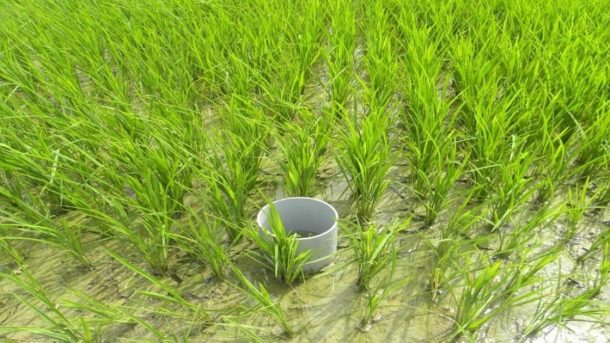
In India, paddy rice cultivation occupies about 44 million hectares – the largest rice-producing area in Asia – and accounts for 20 per cent of total rice production worldwide. AWD reduces the frequency of flooding in rice farms, thus improving soil quality. Better soil structures allow farmers to intercrop rice with other agricultural crops, which in turn leads to diversified farming systems, providing multiple sources of income. AWD-DSR also reduces the incidence of certain pests and diseases, further improving yields and boosting farmers’ resilience.
In 2021, nurture.farm ran the AWD-DSR programme on 22,000 acres in Punjab and Haryana. In the winter season, nurture. farm led the programme on 120,000 acres in Andhra Pradesh and Telangana. Over the course of both programmes, over 80,000 small and marginal farmers were supported with the technology to perform AWD-DSR, which led to 15 per cent to 30 per cent water savings.