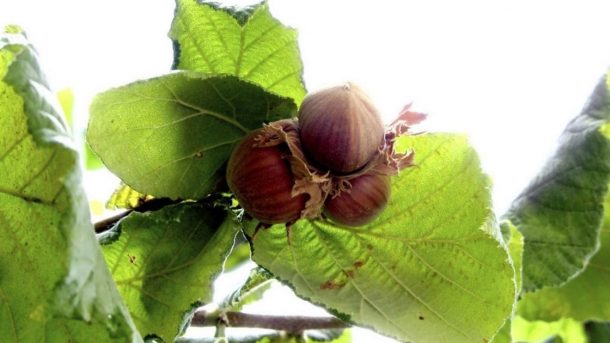
Hazelnuts are harvested annually in mid-autumn. As autumn comes to a close, the trees drop their nuts and tree leaves. Nuts from the hazelnuts’ trees need to be harvested before the autumn rains. As the nuts ripen, they drop from the tree over approximately 6 weeks. Gather Hazelnuts from the ground. Some of the fallen Hazelnuts may be wormy or even empty. It is very easy to distinguish between those nuts that are bad from good one. Place the nuts in water and gloating nuts are the duds. Discard any floaters. Also, insect infested nuts will have holes in the shell and must be tossed out. Once Hazelnuts picking has been accomplished and it’s time to dry the nuts out. The nuts are ready for collection in autumn as soon as husks become yellow colour.
Sustainable agriculture
What is the irrigation requirement for Hazelnut farming?
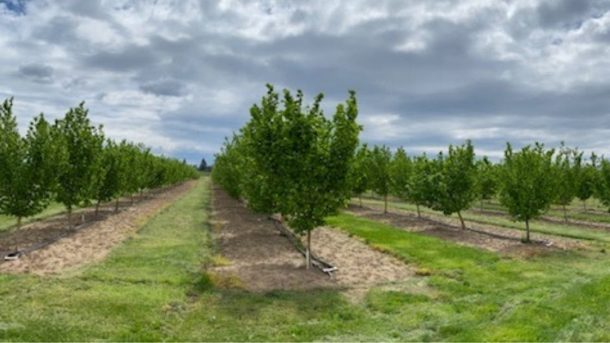
Irrigation is the best method to establish large trees rapidly and it uses countering excessive dry conditions for filling the stage for the production. In summer, 60 cm of the soil must dry on the other side deeper soil may not dry until the end of summer. Then, it fills the shell of the nut from December to February accordingly. So, irrigation is not necessary from the surface of the soil in summer. In cooler climates, irrigation is not necessary. In warmer climates with hot summers and long periods without rain, applying 30 litres of water per tree every 3-4 weeks without rain and mulching well is effective. Drip irrigation system produces bigger trees, more nuts sooner, fuller and heavier kernels. Drip irrigation is increasingly being adopted. Hazelnut trees must be irrigated every year during the periods of low rainfall.
What is fasciation in strawberry?
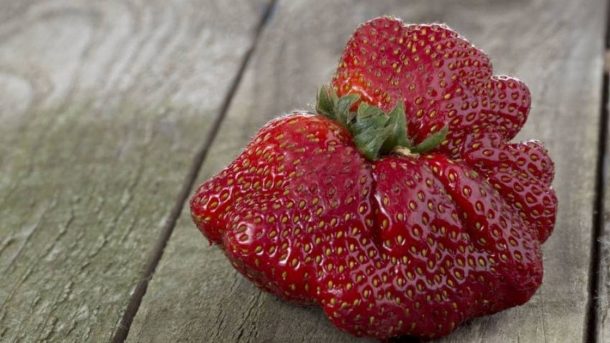
Fasciation is a major problem in strawberry cultivation, which is characterized by abnormal flattening of fruits and then stems. The fruit gets enlarged and plant gives witch’s broom appearance. There is little or no runner production Even the yield is greatly affected as such plants produce little marketable fruits. In severe cases the flower buds broadens and no fleshy fruit develops in the spring rendering the plants completely barren. If berries develop, they develop into a typical shape of cock’s comb.
What is albinism in strawberry?
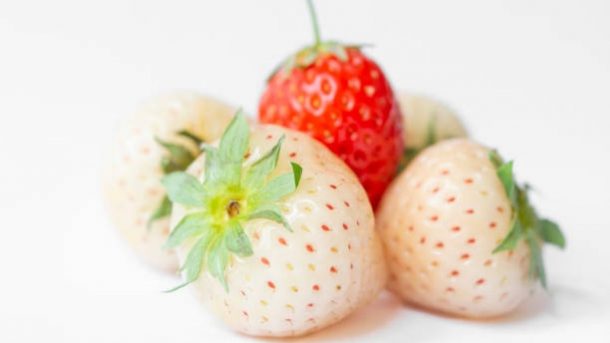
It is most serious disorder of strawberry in which fruits get blotted developing white to pink discolouration on the surface while the pulp gives pale colour. The affected fruits having poor flavour, more acidity and less firmness are not acceptable by the consumer. Albinos fruits an’ often damaged during harvesting and are susceptible to Botrytis infection and decay during storage. However, the fruits develop normal but they do not ripe uniformly. The fruits are little bit waxy in appearance and fetch poor price in the market. Such fruits are liable to severe damage during harvesting. In storage, fruits become susceptible to fruit rot.
Why internal breakdown occurs in Kiwi?
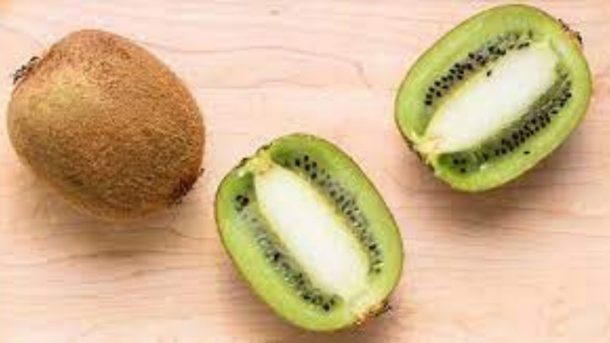
The internal breakdown of kiwi fruit is characterized by a slight discolouration at the blossom end of the fruit. This water soaking progresses around the blossom end and ultimately spreads to the whole fruit resulting in ”graininess” below the fruit surface, which begins in the area around the blossom end of the fruit.
Why water strain occurs in kiwi orchards?
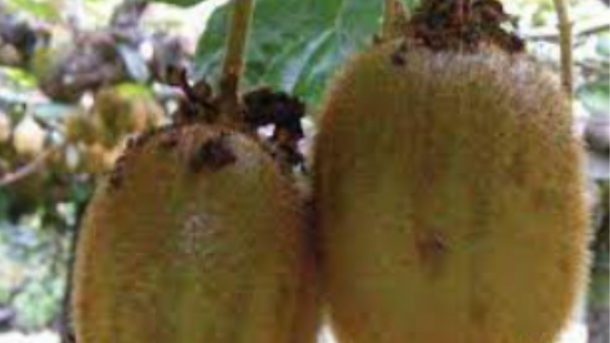
Water-stained kiwi fruits fetch poor price in the market causing economic loss of produce. It is characterized by distinct dark streaks or stains which occurs down the side of kiwi fruit due to deposition of tannins. This accumulation is a result of leaching of tannins from the dead fruit tissues due to rainfall. The malady can be controlled by removal of dead tissue from the plant canopy. The blemishes can be rectified by treatment with weak solution of citric acid.
Why sunscald occurs in Kiwi?
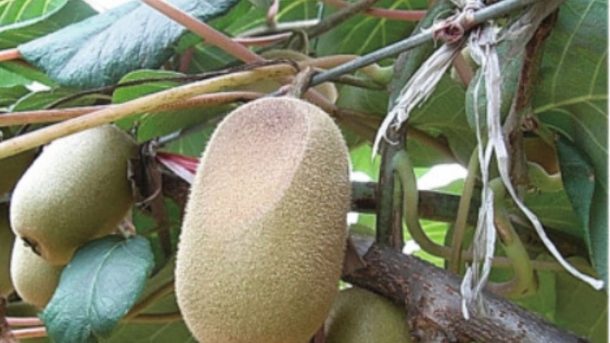
Sun scorch or sunscald is a physiological disorder in which fruits are affected due to direct exposure to sunrays and because of that, the fruit becomes insipid, unfit for human consumption and processing. The affected surface of the fruit develops typical brown, leathery and sunken scars. In summer, high temperature (> 35 °C) accompanied by high insulation and low humidity may cause scorching of leaves.
The damage from sunscald can be minimized by thatching the branches with paddy straw, dry grass or hay as this avoids the direct exposure of fruits to sunlight.
How pollination occurs in Hazelnut farming?
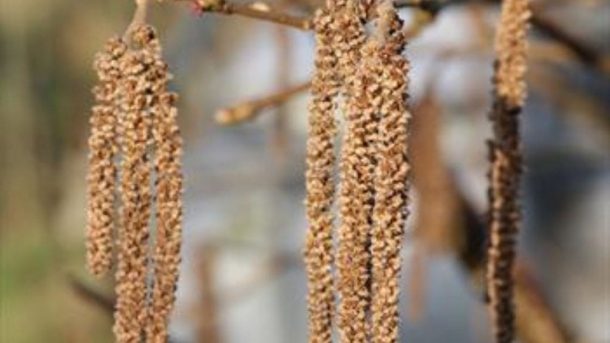
Hazelnut trees are wind pollinated. In cold weather during the flowering time can destroy flowers and reduce fruit set. The trees are in theory self-fertile meaning the pollen from the male flowers can pollinate and fertilize the female flowers on the same plant. Though the blossoming times of the male and female flowers on the same plant do not always coincide and for this reason, it is recommended to plant 2 or more different tree cultivars to increase the likelihood of pollination occurring. Some cultivars require pollinating partners so research your cultivars well. The pollen germinates as soon as it reaches a receptive flower but the fertilization does not take place for another 4 to 5 months in June.
Which soil is suitable for Hazelnut farming?
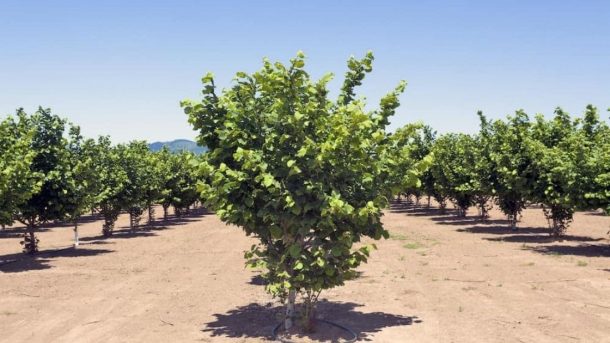
Shallow root but wet soil affects the Hazelnut cultivation to some extent. Hazels grew in pH levels ranging from 5.5 to 7.5, but better and more preferable is 7 for cultivation. Hazelnut trees can grow in most soil types, as long as its well draining. They don’t do well in boggy, water-logged areas, and they are best planted in light soil with a pH level of 5.5 to 7.5. Hazelnut trees tolerate a wide variety of soils from Calcareous to acid, loam to clay soils. It will not grow well in waterlogged and peaty soils. Shallow soils will restrict the tree growth and height of hazel.
What is the climatic requirement for Hazelnut farming?
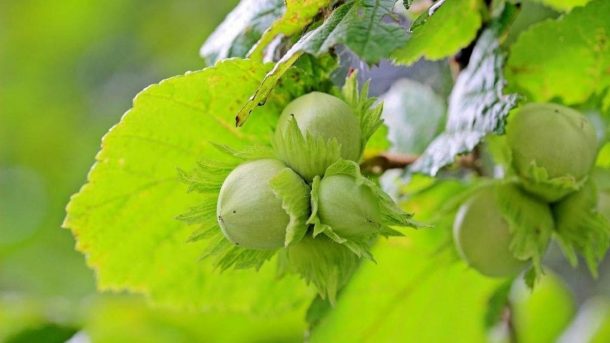
Under moderate climate, Hazelnut tree produces satisfactory crop along with the minimum temperature level of -10°C. therefore in a different region of India, Hazelnuts is grown in areas such as Jammu and Kashmir, Northern Easter Himalayan and Uttarakhand.