
After harvesting, immediately place roses in a bucket of water inside the polyhouse and transport to cold storage (2-4°C). The length of time depends on the roses’ variety and quality. The length of the flowers is used to classify them. It ranges in length from 40 to 70 cm, depending on the variety, and is packaged in tens or twelves per bunch.
What is paired row technique ?
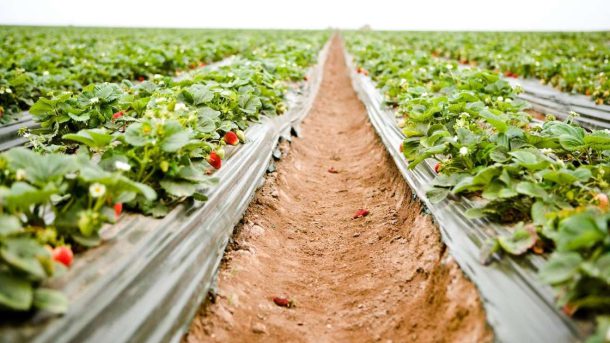
Paired row technique is growing crop on both side of the furrow. This is done by increasing the ridge spacing . Thus , a single furrow can be used for irrigating two rows. This method of irrigation has been experimented for crops like greengram, blackgram, groundnut and sunflower. The results showed that there was saving of about 20 % irrigation water and 15 % increase in crop yields.
How high relative humidity affects plants ?

Very high relative humidity reduces evapotranspiration, increases heat load of plants and results in stomatal closure. It causes reduced CO2 uptake and reduced transpiration influences translocation of food materials and nutrients. Moderately high RH of 60-70% is beneficial. Low RH increases the evapotranspiration
What are the effect of relative humidity on crop ?
Relative humidity (RH) has a direct impact on plant water relations and has an indirect impact on leaf growth, photosynthesis, pollination, disease occurrence, and, ultimately, economic production. Because there is less transpiration when the humidity is low, the turgor pressure is high. As a result, leaf elongation is common in humid environments. RH has an indirect effect on photosynthesis. When the relative humidity (RH) is low, transpiration rises, resulting in water deficiencies in the plant. Many crops benefit from moderately low air humidity, as long as the soil moisture supply is adequate. Insect pests and diseases are more common in high-humidity environments.
What is suction method of emasculation in flowers ?
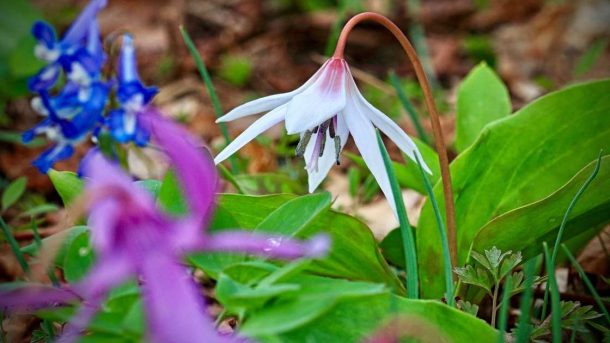
It’s ideal for small-flowered species. Emasculation is performed in the morning, as soon as the petals open. The anthers are sucked off the blooms using a thin rubber or glass tube coupled to a suction hose. The quantity of suction employed is critical, since it must be enough to suction pollen and anthers but not gynoecium.10% self-pollination is likely to occur in this manner. Although washing the stigma with a jet of water may assist to reduce self-pollination, this procedure does not completely eliminate it.
How tagging is practiced in flowers ?

The flowers are tagged just after bagging. They are attached to the inflorescence or to the flower with the help of a thread. After that , date of emasculation, date of pollination, parentage and no. of emasculated flowers are noted .
What is emasculation ?
Emasculation is the removal of stamens or anthers from a flower or killing of pollen without the female reproductive organ. Emasculation is required in bisexual flowers to prevent self-pollination. Male flowers are eliminated from monoecious plants. Hand emasculation is accurate and adequate in species with large blooms, such as cotton and pulses.
What were the ancient methods of pest management ?
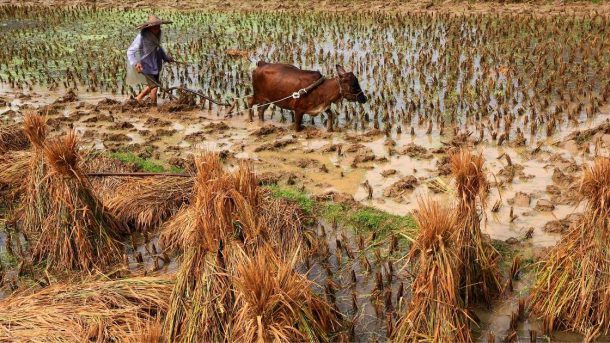
Botanical pesticides were used. During storage, neem leaves were often employed to keep storage insects and seed infection at control. There is also a belief that seed should be treated with coal ash before storage to minimise insect damage. Before storage, pigeon pea seeds were sun dried to minimise moisture content, which was a standard method in Ancient times for the control of insects and vermin. Resin application to roots has been recommended for preventing cracking of pomegranate is found in ancient literature.
What are the benefits of Bt cotton technology ?

Bt cotton hybrids had good control of the American Boll worm and used fewer insecticides, resulting in a more environmentally friendly environment. In comparison to insecticide-mediated control of bollworms, Bt cotton technology does not affect non-target beneficial insects; in addition, this revolutionary technique reduces production costs, increases profit, reduces farming risk, and improves the economic outlook for cotton. This technology also aids in the improvement of wild life populations, the reduction of insecticide run-off, the reduction of air pollution, and the increased safety of farm employees and the surrounding community.
What is PMAGY ?

PMAGY or Pradhanmantri Adarsh Gram Yojana is a new scheme launched by the government for the integrated development of scheduled castes dominated villages in the country. There are about 44,000 villages in which the population of scheduled castes is above 50 per cent. Shri Mukherjee said that the new scheme PMAGY will be launched this year on a pilot basis in 1000 such villages. An amount of Rs.100 crore has been allocated for this Scheme, he added. Under this Scheme, each village would be able to avail gap funding of Rs.10 lakh over and above the allocations under Rural Development and Poverty Alleviation Schemes. On successful implementation of the pilot phase, the PMAGY would be extended in coming years.