
The process of removal of foliage is known as defoliation. This is done mainly with a view to inducing flowering in certain plant. This can also be done to reduce transpiration loss during periods of stress and strain and also during transportation of certain plants such as roses. Defoliation can be achieved by the removal of leaves by hand or by the use chemical and withholding water.
Scientific Farming
What is deshooting in floriculture ?

Deshooting is the process of removing unwanted shoots. If all of the side shoots on some flowering annuals and herbaceous perennials are allowed to droop, the size and quality of the blooms will be substantially decreased. Only a few side shoots are permitted to flower, while the rest are destroyed before they flower.
What is stopping or pinching in floriculture?
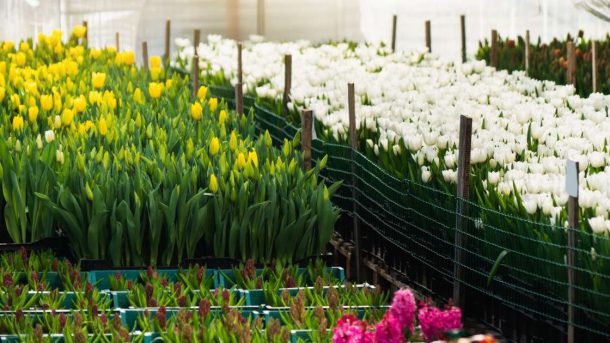
The procedure of pinching or stopping includes the removal of a shoot’s growth tip as well as a few leaves. The primary goals of pinching includes enhancing production of flower buds on the pinched branch and encouraging branching to promote bushy growth. Pinching is done at a stage when the plants are young and between 7 and 15 cm in height, depending on their habits of growth. The plants which need pinching include dahlia, chrysanthemum, marigold, carnation, rose.
What is organic farming ?
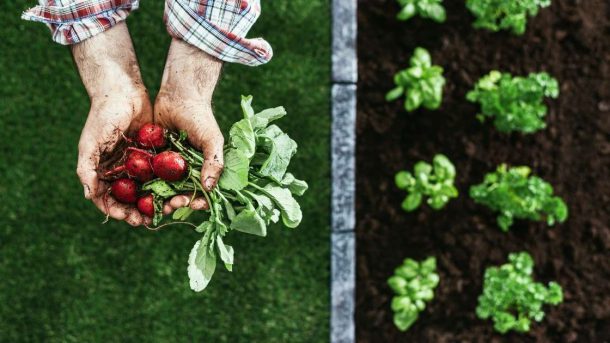
Organic farming is an agricultural technique that relies on environmentally friendly pesticides and biological fertilisers made primarily from animal and plant wastes, as well as nitrogen-fixing cover crops. Modern organic farming was created in reaction to the environmental harm caused by the use of chemical pesticides and synthetic fertilisers in conventional agriculture, and it provides a number of environmental advantages.
Organic farming utilises fewer pesticides, minimises soil erosion, reduces nitrate leaching into groundwater and surface water, and recycles animal waste back into the farm as compared to conventional agriculture. These advantages are offset by increased consumer food costs and generally lower yields. Organic agricultural yields have been found to be roughly 25% lower than conventionally grown crops on average, though this varies greatly depending on the type of crop. The challenge for future organic agriculture will be to maintain its environmental benefits, increase yields, and reduce prices while meeting the challenges of climate change and an increasing world population.
How red hairy caterpillars are controlled in maize ?
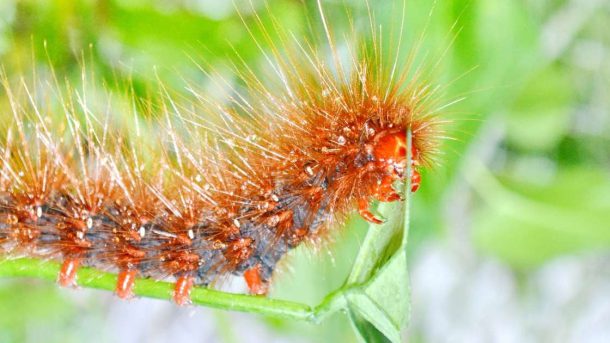
Caterpillars feed and destroy the whole plant if the attack is in the early stages of growth. Control is done by detecting and destroying egg masses and young caterpillar. The field should be ploughed out after the crop is harvested, so as to expose pupae. Thiodan 35 EC @ 27 ml in 18 litres water should be sprayed only as last resort.
What is the significance of phosphate ?

Phosphate is one of the most important ingredients in fertiliser. After nitrogen, it is the second most important nutrient for plants, and it is frequently a limiting factor. It’s crucial for long-term agriculture since it can boost soil fertility and crop yields. Photosynthesis, energy transfer, signal transduction, macromolecular biosynthesis, and respiration are all processes that require phosphorus. It’s necessary for root ramification and strength, as well as seed development and disease resistance. Phosphorus is found in both inorganic and organic forms in the soil and accounts for about 0.05 percent of soil biomass.
Phosphorus fertilisers are the primary source of inorganic phosphorus in agricultural soils, with inorganic phosphorus accounting for 70–80 percent of phosphorus in cultivated soils. People have turned to other sources since long-term usage of phosphate-containing chemical fertilisers causes eutrophication and depletes soil microbial life.
What is sustainable agriculture ?

Sustainable agriculture refers to farming methods that are favorable to the environment and allow for the production of crops or livestock without causing harm to human or natural systems. It involves avoiding negative consequences for soil, water, biodiversity, nearby or downstream resources, as well as individuals working or living on the farm or in the surrounding environment. Permaculture, agroforestry, mixed farming, multiple cropping, and crop rotation are all examples of sustainable agriculture. It includes farming practices that meet society’s current food and textile needs without affecting current or future generations’ ability to meet those needs. It could be founded on a knowledge of ecological services. There are a variety of approaches that can be used to improve agriculture’s long-term viability. It is critical to build flexible business processes and farming methods while developing agriculture within sustainable food systems.
How weed management is done in mango ?
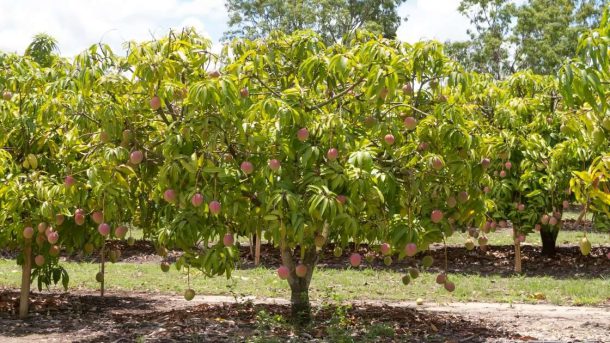
Black plastic mulch (100 micron) restricts the germination of weed seeds and suppresses the weed growth. The size of the film requirement for young plant is 1 m x 1 m, and for 8 years onwards film requirement is 2.5 m x 2.5 m around the tree. Interculturing operations in large canopy trees are done by spraying Glyphosate 41 percent or Glyphosate 71 percent, whereas interculturing operations in small canopy trees are done by hand weeding.
What is earthing up/hilling/ridging ?
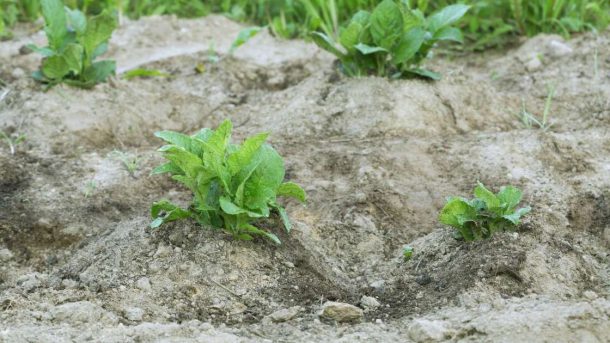
In agriculture and horticulture, hilling, earthing up, or ridging is the practice of piling soil up around the base of a plant. It can be done by hand (most commonly with a hoe) or with powered machinery (most commonly a tractor attachment). Hilling buries the plant’s normally above-ground parts, fostering the desired development. This may accelerate the formation of new tubers (as with potatoes), drive the plant to produce longer stems (as with leeks), or maintain the stems or shoots pale and soft for various crops (chicory, leeks, asparagus, and so on). Hilling can also be used to stabilise the stems of crops that are susceptible to wind damage.
What is gap filling ?
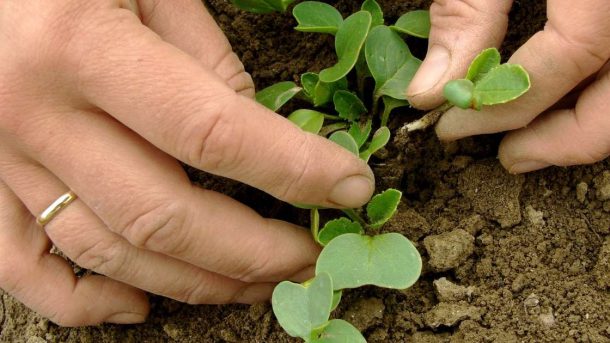
Gap filling involves spreading seeds or transplanting seedlings into gaps where early sown seeds have failed to sprout. These are usually done a week after seeding to a maximum of 15 days after sowing. Gap filling comes first in dryland agriculture. After 7 days after seeding, the seeds are dibbled. To avoid drought, thinning is done after gap filling. Mid-season correction is a management method that involves removing a percentage of the plant population to reduce stress.